Situation Summary
Malaysia remains at composite threat level 4 (rank #142 globally) with no major acute violence or armed conflict reported in the last 24–48 hours. Current developments center on anti-corruption enforcement, refugee policy restructuring, and political-information contestation rather than physical security incidents. Risk is concentrated in Kuala Lumpur (score 31.5) and Johor (18.7), driven by administrative and governance-related activity; sub-national and border tensions with Indonesia and the Philippines are reflected in recent diplomatic disapprovals but have not escalated to kinetic incidents.
Key Developments
- Putrajaya, Selangor, Negeri Sembilan, Melaka – 24 July 2026. Malaysian Anti-Corruption Commission (MACC) remanded 33 individuals, including enforcement officers, in a visa-bribery syndicate investigation spanning multiple states; arrests target officials and agents involved in immigration and visa fraud dating to 2021. Risk implication: disruption to visa-processing channels and heightened scrutiny of enforcement personnel.
- National – 24 July 2026. Malaysian government directed UNHCR to temporarily halt all refugee registrations to enable restructuring under a new Refugee Registration Document (DPP) programme. Risk implication: uncertainty for asylum-seeker and migrant populations; potential for increased enforcement pressure on undocumented refugees, particularly in urban centers.
- Johor – 24 July 2026. Communications Minister Fahmi Fadzil issued public warning against political disinformation ahead of local voting, highlighting active online contestation. Risk implication: heightened information-environment volatility; no verified street-level unrest reported but political polarization remains elevated.
- Sarawak – 24 July 2026. State premier announced joint gas-exploration cooperation between Petronas and Petros; no reported protests or infrastructure disruption tied to the announcement.
- National (social media) – 24 July 2026. X/Twitter and other platforms show active debate and NGO criticism of the UNHCR registration halt; no corroborated street protests or clashes reported as of this briefing cycle.
- National – 22–24 July 2026. Recent event signals include administrative sanctions, inter-state disapprovals (Malaysia vs. Indonesia, Malaysia vs. Philippines), and public statements by Kuala Lumpur and Sarawak authorities; no kinetic escalation documented.
Highest-Risk Areas
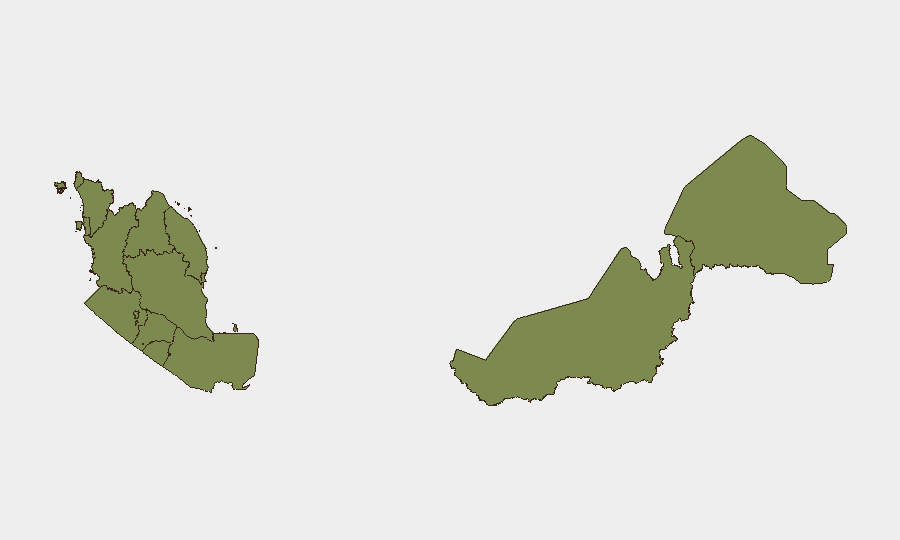
Kuala Lumpur (31.5) dominates the national risk profile, reflecting administrative and governance activity, public contestation, and inter-agency operations concentrated in the capital. Johor (18.7) follows, with activity linked to political disinformation, administrative procedures, and regional administrative involvement in the MACC visa-syndicate arrests. Negeri Sembilan (15.1) and Penang (8.7) carry moderate residual risk tied to administrative operations and governance processes. Sarawak, despite hydrocarbon-development decisions, remains lower-ranked (5.8), indicating no acute unrest over resource or sovereignty issues in the current window.
How GeoBit Would Assist
Security teams would deploy Intel Sweep and multi-language OSINT (X/Twitter, Telegram, and social-media feeds) to monitor political disinformation narratives and sentiment shifts around refugee policy and anti-corruption operations in real time. AOI Monitoring & Early Warning on Kuala Lumpur, Johor, and border zones would provide persistent alerting on any escalation of administrative actions, enforcement operations, or public contestation. Risk & Threat Assessment with Network & Actor Analysis would track MACC enforcement patterns, refugee-policy enforcement implications, and inter-state diplomatic signals to anticipate secondary impacts on corporate operations and personnel movement.
7-Day Outlook
No significant escalation to armed conflict, mass civil unrest, or terrorism is forecast in the near term. Risk trajectory remains driven by governance, enforcement, and policy implementation rather than kinetic events; however, refugee-policy enforcement and ongoing political disinformation could create localized disruption or information volatility. Border-state diplomatic tensions (Indonesia, Philippines) warrant sustained monitoring but show no signs of military mobilization as of 25 July 2026.
Highest-Risk Areas — Ranked
| # | State / Region | Risk |
|---|---|---|
| 1 | Kuala Lumpur | 31.5 |
| 2 | Johor | 18.7 |
| 3 | Negeri Sembilan | 15.1 |
| 4 | Penang | 8.7 |
| 5 | Kelantan | 5.8 |
| 6 | Selangor | 5.8 |
| 7 | Sarawak | 5.8 |
| 8 | Perak | 3 |
| 9 | Perlis | 1.5 |
| 10 | Kedah | 1.5 |
| 11 | Pahang | 1.5 |
| 12 | Labuan | 1.5 |
Previous Daily Briefs
A new Malaysia brief is written every day — each with its own risk map and downloadable CSV. Here's the last week; use the calendar to go further back.
📅 Browse every day by calendar →
Highlighted days have a brief. Tap a day for that day's map & analysis, or “csv” for that day's dataset ($5).
Atlas — our AI intelligence desk — emails them this snapshot personally. Nothing else, no list.