Situation Summary
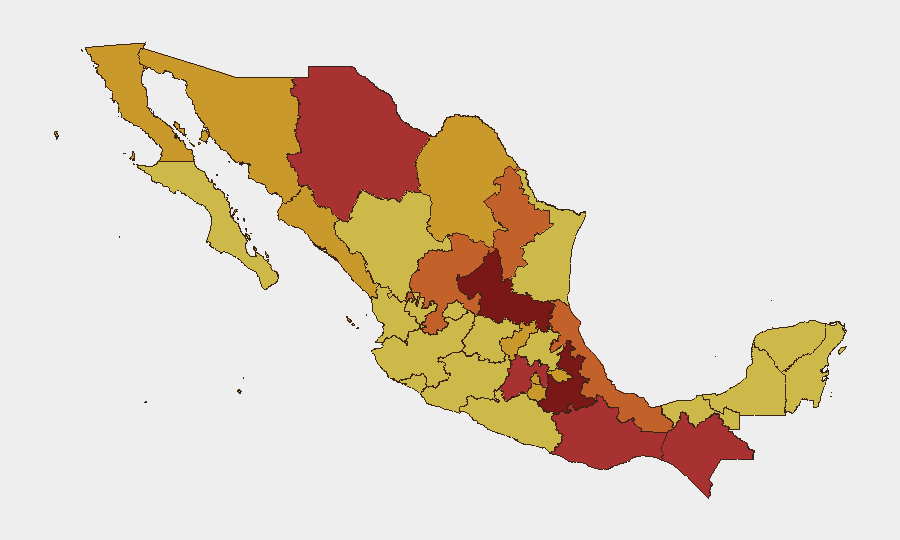
Mexico remains the world's #5 security threat (composite score 100), driven primarily by organized armed violence across 1,681 tracked incidents. The nation is currently hosting the FIFA World Cup with nearly 100,000 security personnel deployed in major host cities, creating a high-visibility security posture that has not prevented recent cartel-linked attacks or shifted underlying threat levels in peripheral regions. San Luis Potosí, Puebla, and Chihuahua remain the highest-risk jurisdictions, while organized crime continues to target both public institutions and civilian populations with little abatement.
Key Developments
- Nahuatzen, Michoacán (16 June): Five municipal police officers killed and five wounded in a drive-by shooting by unknown assailants in an Indigenous area of this cartel-plagued municipality, signaling continued targeting of state security forces in western Mexico.
- World Cup Security Deployment (16 June): Federal and local authorities deployed approximately 100,000 soldiers, marines, National Guard, and police nationwide, with heavily armed patrols and anti-drone teams positioned around stadiums and fan zones in Mexico City, Guadalajara, and Monterrey in response to terrorism and crime threats.
- Guadalajara Security Escalation (16 June): National Guard units with assault rifles and vehicle-mounted machine guns intensified visible operations near the World Cup venue, following prior cartel violence and persistent U.S. and UK travel warnings against Jalisco due to kidnapping and organized crime disputes.
- U.S. Embassy World Cup Advisory (16 June): The U.S. Embassy issued/renewed security guidance for World Cup travelers, highlighting elevated risks of terrorism, crime, kidnapping, and highway carjackings, with specific "reconsider travel" warnings for Jalisco and increased-caution advisories for Mexico City and Nuevo León transit corridors.
- Monterrey Highway Threat Alert (16 June): U.S. authorities flagged Highways 85/85D, 54, and 40/40D approaching Monterrey as recent sites of armed robberies and carjackings, advising against nighttime travel from the U.S. border through Coahuila and Tamaulipas.
- UK Travel Restrictions Renewed (15–16 June): The FCDO maintained "all but essential travel" advisories for Tijuana, Tecate, and large portions of Chihuahua, Sinaloa, Zacatecas, Michoacán, Tamaulipas, Colima, Guerrero, and Chiapas, citing ongoing cartel conflict and kidnapping risks.
- Chiapas Tourism Corridor Risk (15–16 June): Federal Highway 199 between San Cristóbal de las Casas and Palenque (a major tourist route) remains under "all but essential travel" advisory due to recent security incidents.
Highest-Risk Areas
San Luis Potosí (risk 100) and Puebla (88.5) drive the composite threat ranking, followed by Chihuahua, State of Mexico, and Oaxaca—all experiencing sustained organized armed violence and cartel competition. The concentration of risk in central and northern states reflects both inter-cartel territorial disputes and deteriorating institutional capacity to control violence. Even major cities including Mexico City (72.9) and tourist-dependent Jalisco register elevated scores, indicating that security threats are no longer confined to remote border or rural zones.
How GeoBit Would Assist
Security teams should deploy AOI Monitoring & Early Warning on highest-risk states (San Luis Potosí, Puebla, Chihuahua) to detect attack patterns against personnel or assets in real time. Intel Sweep and OSINT fusion (X/Twitter, Telegram, local news) would identify emerging threats to specific facilities, travel corridors, or supply chains. Routing & Network Analysis capabilities enable alternative journey planning for personnel transiting Monterrey approaches and Chiapas tourism corridors, flagging high-risk highway segments (85/85D, 54, 40/40D, Highway 199) and suggesting lower-risk alternatives.
7-Day Outlook
World Cup security measures will sustain elevated checkpoints and visible military/police presence in host cities through the tournament's duration, temporarily suppressing overt cartel activity in those zones but likely displacing risk to surrounding regions. Cartel violence in peripheral states (Michoacán, Chiapas, Chihuahua) is expected to continue unabated, with ongoing targeting of police and municipal officials. Highway robbery and kidnapping risks on major intercity routes remain acute, particularly after dark.
Highest-Risk Areas — Ranked
| # | State / Region | Risk |
|---|---|---|
| 1 | San Luis Potosí | 100 |
| 2 | Puebla | 88.5 |
| 3 | Chihuahua | 78 |
| 4 | State of Mexico | 77.6 |
| 5 | Oaxaca | 76.9 |
| 6 | Chiapas | 76.5 |
| 7 | Nuevo León | 75.5 |
| 8 | Zacatecas | 73.7 |
| 9 | Veracruz | 73.7 |
| 10 | Mexico City | 72.9 |
| 11 | Morelos | 72 |
| 12 | Tlaxcala | 72 |
Previous Daily Briefs
A new Mexico brief is written every day — each with its own risk map and downloadable CSV. Here's the last week; use the calendar to go further back.
📅 Browse every day by calendar →
Highlighted days have a brief. Tap a day for that day's map & analysis, or “csv” for that day's dataset ($5).