Situation Summary
The Philippines faces an elevated composite security threat (rank #40 globally, score 47) driven primarily by geopolitical friction over the South China Sea, domestic gun violence, and ongoing regional instability. Metro Manila and Eastern Visayas are the primary risk vectors, with the former reflecting urban crime and political tension and the latter marked by recent armed conflict in civilian spaces. Recent diplomatic exchanges with China and a national security review ordered following a school shooting indicate sustained tension across multiple threat domains. Current trajectory reflects heightened awareness and policy response but no imminent systemic breakdown.
Key Developments
- Manila — 2026-06-28: Philippines Defense Secretary Gilberto Teodoro issued formal diplomatic statement accusing China of "insincerity and hypocrisy" in South China Sea arbitral ruling dispute; exchange signals renewed bilateral friction over maritime claims and U.S.–Philippines alignment.
- Manila — 2026-06-26: Military/police power demonstration involving U.S. and Philippine forces; concurrent public statements by Philippine government regarding defense posture suggest coordinated messaging on regional security partnerships.
- Tacloban City, Eastern Visayas — 2026-06-22: San Jose National High School shooting resulted in 3 student fatalities and 7 wounded; suspects arrested; presidential order issued for national security review, indicating institutional concern over armed violence in civilian infrastructure.
- National — 2026-06-26–27: Multiple public statements and disapproval announcements by Philippine government, including rejection of certain positions by Washington, suggest active policy disagreement on security or alliance matters (specific substance unclear from available signals).
- Regional / Maritime — 2026-06-28: Reporting confirms ongoing Philippines–China maritime friction as part of broader Southeast Asian realignment, including closer defense cooperation between Philippines, Vietnam, and Japan.
Highest-Risk Areas
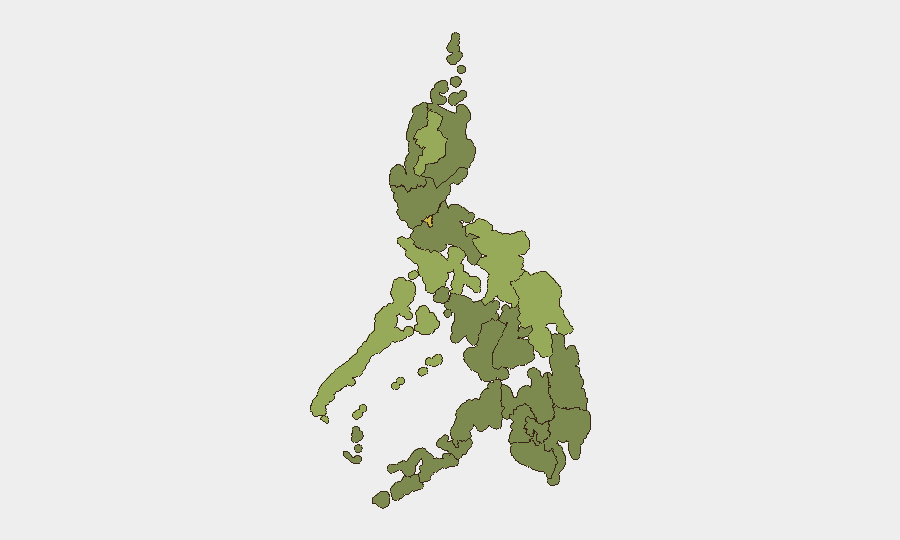
Metro Manila (risk 63.1) and Eastern Visayas (risk 55) account for the two highest composite threat scores, reflecting distinct risk profiles. Metro Manila concentrates urban crime, political volatility, and administrative security challenges in the capital region; Eastern Visayas combines maritime pressure, armed group activity, and demonstrated gun violence in civilian spaces (evidenced by the school shooting). Cordillera Administrative Region (44.7) and Mimaropa (42.5) show moderate elevation, likely tied to mining conflicts, internal displacement, and local armed group presence. Risk concentration in these four regions should anchor geographic prioritization for duty-of-care teams.
How GeoBit Would Assist
Corporate security and risk teams would deploy AOI Monitoring & Early Warning with persistent watch on Metro Manila, Eastern Visayas, and transport corridors to capture emerging unrest, violence incidents, and infrastructure disruption in real time. OSINT Fusion & Corroboration (X/Twitter, Telegram, local media, government statements) would clarify the substance and trajectory of Philippines–U.S.–China diplomatic signals, informing supply-chain and personnel-movement decisions. Conflict & Military force-structure tracking combined with Maritime & Aviation tracking would monitor U.S.–Philippines exercises, Chinese naval activity, and regional realignment, enabling early detection of escalation or de-escalation cues affecting broader Asia-Pacific operations.
7-Day Outlook
Diplomatic friction between Manila and Beijing is expected to persist without substantive resolution; no imminent kinetic escalation is signaled, but rhetoric and military posturing will likely continue. Domestic armed-violence risk, particularly in schools and public venues in Eastern Visayas and Metro Manila, remains elevated pending outcomes of the presidential security review. Regional defense alignment activity (U.S., Japan, Vietnam) will likely accelerate, creating secondary diplomatic responses from China and potential knock-on effects on local security perception.
Highest-Risk Areas — Ranked
| # | State / Region | Risk |
|---|---|---|
| 1 | Metro Manila | 63.1 |
| 2 | Eastern Visayas | 55 |
| 3 | Cordillera Administrative Region | 44.7 |
| 4 | Mimaropa | 42.5 |
| 5 | Bicol Region | 40.4 |
| 6 | Central Visayas | 35.3 |
| 7 | Northern Mindanao | 33.5 |
| 8 | Central Luzon | 33.5 |
| 9 | Bangsamoro | 33.1 |
| 10 | Caraga | 33.1 |
| 11 | Soccsksargen | 33.1 |
| 12 | Davao Region | 33.1 |
Sources
Previous Daily Briefs
A new Philippines brief is written every day — each with its own risk map and downloadable CSV. Here's the last week; use the calendar to go further back.
📅 Browse every day by calendar →
Highlighted days have a brief. Tap a day for that day's map & analysis, or “csv” for that day's dataset ($5).