Situation Summary
Qatar remains a low-threat environment domestically, with no confirmed civil unrest or major crime incidents in the past 48 hours; however, the security posture is significantly shaped by regional volatility, particularly attacks on Qatari maritime assets in the Strait of Hormuz and heightened Iranian military activity affecting airspace and GPS integrity. Doha's risk profile (31.3) reflects exposure to maritime and aviation disruption rather than internal instability, while all other sub-national zones report baseline risk. The U.S. Embassy's ordered departure and suspension of non-emergency consular services underscore the elevated regional environment, even as Qatar's internal security apparatus maintains control.
Key Developments
- Strait of Hormuz, 26–27 July: Qatar's LNG carrier *Al Rekayyat* struck by projectile; minor damage, no injuries, crew safe. Qatar's Foreign Ministry condemned the incident as a grave threat to international navigation and energy security.
- Doha Corniche, within last 24–48 hours: Civil Defence teams extinguished fire on marine platform off the Corniche; no injuries; localized disruption only.
- Qatar territorial waters & airspace, ongoing 24–48 hours: Heightened maritime security protocols for Qatari vessels; stricter routing for LNG carriers transiting Strait of Hormuz in response to recent regional missile and drone activity and GPS interference risk.
- Doha–Riyadh, 26 July: Qatar Foreign Minister held telephone diplomacy with Saudi counterpart on regional de-escalation, freedom of navigation, and adherence to U.S.–Iran commitments.
- U.S. Embassy Doha, reaffirmed 24–28 July: Ordered departure of non-emergency staff remains in effect; non-emergency visa services suspended; complex regional security environment cited, including airspace disruption risk.
- Qatar airspace, ongoing 24–48 hours: Civil aviation advisories note heightened caution due to residual air-defence activity and GPS jamming/spoofing linked to recent Iranian operations, increasing flight disruption and operational risk.
Highest-Risk Areas
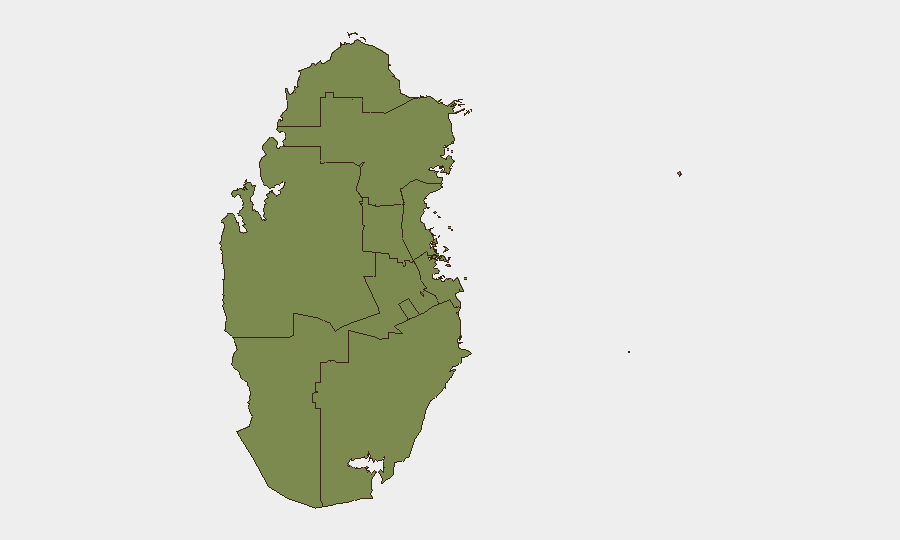
Doha dominates the risk ranking (31.3) due to its status as Qatar's capital, primary maritime hub, and location of foreign missions; exposure to Strait of Hormuz instability, coastal platform operations, and potential airspace disruption drives this elevated score. All other municipalities (Ash Shamal, Al Shahaniya, Al Rayyan, Al Khor and Al Thakhira, Al-Daayen, Umm Salal, Al Wakrah) register at 1.3, indicating baseline risk with no current drivers. The pronounced differential reflects concentration of national critical infrastructure, energy assets, and diplomatic presence in Doha rather than distributed internal instability.
How GeoBit Would Assist
Security teams would employ Maritime & Aviation tracking combined with AOI Monitoring & Early Warning to maintain persistent watch on Qatari vessels transiting the Strait of Hormuz and monitor Doha airspace for flight disruptions and safety alerts. Intel Sweep and OSINT fusion (X/Twitter, Telegram, multi-language feeds) would provide real-time corroboration of regional military activity, GPS interference, and diplomatic moves affecting consular and business operations. Routing & Network Analysis capabilities would support alternative journey planning for personnel and shipments avoiding high-risk maritime zones.
7-Day Outlook
Doha and Qatar's maritime exposure will likely remain elevated through early August pending de-escalation signals from U.S.–Iran and regional diplomatic channels; no imminent change in U.S. Embassy posture is expected. Domestic security is forecast to remain stable; monitor for cascading effects of airspace or port-access disruptions on business continuity and personnel movement.
Highest-Risk Areas — Ranked
| # | State / Region | Risk |
|---|---|---|
| 1 | Doha | 31.3 |
| 2 | Ash Shamal | 1.3 |
| 3 | Al Shahaniya | 1.3 |
| 4 | Al Rayyan | 1.3 |
| 5 | Al Khor and Al Thakhira | 1.3 |
| 6 | Al-Daayen | 1.3 |
| 7 | Umm Salal | 1.3 |
| 8 | Al Wakrah | 1.3 |
Sources
Previous Daily Briefs
A new Qatar brief is written every day — each with its own risk map and downloadable CSV. Here's the last week; use the calendar to go further back.
📅 Browse every day by calendar →
Highlighted days have a brief. Tap a day for that day's map & analysis, or “csv” for that day's dataset ($5).
Atlas — our AI intelligence desk — emails them this snapshot personally. Nothing else, no list.