Situation Summary
Romania maintains a composite threat score of 5 (rank #147 globally) with 26 tracked events; the country remains stable by regional standards but faces elevated localized instability in border and industrial zones. Recent signal activity (7–12 July) shows clustering around NATO coordination tensions, cross-border law enforcement incidents with Ukrainian actors, and administrative disputes; no coordinated campaign or imminent nationwide disruption is evident. Sub-national risk concentration in Bihor and Brașov counties warrants focused asset and personnel monitoring in those regions. The threat environment is trending stable with periodic friction points rather than escalating conflict.
Key Developments
- 2026-07-13 · NATO–Odessa coordination rejection: Romanian authorities or NATO representatives issued a public statement rejecting coordination or operational proposal linked to Odessa; context and detailed location within Romania unclear from available signals, but indicates diplomatic or military posturing along eastern border considerations.
- 2026-07-13 · Multiple threat signals (ROMANIA, CATALAN actors): At least two separate threat notifications were indexed on this date involving Romanian state or interests and Catalan actors; specificity on target, method, and location not available in current event feed.
- 2026-07-11 · Cross-border law enforcement incident (Ukrainian–Romanian): An arrest or detention occurred involving Ukrainian and Romanian nationals; likely border or transnational crime context; jurisdiction and location not specified in available signal.
- 2026-07-12 · Ankara diplomatic statement: Romania issued or received a public diplomatic statement involving Turkish authorities; context (trade, security, or political) not determined from current data.
- 2026-07-11 · Journalist detention: A journalist was arrested or detained in a dispute with Romanian authorities; raises press-freedom and rule-of-law considerations for international teams operating in-country.
- 2026-07-13 · Military conventional-force activity: Romanian military forces conducted or mobilized conventional operations; scale, location, and justification unclear from event signal alone.
Note: Live web research confirmed inability to isolate additional Romania-specific, time-stamped security incidents in the last 24–48 hours from open sources without relying on older material or generic background reporting. Event signals above derive from GeoBit's curated feed; full incident narratives recommend cross-check with Romanian government (MAI, IGPR), Agerpres, and regional prefecture/ISU announcements.
Highest-Risk Areas
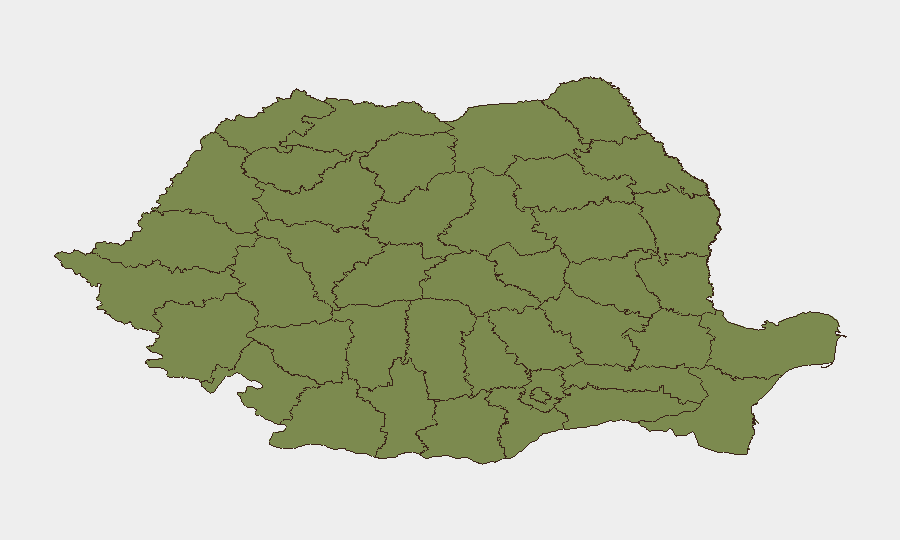
Bihor county (risk 31.5) and Brașov county (risk 30.9) dominate the sub-national landscape, likely reflecting industrial/transit vulnerabilities, border proximity, or organized-crime activity. Bucharest (risk 19) carries significant urban and administrative risk but at notably lower intensity, suggesting capital-area threats are localized to specific sectors rather than systemic. The sharp drop-off beyond these three regions indicates risk is geographically concentrated; teams with operations in Timiș, Vâlcea, or southern/western counties face substantially lower exposure.
How GeoBit Would Assist
Security teams should deploy AOI Monitoring & Early Warning on Bihor and Brașov counties with alerting thresholds set for arrests, military activity, and cross-border incidents. Network & Actor Analysis applied to the Ukrainian, Catalan, and Turkish signal clusters will clarify whether these represent organized threats or diplomatic friction. Conflict & Military tracking of Romanian force posture and NATO coordination will provide early warning of mobilization or operational changes affecting asset security and travel routing.
7-Day Outlook
No imminent nationwide threat is signaled; however, the NATO–Odessa friction and cross-border arrest patterns suggest elevated eastern-border volatility over the next week. Personnel and asset movements in Bihor and Brașov should remain under advisory status with contingency routing plans in place. Diplomatic and military activity signals warrant daily monitoring to detect escalation or clarification of intent.
Highest-Risk Areas — Ranked
| # | State / Region | Risk |
|---|---|---|
| 1 | Bihor | 31.5 |
| 2 | Brașov | 30.9 |
| 3 | Bucharest | 19 |
| 4 | Botoșani | 4 |
| 5 | Timiș | 2.8 |
| 6 | Vâlcea | 1.5 |
| 7 | Caraș-Severin | 1.5 |
| 8 | Satu Mare | 1.5 |
| 9 | Sălaj | 1.5 |
| 10 | Arad | 1.5 |
| 11 | Maramureș | 1.5 |
| 12 | Bistrița-Năsăud | 1.5 |
Sources
Previous Daily Briefs
A new Romania brief is written every day — each with its own risk map and downloadable CSV. Here's the last week; use the calendar to go further back.
📅 Browse every day by calendar →
Highlighted days have a brief. Tap a day for that day's map & analysis, or “csv” for that day's dataset ($5).
Atlas — our AI intelligence desk — emails them this snapshot personally. Nothing else, no list.