Situation Summary
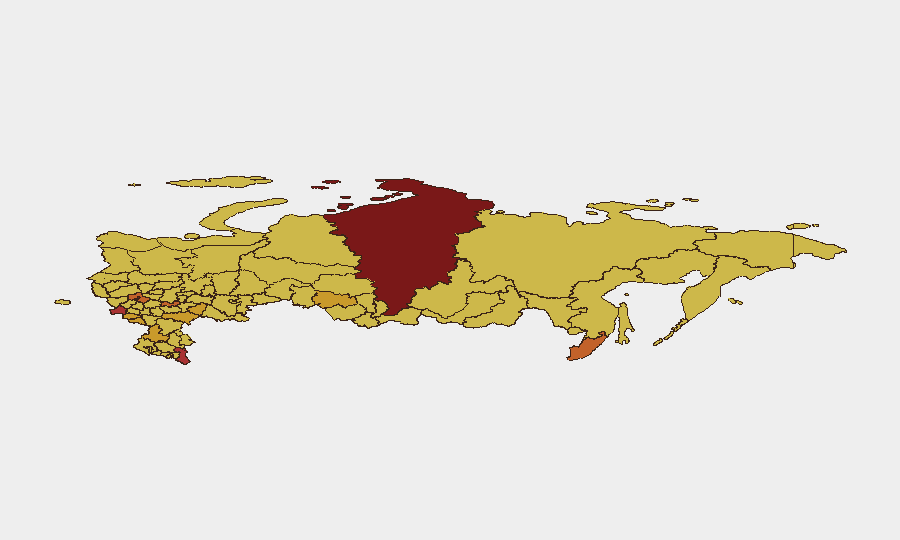
Russia faces sustained Ukrainian long-range strike operations targeting energy and military-industrial infrastructure across southern and central regions, combined with continued escalatory nuclear rhetoric from Moscow. The active war remains the primary driver of Russia's composite threat score (100, rank #2 globally), with 731 tracked events recorded. Sub-national risk is concentrated in western border regions (Moscow, Saint Petersburg, Krasnoyarsk Krai) and conflict-adjacent southern areas (Krasnodar, Rostov, Kursk oblasts), while tactical and strategic escalation signals continue to dominate official messaging.
Key Developments
- Volna, Krasnodar Krai (13 June) – Ukrainian drone strike on Black Sea oil and gas export terminal caused fire, 1 fatality, 3 injured; facility handles crude oil, petroleum products, and LNG.
- Krasnodar Krai energy infrastructure (13 June) – Multiple Ukrainian strikes on regional oil-related facilities reported by both Ukrainian General Staff and Russian regional media as part of coordinated deep-strike campaign.
- Volgograd Oblast (13 June) – Ukrainian forces struck an oil preparation/pumping station; attack attributed to long-range operational wave targeting Russian military-energy targets.
- Cheboksary, Chuvash Republic (13 June) – Ukrainian President Zelenskyy reported strike on military factory claimed to supply drone and missile components, located >900 km from front lines.
- Coordinated Ukrainian strike wave (13 June, preceding 48 hours) – Russian and Ukrainian sources confirm multi-site offensive targeting oil terminals, refineries, and military-industrial production; triggered activation of enhanced Russian air defense and emergency response measures across affected regions.
- Moscow region air activity (13 June) – Russian officials reported interception of at least one Ukrainian drone over Moscow region; reflects continued Ukrainian attempts to strike capital area.
- NATO airspace incidents (12–13 June) – Ukrainian officials claim Russia employing electronic warfare to deflect Ukrainian drones into Baltic NATO member airspace; multiple diversions reported.
- Nuclear signaling (12–13 June) – Russian officials reiterated public statements affirming readiness to deploy nuclear weapons if security threats perceived; message circulated in Russian and international media.
Highest-Risk Areas
Krasnoyarsk Krai (100) and Moscow (99.6) rank as highest-risk due to concentration of strategic infrastructure, capital-city political sensitivity, and active targeting by Ukrainian long-range systems. Western border regions including Saint Petersburg (80.2) and Moscow Oblast (73.1) face elevated risk from drone operations and potential escalation dynamics. Southern conflict-adjacent oblasts—Krasnodar (not ranked top 12 but subject of active strikes), Rostov (71.9), Kursk (72), and Saratov (72)—experience repeated targeting of energy and military logistics, compounded by proximity to active war theater and Ukrainian operational reach.
How GeoBit Would Assist
Security teams monitoring personnel or assets in Russia should employ Intel Sweep and multi-language OSINT (X/Telegram monitoring, YouTube intelligence) to track real-time strike patterns and official response declarations. AOI Monitoring & Early Warning with persistent watch on Krasnoyarsk, Moscow, Krasnodar, and Rostov regions enables immediate alerting when energy infrastructure, transportation nodes, or key facilities enter targeting cycles. Battle Mapping, conflict-zone satellite imagery analysis, and economic/trade tracking provide visibility into supply-chain disruption, energy market impacts, and logistics vulnerability that affect operational continuity.
7-Day Outlook
Ukrainian deep-strike operations targeting energy and defense-industrial infrastructure will likely continue at current or elevated tempo; Russian air defenses will remain activated across southern and central regions, creating persistent flight risk and infrastructure vulnerability. Escalatory rhetoric—particularly nuclear signaling—shows no sign of de-escalation, and Moscow's emphasis on military mobilization suggests sustained offensive posture. Corporate personnel and asset exposure in Krasnodar, Rostov, Volgograd, and Moscow regions remains elevated; supply-chain and energy-sector disruptions should be anticipated over the near term.
Highest-Risk Areas — Ranked
| # | State / Region | Risk |
|---|---|---|
| 1 | Krasnoyarsk Krai | 100 |
| 2 | Moscow | 99.6 |
| 3 | Saint Petersburg | 80.2 |
| 4 | Dagestan | 77.1 |
| 5 | Bryansk Oblast | 76.7 |
| 6 | Republic of Mordovia | 74.4 |
| 7 | Primorsky Krai | 74.3 |
| 8 | Moscow Oblast | 73.1 |
| 9 | Saratov Oblast | 72 |
| 10 | Kursk Oblast | 72 |
| 11 | Rostov Oblast | 71.9 |
| 12 | Ingushetia | 71.8 |
Sources
Previous Daily Briefs
A new Russia brief is written every day — each with its own risk map and downloadable CSV. Here's the last week; use the calendar to go further back.
📅 Browse every day by calendar →
Highlighted days have a brief. Tap a day for that day's map & analysis, or “csv” for that day's dataset ($5).