Situation Summary
Rwanda remains at a composite threat level of 67 (rank #26 globally) with no acute security incidents documented in the past 24–48 hours. The primary current risk driver is an active Marburg virus outbreak classified as a public-health emergency, which may constrain movement and operational tempo but does not reflect armed conflict, civil unrest, or major crime spikes on Rwandan territory. All five provinces maintain equivalent risk scores (47), though Southern Province historically carries elevated baseline risk. The security environment is stable with no indicators of imminent deterioration.
Key Developments
- No acute security incidents documented, Rwanda (nationwide), 18–20 July 2026. National monitoring confirms absence of new protests, armed clashes, terrorism events, or infrastructure disruptions in the past 24–48 hours. Threat posture remains within normal operating parameters.
- Marburg virus outbreak remains active public-health priority, Rwanda (nationwide), ongoing. Confirmed cases constitute an operational constraint for movement and staff health protocols; no newly confirmed cases or major spread reported in the last 24–48 hours, but outbreak status continues to dominate duty-of-care planning.
- Southern Province maintains highest baseline risk score (32), Rwanda, continuing status. While no new incidents reported in the 24–48-hour window, Southern Province continues to present elevated measurable risk relative to other regions; specific drivers remain under assessment and do not currently reflect acute events.
- Road safety incident outside 24–48h window (reference only). A minibus–truck collision in Musambira Sector, Kamonyi District on 19 July 2026 killed nine and injured 13; incident occurred outside the strict 24–48-hour reporting window but underscores persistent traffic-safety risks on secondary routes.
Highest-Risk Areas
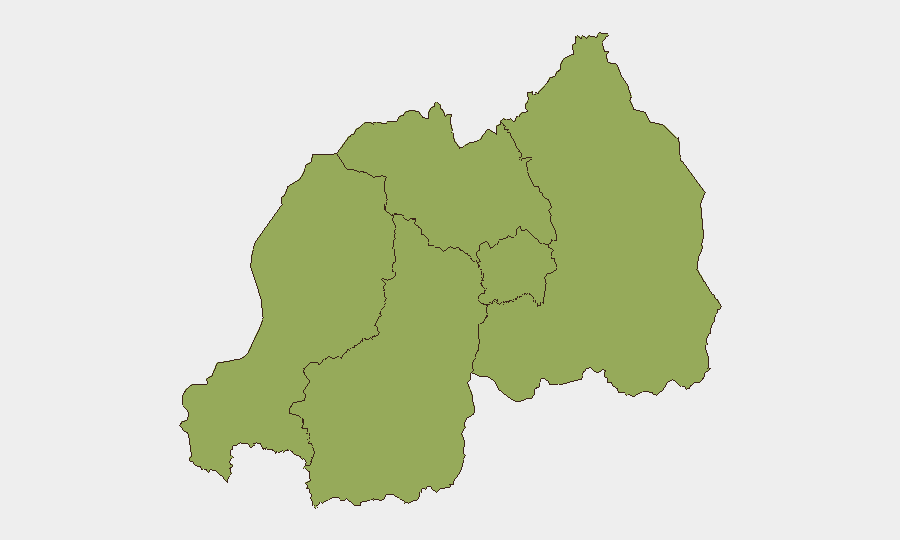
All five provinces (Western, Northern, Kigali City, Southern, Eastern) carry identical composite risk scores of 47. Southern Province distinguishes itself by baseline measurement (score 32 vs. lower provincial figures), though this reflects structural risk rather than new acute events. Risk concentration is diffuse rather than geographically focal; teams operating across all regions should maintain standard security protocols. Kigali City, as the capital and primary hub for foreign personnel and assets, warrants continuous monitoring despite equal nominal risk rating.
How GeoBit Would Assist
Security teams in Rwanda should employ Intel Sweep and multi-language OSINT fusion to monitor Rwanda-focused event feeds, social media (X, Telegram), and open reporting for early indication of protests, movement restrictions, or health-related operational changes. AOI Monitoring & Early Warning with persistent alert capability on key locations (Kigali districts, border crossings, health facilities) will flag emerging incidents within hours of occurrence. Routing & Network Analysis supports real-time journey planning around Marburg-related movement constraints and road-safety hotspots, while Environmental & Health intelligence tracks outbreak status and operational impact on staff mobility and supply chains.
7-Day Outlook
No acute security deterioration is forecast in the next seven days; threat posture is expected to remain stable. Marburg outbreak trajectory will be the primary driver of operational constraint and duty-of-care planning. Regional monitoring of DRC border dynamics (military tensions) remains prudent, though direct spillover into Rwanda proper is not currently indicated.
Highest-Risk Areas — Ranked
| # | State / Region | Risk |
|---|---|---|
| 1 | Western Province | 47 |
| 2 | Northern Province | 47 |
| 3 | Kigali City | 47 |
| 4 | Southern Province | 47 |
| 5 | Eastern Province | 47 |
Sources
Previous Daily Briefs
A new Rwanda brief is written every day — each with its own risk map and downloadable CSV. Here's the last week; use the calendar to go further back.
📅 Browse every day by calendar →
Highlighted days have a brief. Tap a day for that day's map & analysis, or “csv” for that day's dataset ($5).
Atlas — our AI intelligence desk — emails them this snapshot personally. Nothing else, no list.