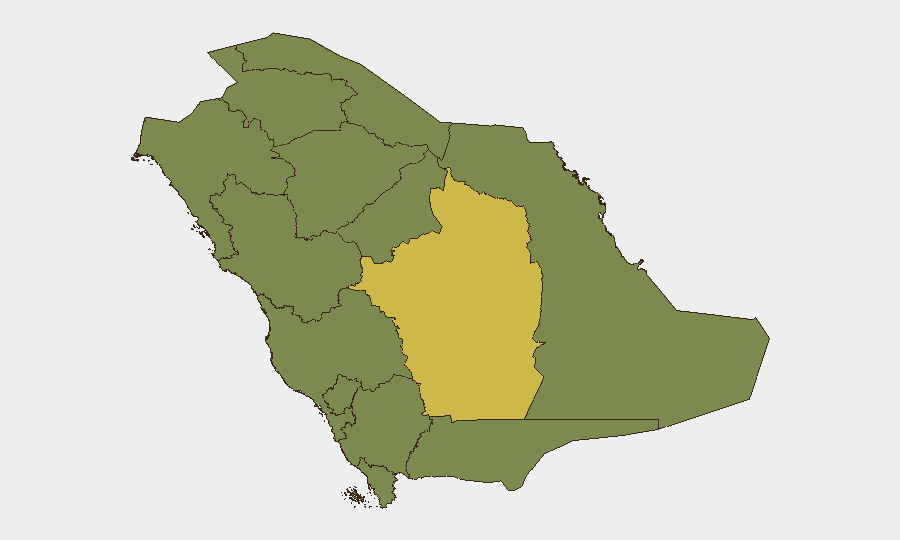
Situation Summary
Saudi Arabia remains at moderate-to-elevated risk (global rank #40, composite score 49) as a result of regional military escalation involving Iran, the US, and Gulf maritime assets rather than internal instability. The primary driver is ongoing Iranian attacks on commercial shipping in the Strait of Hormuz, including damage to at least one Saudi-flagged tanker last week, compounded by the IRGC Navy's announced closure of the Strait and a series of ballistic and aerial attacks recorded across the Gulf region in the past 48 hours. Riyadh Region carries significantly higher risk (63.9) than other sub-national areas, reflecting both capital concentration and its role as a coordination hub for regional security response. Current trajectory is elevated but not acute within Saudi borders; immediate threat to civilians and corporate operations remains primarily indirect—via maritime disruption, airspace volatility, and potential escalation spillover—rather than from domestic terrorism or civil unrest.
Key Developments
- Strait of Hormuz / Saudi maritime interests (last 7 days, condemnation issued 24–48h ago): Saudi Foreign Ministry issued a sharply worded condemnation of Iran within the past 48 hours following confirmed damage to a Saudi-owned oil tanker that transited the Strait last week. Statement explicitly cited "destabilizing behaviour," repeated attacks on commercial vessels, and violations of international law, signaling Riyadh's direct exposure and diplomatic pushback.
- IRGC Strait closure declaration (Gulf waters, 11–12 July 2026): IRGC Navy announced the Strait of Hormuz will be closed "until further notice" following the firing of a warning shot that halted a commercial vessel. This directly affects Saudi export routes and energy infrastructure logistics.
- Regional ballistic and aerial attack envelope (early Sunday, within last 24h): Qatar and Kuwait reported intercepting ballistic missiles and confronting hostile aerial targets in the early hours of Sunday following renewed US strikes on Iranian targets. While not on Saudi soil, these incidents indicate an expanded missile and drone threat zone affecting Saudi airspace and cross-border infrastructure.
- Saudi–US security coordination reaffirmation (Riyadh, past 24–48h): Saudi and US officials publicly reaffirmed bilateral security coordination as international pressure mounted to de-escalate the Gulf military crisis, underscoring active Saudi crisis management and alignment with US posture.
- Regional diplomatic mediation intensification (Doha/Tehran/Washington, last 48h): Qatar, Pakistan, and other mediators have intensified efforts to pull the US and Iran back from escalation and revive diplomatic talks, explicitly targeting de-escalation of a confrontation directly affecting Saudi security, energy exports, and travel risk.
Highest-Risk Areas
Riyadh Region dominates the sub-national risk profile at 63.9—more than 70% higher than the second-ranked Makkah Region (37.1)—reflecting the capital's role as the political, economic, and security coordination center. All remaining tracked provinces cluster at 33.9, indicating relatively even baseline risk distribution outside the capital. Riyadh's elevated score is driven by its concentration of government, energy-sector headquarters, international business presence, and diplomatic facilities, combined with its position as the primary hub for responding to regional security threats. The current crisis—centered on Iranian military actions in the Gulf and Hormuz—amplifies Riyadh's risk profile through its direct involvement in diplomatic coordination and potential exposure to escalatory second-order effects.
How GeoBit Would Assist
Security teams should use AOI Monitoring & Early Warning on Riyadh Region, Hormuz transit routes, and Saudi coastal/port facilities to detect escalatory signals before they reach operational impact. Conflict & Military capabilities (battle mapping, force-structure tracking) and Maritime & Aviation tracking will provide real-time visibility on Iranian and allied military posture, vessel movements, and airspace activity affecting Saudi interests. Intel Sweep and multi-language OSINT (X, Telegram, regional sources) enable continuous sentiment and threat-actor analysis tied to Saudi-linked targets or personnel.
7-Day Outlook
The risk trajectory remains elevated but contingent on US–Iran de-escalation momentum. If mediation efforts gain traction in the next 48–72 hours, regional missile and maritime threat density may decline, reducing indirect risk to Saudi operations and shipping. Conversely, any new Iranian strikes on Gulf assets or hostile interceptions in Saudi-adjacent airspace will reset escalation clocks and heighten Riyadh's operational security posture. Domestic security in Saudi Arabia itself is not imminently threatened; corporate duty-of-care focus should remain on maritime logistics, airspace transit, and US-facility exposure.
Highest-Risk Areas — Ranked
| # | State / Region | Risk |
|---|---|---|
| 1 | Riyadh Region | 63.9 |
| 2 | Makkah Region | 37.1 |
| 3 | Northern Borders Province | 33.9 |
| 4 | Al-Bahah Province | 33.9 |
| 5 | 'Asir Province | 33.9 |
| 6 | Jazan Province | 33.9 |
| 7 | Najran Region | 33.9 |
| 8 | Tabuk Province | 33.9 |
| 9 | Al Jawf Region | 33.9 |
| 10 | Ḥa'il Province | 33.9 |
| 11 | Medina Province | 33.9 |
| 12 | Al-Qassim Province | 33.9 |
Sources
Previous Daily Briefs
A new Saudi Arabia brief is written every day — each with its own risk map and downloadable CSV. Here's the last week; use the calendar to go further back.
📅 Browse every day by calendar →
Highlighted days have a brief. Tap a day for that day's map & analysis, or “csv” for that day's dataset ($5).
Atlas — our AI intelligence desk — emails them this snapshot personally. Nothing else, no list.