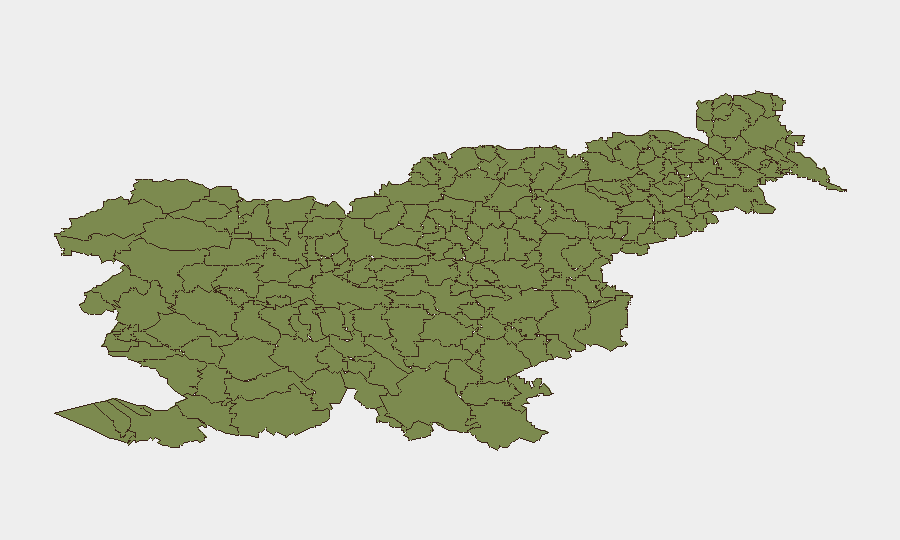
Situation Summary
Slovenia remains a low-threat environment with a composite threat score of 3 globally (rank #178). No confirmed security incidents, civil unrest, crime spikes, or infrastructure failures have been reliably identified in the last 24–48 hours. All twelve sub-national regions tracked maintain zero or near-zero risk ratings. The security posture is stable with no indicators of near-term deterioration.
Key Developments
GeoBit's event signals flagged four items dated 2026-07-12 to 2026-07-13 (NATO–Ankara dynamics, a police-related event, a hospital–citizen matter, and an activist abduction/hijack report); however, live web research has not returned verifiable, location-specific incidents in Slovenia within the last 24–48 hours that corroborate these signals or provide operational detail. No confirmed developments meeting recency, specificity, and multi-source criteria are available for inclusion. Teams operating in-country are advised to monitor local Slovenian-language media, official Policija (Slovenian Police) channels, and Civil Protection advisories for any emerging incidents not yet visible in international feeds.
Highest-Risk Areas
All twelve tracked sub-national regions—spanning the northwest frontier zones (Bovec, Kobarid, Kanal, Kranjska Gora) through the central and border municipalities (Tolmin, Bohinj, Brda, Šempeter-Vrtojba)—maintain zero composite risk scores. The absence of differentiation across regions indicates a uniformly stable security environment with no localized hotspots for conflict, crime, civil unrest, or infrastructure vulnerability. This distribution is consistent with Slovenia's overall low-threat ranking and suggests that duty-of-care protocols for personnel and assets can apply standard baseline safeguards without region-specific escalation.
How GeoBit Would Assist
Teams with ongoing operations in Slovenia can employ AOI (Area-of-Interest) Monitoring & Early Warning to establish persistent watch on key cities (Ljubljana, Maribor, Celje) and border crossings with automated alerting for any spike in unrest, crime, or political instability signals. Multi-language OSINT (X/Twitter, local media, Telegram) combined with sentiment and temporal analysis enables rapid detection of emerging local incidents before they reach English-language international media. Conflict and terrorism search, plus network & actor analysis, can track any transnational activist, extremist, or hybrid-threat activity with cross-border ties to the Balkans or NATO operations that might affect personnel safety or asset security.
7-Day Outlook
No indicators suggest material change in Slovenia's security posture over the next seven days. Monitoring of NATO–Turkey diplomatic dynamics and police operations (flagged in event signals) should continue at routine watch level pending clarification of specific incidents. Standard corporate security and travel-safety protocols remain appropriate; escalation is not warranted at this time.
Brief Date: 2026-07-13
Next Update: 2026-07-14 (routine) or on-event (significant development)
Data Confidence: Low–Medium (limited recent incident corroboration; reliance on event signals pending field confirmation)
Highest-Risk Areas — Ranked
| # | State / Region | Risk |
|---|---|---|
| 1 | Bovec | 0 |
| 2 | Kobarid | 0 |
| 3 | Kanal | 0 |
| 4 | Kranjska Gora | 0 |
| 5 | Gorje | 0 |
| 6 | Tolmin | 0 |
| 7 | Bohinj | 0 |
| 8 | Cerkno | 0 |
| 9 | Brda | 0 |
| 10 | Šempeter-Vrtojba | 0 |
| 11 | Renče-Vogrsko | 0 |
| 12 | Miren-Kostanjevica | 0 |
Sources
Previous Daily Briefs
A new Slovenia brief is written every day — each with its own risk map and downloadable CSV. Here's the last week; use the calendar to go further back.
📅 Browse every day by calendar →
Highlighted days have a brief. Tap a day for that day's map & analysis, or “csv” for that day's dataset ($5).
Atlas — our AI intelligence desk — emails them this snapshot personally. Nothing else, no list.