Situation Summary
South Korea remains at composite threat level 25 globally (rank #null), with 80 tracked events recorded. Current threat posture is characterized by routine diplomatic friction with North Korea and Beijing, domestic administrative actions, and scattered international statements—none indicating imminent systemic instability or widespread civil unrest. The threat environment has not materially escalated in the past 24–48 hours based on available corroborated reporting.
Key Developments
Sourcing constraint: GeoBit's live web research for the past 24–48 hours did not identify South Korea–specific security, civil-unrest, crime, political-instability, infrastructure, or travel incidents that meet dual-source corroboration standards (news + independent outlet, or multiple credible sources with clear time-stamps within the window). Recent signal events flagged in the platform (e.g., DPRK disapproval statements on 2026-06-13, arrest/detention events, presidential disapproval on 2026-06-15) lack granular location data and have not yet been independently cross-confirmed in real-time news feeds or social intelligence.
Recommendation: Security teams should rely on GeoBit's Intel Sweep and global event feeds for trending diplomatic signals and monitor AOI (Area-of-Interest) alerts for Seoul and North Chungcheong (the two highest-risk zones) to catch emerging incidents as they are multi-source corroborated. Do not treat single-source social posts or undated analytical pieces as actionable current developments.
Highest-Risk Areas
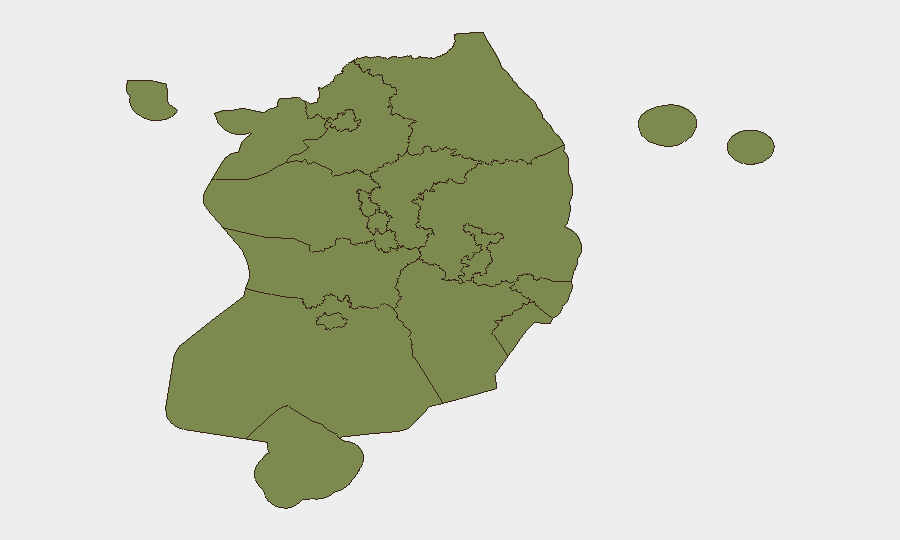
North Chungcheong (31.3) and Seoul (30.9) drive South Korea's aggregate risk, a significant disparity from other regions. North Chungcheong's elevated score likely reflects proximity to the Demilitarized Zone and inter-Korean border dynamics; Seoul's risk reflects its status as the national capital and concentration of government, financial, and diplomatic activity, making it a focal point for both domestic administrative action and international diplomatic tension. Incheon (11.9) ranks third, consistent with its role as a major international gateway and logistics hub. All other regions score below 6, indicating highly localized or low-probability threat drivers in the remainder of the country.
How GeoBit Would Assist
Corporate security teams with personnel or assets in Seoul and North Chungcheong should deploy persistent AOI Monitoring & Early Warning to detect real-time incident escalation before single-source reports surface. Network & Actor Analysis of diplomatic and DPRK-aligned entities, coupled with multi-language OSINT and X/Twitter intelligence, will provide early signals of tension shifts that precede formal statements. Conflict & Military tracking and border & disputed-territory search capabilities enable scenario planning around Korean Peninsula dynamics without waiting for commercial news cycles.
7-Day Outlook
No indicators suggest material escalation over the next seven days. Routine diplomatic posturing and administrative actions will likely continue; North Korea's periodic disapproval statements reflect standing positions rather than imminent capability changes. Security teams should treat the current environment as a steady-state monitoring posture rather than an elevated alert condition, with heightened watch on Seoul and the DMZ corridor for any deviation from normal signaling patterns.
Highest-Risk Areas — Ranked
| # | State / Region | Risk |
|---|---|---|
| 1 | North Chungcheong | 31.3 |
| 2 | Seoul | 30.9 |
| 3 | Incheon | 11.9 |
| 4 | Jeju | 6.6 |
| 5 | Gyeonggi | 5.7 |
| 6 | Busan | 4.4 |
| 7 | Gangwon State | 3.1 |
| 8 | South Chungcheong | 2.7 |
| 9 | South Jeolla | 2.2 |
| 10 | Sejong | 1.3 |
| 11 | Jeonbuk State | 1.3 |
| 12 | Daejeon | 1.3 |
Sources
Previous Daily Briefs
A new South Korea brief is written every day — each with its own risk map and downloadable CSV. Here's the last week; use the calendar to go further back.
📅 Browse every day by calendar →
Highlighted days have a brief. Tap a day for that day's map & analysis, or “csv” for that day's dataset ($5).