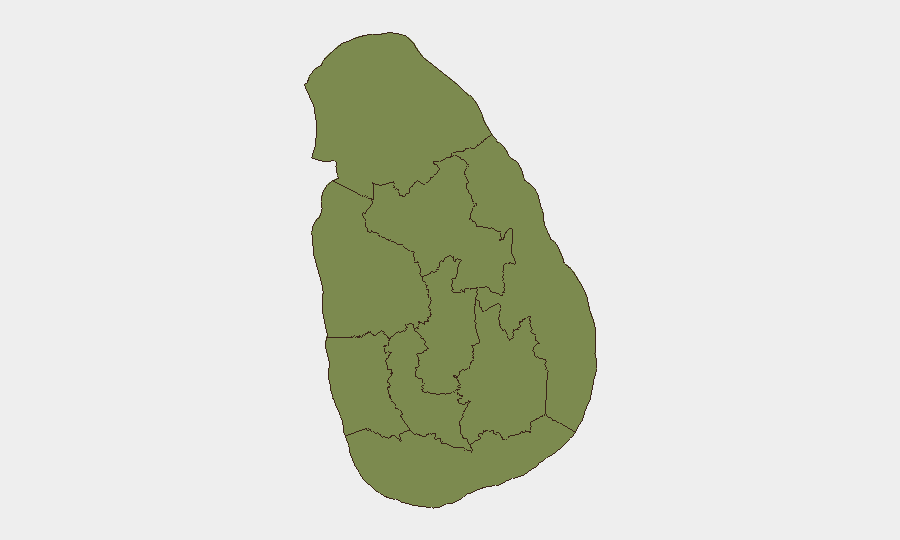
Situation Summary
Sri Lanka remains under elevated composite threat (rank #101 globally; score 18), driven by concurrent political instability, civil unrest, and criminal activity across multiple provinces. A scheduled U.S. Assistant Secretary of State visit (21–24 June) signals diplomatic engagement on security and trade, but underlying tensions persist. Recent event signals (past 72 hours) indicate heightened government communications, arrests, parliamentary activity, and community disapproval, suggesting active political friction. The security environment is volatile but not in acute crisis; duty-of-care teams should maintain heightened awareness in high-risk zones.
Key Developments
- 2026-06-23 · Consulate Relations Reduction – A foreign consulate has reduced relations with Sri Lanka, likely a response to governance or security concerns; no specific location specified in available data.
- 2026-06-23 · Government Public Statement – Government issued statement; context and subject matter not detailed in available signals.
- 2026-06-22 · Criminal Arrests – Criminal arrests reported (specific location and nature not itemized in provided signals).
- 2026-06-22 · Corporate Public Statement – A corporation issued public statement regarding Sri Lanka; subject unclear from signal alone.
- 2026-06-21 · Parliamentary Military Reference – Parliament referenced artillery/tanks activity; likely procedural or policy discussion rather than active military deployment, but context requires clarification.
- 2026-06-21 · Mass Community Disapproval – Community-level disapproval event recorded; scale and location not specified.
- U.S. Diplomatic Visit (21–24 June) – Assistant Secretary of State in Colombo for trade, investment, and security cooperation talks; represents baseline diplomatic engagement, not a crisis signal.
*Note: Available web research for the past 24–48 hours confirms standing travel advisories and the diplomatic visit but does not yield independently verifiable incident-level detail for additional events. GeoBit's event signals (above) are drawn from platform feeds; operational teams should correlate with local intelligence and partner reporting.*
Highest-Risk Areas
Southern Province (34.4) and Central Province (32.8) account for two-thirds of sub-national risk and are the primary focus for duty-of-care. The Southern Province's high score reflects convergence of criminal activity, civil unrest, and inter-communal tensions; the Central Province combines political fragility, transport vulnerability, and geographic centrality to national governance. Western Province (27.5), which includes Colombo and major economic hubs, remains materially at-risk despite being the capital region; consular presence, commercial activity, and diplomatic concentration make it a secondary but significant concern. Northern and Eastern Provinces show minimal comparative risk, suggesting threat concentration in the south-central belt.
How GeoBit Would Assist
AOI Monitoring & Early Warning with persistent watch on Southern and Central Provinces enables real-time alerting on arrest, detention, or protest-scale events before they impact personnel or supply chains. Intel Sweep and OSINT Fusion (X/Twitter, local news, entity extraction, sentiment analysis) provides rapid corroboration of government statements and public sentiment shifts, reducing reliance on delayed official channels. Routing & Network Analysis supports alternative journey planning for personnel transit, bypassing high-risk zones or protest concentrations in real time. Risk & Threat Assessment dashboards track arrest patterns and criminal activity trends to forecast safety windows for non-essential operations.
7-Day Outlook
Political messaging and arrests are likely to persist as Sri Lanka navigates internal governance tensions; the U.S. diplomatic visit may stabilize sentiment temporarily but is unlikely to resolve underlying grievances. Criminal and civil unrest activity in the Southern and Central Provinces should be assumed to continue. No imminent large-scale security breakdown is forecast, but reactive incidents (roadblocks, demonstrations, detentions) remain probable.
Highest-Risk Areas — Ranked
| # | State / Region | Risk |
|---|---|---|
| 1 | Southern Province | 34.4 |
| 2 | Central Province | 32.8 |
| 3 | Western Province | 27.5 |
| 4 | Uva Province | 12.7 |
| 5 | Sabaragamuwa Province | 6.1 |
| 6 | Northern Province | 5.1 |
| 7 | North Central Province | 5.1 |
| 8 | North Western Province | 5 |
| 9 | Eastern Province | 4.4 |
Sources
Previous Daily Briefs
A new Sri Lanka brief is written every day — each with its own risk map and downloadable CSV. Here's the last week; use the calendar to go further back.
📅 Browse every day by calendar →
Highlighted days have a brief. Tap a day for that day's map & analysis, or “csv” for that day's dataset ($5).