Situation Summary
Tajikistan remains stable in the immediate term with no verified security incidents in the past 24–48 hours. The country's composite threat score of 5 reflects chronic underlying vulnerabilities—primarily the high-risk border environment in Gorno-Badakhshan and ongoing tensions in the south—rather than active acute crises. Personnel and assets in the capital and major urban centers face moderate, manageable risk; southern and eastern regions warrant elevated vigilance.
Key Developments
- No verified incidents — Tajikistan (nationwide) — 18–19 Jun 2026 — Web research and open-source monitoring detected no confirmed reports of protest, crime escalation, infrastructure disruption, border clash, or transport disruption in the past 24–48 hours.
- Routine diplomatic engagement — Dushanbe — 18 Jun 2026 — The Tajik Ministry of Foreign Affairs held a scheduled meeting with OSCE representatives; this is protocol-level activity and carries no direct security or travel-risk signal.
- Regional diplomatic messaging — Tajikistan — 18 Jun 2026 — Foreign-policy statements regarding neighboring states are routine; no evidence of escalation or domestic instability linked to these statements.
Highest-Risk Areas
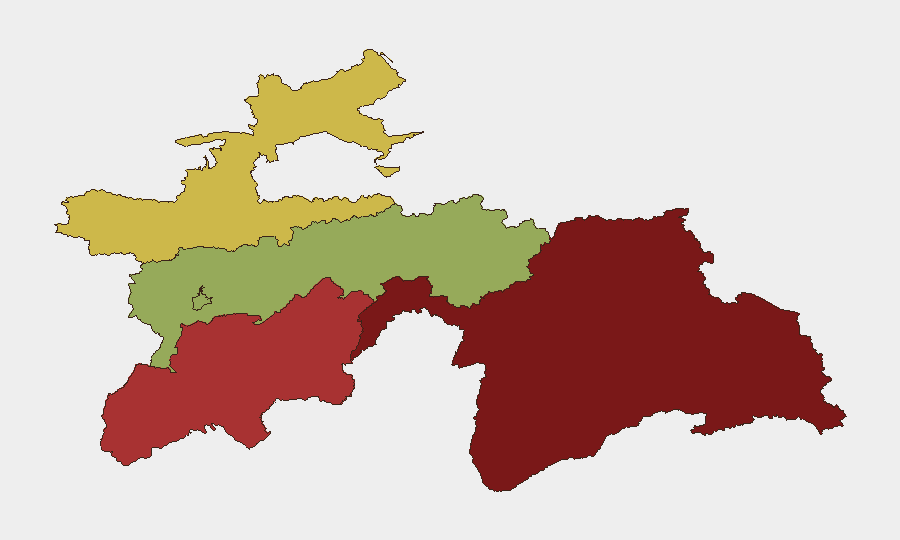
Gorno-Badakhshan Autonomous Region (GBAO; risk 92) remains the most volatile zone, driven by its mountainous terrain, limited state control, and proximity to the Afghan border—a persistent transit corridor for weapons, narcotics, and militant actors. Khatlon Region (risk 78) in the south ranks second, reflecting residual tension from the 2021–2022 border conflict with Kyrgyzstan and fragile ceasefire management. Sughd Region (risk 65) in the north carries moderate exposure tied to border volatility and trafficking networks. Dushanbe (risk 42), the capital, is the safest major location for expatriate and corporate presence, though petty crime and street-level theft remain routine concerns for travelers.
How GeoBit Would Assist
A corporate security team operating in Tajikistan should leverage AOI (Area-of-Interest) Monitoring & Early Warning to establish persistent watch over GBAO and Khatlon, with automated alerting on any protest activity, security-force mobilization, or cross-border incident. Multi-language OSINT and Telegram/X monitoring enable real-time detection of emerging civil unrest, militia chatter, or transport disruptions before they affect operations. Routing & Network Analysis and conflict mapping help identify safe transit corridors and update duty-of-care evacuation or supply-chain protocols as conditions shift.
7-Day Outlook
No acute trigger is evident for deterioration in the near term. Border management between Tajikistan and Kyrgyzstan remains tense but contained; the Afghan border in GBAO continues to pose chronic trafficking and militant risk rather than an immediate military escalation threat. Organizations should maintain standard operational security postures and keep emergency response plans current, particularly for staff in southern and eastern regions.
Highest-Risk Areas — Ranked
| # | State / Region | Risk |
|---|---|---|
| 1 | Gorno-Badakhshan Autonomous Region | 92 |
| 2 | Khatlon Region | 78 |
| 3 | Sughd Region | 65 |
| 4 | Districts of Republican Subordination | 58 |
| 5 | Dushanbe | 42 |
Sources
Previous Daily Briefs
A new Tajikistan brief is written every day — each with its own risk map and downloadable CSV. Here's the last week; use the calendar to go further back.
📅 Browse every day by calendar →
Highlighted days have a brief. Tap a day for that day's map & analysis, or “csv” for that day's dataset ($5).