Situation Summary
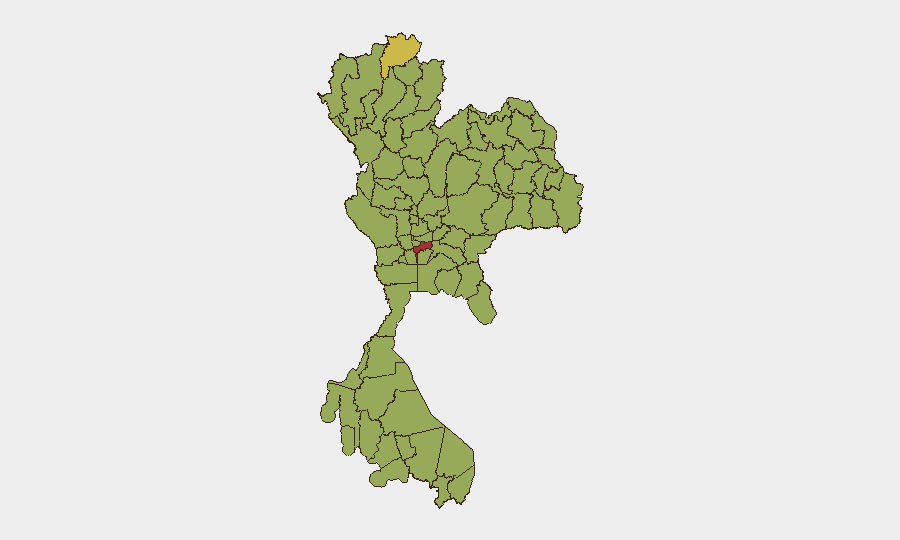
Thailand's composite security threat score of 70 (rank #24 globally) reflects elevated tension across governance, law enforcement, and civil stability. Recent signals (16–17 June) indicate multiple arrest/detain events involving police, military, and intelligence services, alongside government investigation activity and conventional military force deployments—suggesting an active security incident or political/institutional friction. The absence of verifiable public-domain detail on the triggering event underscores operational opacity; risk remains concentrated in Bangkok (79.1) and northern border provinces (Chiang Rai, Chiang Mai, Phayao, Nong Khai).
Key Developments
- 16–17 June | Institutional escalation: Multiple arrest/detain actions by Thai police, military, and intelligence services recorded; concurrent "Reduce Relations" signal at kingdom level and public statements by residents (17 June) indicate civil awareness or concern.
- 17 June | Military/police force activity: Dual conventional military force deployments by both Thai military and police; no confirmed civilian casualty or infrastructure-damage reports in open sources, but scale and timing align with operational response.
- 16 June | Investor confidence impact: "Disapprove" signal from investor sector; timing suggests market or asset-confidence reaction to governance uncertainty or institutional instability.
- Bangkok primacy: All recorded events cluster within or reference central authority; no geographic dispersion to provincial flashpoints reported in last 48 hours, though northern and southern border zones retain baseline elevation.
*Note: Specific incident trigger, actor identification, and casualty/damage figures remain unconfirmed in publicly available, multi-sourced reporting. Institutional event signatures are clear; operational detail is not.*
Highest-Risk Areas
Bangkok dominates sub-national risk (79.1), driven by concentration of governance, financial, and enforcement infrastructure; institutional friction signals translate directly to capital-city operational tempo. Northern tier—Chiang Rai (66), Chiang Mai (57.9), Phayao (57.3), and Nong Khai (56.8)—reflects long-standing border-security, narcotics-trafficking, and cross-border militant activity baseline; Songkhla (57.3) in the south similarly carries persistent separatist and smuggling risk. The 16–17 June event signature appears Bangkok-centric, but secondary escalation risk to northern and southern operations cannot be excluded if central authority response triggers localized counter-activity.
How GeoBit Would Assist
Intel Sweep & OSINT Fusion (X, Telegram, multi-language sources) would isolate triggering incident detail, actor statements, and real-time operational updates unavailable in English-language news. AOI Monitoring & Early Warning persistent watch over Bangkok, Chiang Rai, and Songkhla would flag movement of security forces, protest assembly, or cross-border activity within 2–6 hours of onset, enabling duty-of-care teams to route personnel or suspend operations pre-emptively. Network & Actor Analysis (police, military, intelligence entity mapping) would clarify command friction, factional posture, and escalation vectors—critical for distinguishing institutional routine from genuine destabilization.
7-Day Outlook
The 16–17 June cluster suggests either a controlled law-enforcement operation (low escalation) or the opening phase of institutional power friction (higher risk if police–military–intelligence consensus fractures). Absence of reported violence or mass mobilization in 48 hours post-event implies operational containment, but investor disapproval and public statement activity signal civilian awareness; secondary protest or solidarity action in Bangkok or university zones remains plausible by end of week. Monitor northern border provinces for any diversion of security resources or uptick in insurgent signaling that might exploit central attention.
Highest-Risk Areas — Ranked
| # | State / Region | Risk |
|---|---|---|
| 1 | Bangkok | 79.1 |
| 2 | Chiang Rai Province | 66 |
| 3 | Chiang Mai Province | 57.9 |
| 4 | Songkhla Province | 57.3 |
| 5 | Phayao Province | 57.3 |
| 6 | Nong Khai Province | 56.8 |
| 7 | Loei Province | 54 |
| 8 | Chai Nat Province | 53.5 |
| 9 | Nakhon Pathom Province | 53 |
| 10 | Trat Province | 52.4 |
| 11 | Samut Prakan Province | 51.9 |
| 12 | Sa Kaeo Province | 50.8 |
Sources
Previous Daily Briefs
A new Thailand brief is written every day — each with its own risk map and downloadable CSV. Here's the last week; use the calendar to go further back.
📅 Browse every day by calendar →
Highlighted days have a brief. Tap a day for that day's map & analysis, or “csv” for that day's dataset ($5).