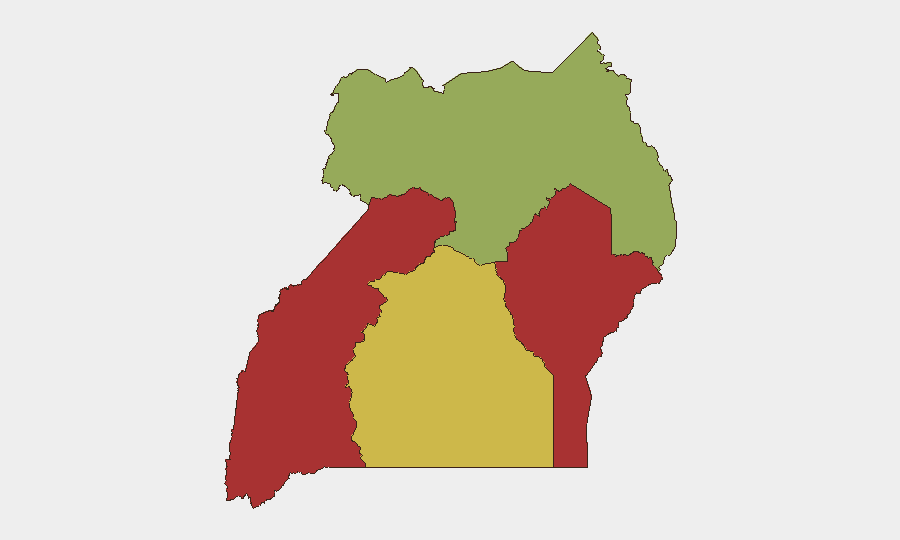
Situation Summary
Uganda remains at composite threat level #23 globally (score 67/100) with 733 tracked security events, driven primarily by political mobilization, cross-border banditry, and ongoing detention of opposition figures. The past 24–48 hours have seen escalating political activism, including Parliament-targeted demonstrations and activist arrests, alongside command-level security threat statements that have raised institutional risk perception. The security environment is characterized by fragmented but persistent threats across regions rather than a single acute crisis; however, the confluence of political tension, detention-driven grievance, and unresolved opposition-figure cases creates elevated volatility over the near term.
Key Developments
- Kampala (near Parliament) — 2026-07-25: Multiple nationwide protest rallies and demonstrations targeting Parliament and government policy were recorded, with associated activist arrests and university public statements indicating sustained political mobilization and detention of activists.
- Nationwide (command-level alert) — 2026-07-25: A senior military or security commander issued a public threat statement warning of unspecified security concerns, recorded as a command-level alert contributing to raised institutional risk perception.
- Arua District, Uganda–South Sudan border — 2026-07-24: Uganda and South Sudan reactivated joint border-security committees at their 6th Joint Border Meeting, aimed at strengthening cross-border security operations and reducing banditry and rebel activity along the northern frontier.
- National political sphere — through 2026-07-25: The unresolved enforced disappearance and continued military detention of opposition figure Muwanga Kivumbi remain a driving factor in opposition mobilization, social-media activity, and sustained risk of further protests and confrontations in political hubs.
- Kampala Metropolitan & Wakiso District — 2026-07-22 (context shaping current conditions): Police conducted intelligence-led operations resulting in arrest of 65 criminal-gang suspects in Kampala hotspots, including panga-robbery operations, indicating active organized-crime pressure in urban centers.
- Northern border areas (within 50 km of South Sudan) — ongoing: Foreign travel advisories maintain "avoid all travel" warnings due to persistent banditry and cross-border rebel activity, sustaining elevated infrastructure and personnel risk in Northern Uganda.
- National health/travel environment — current: International authorities maintain heightened screening and travel advisories for Uganda due to regional Ebola outbreak, combined with existing terrorism and crime risk warnings, affecting corporate movement and third-party transit.
Highest-Risk Areas
Western Uganda (risk 77.2) and Eastern Uganda (risk 76.1) drive the country's overall threat ranking, with both regions exposed to cross-border criminal networks, rebel activity, and community-level conflicts. Northern Uganda (55.5), while lower-ranked, remains elevated due to proximity to South Sudan's instability and ongoing banditry despite recent border-security coordination. Central Region (66.3), including Kampala, is currently amplified by political tension, activist detention, and security-force presence, creating urban-specific risks for corporate staff and operations despite Kampala's relative stability relative to border zones.
How GeoBit Would Assist
A corporate security team would deploy AOI (Area-of-Interest) Monitoring & Early Warning to track ongoing protests, detention activity, and cross-border movement in high-risk zones with automated alerting. Intel Sweep and OSINT fusion capabilities—including X/Twitter sentiment analysis, Telegram monitoring, and multi-language event feeds—would identify emerging opposition grievance, command statements, and underground mobilization before broad escalation. Routing & Network Analysis and GIS mapping would enable real-time alternative-route planning for personnel and supply chains around active protest zones and banditry hotspots, while Conflict & Military tracking would monitor border-committee implementation and potential security-force posture shifts.
7-Day Outlook
Political tensions will likely sustain elevated weekend and early-week protest activity, particularly if Kivumbi's detention remains unresolved or if further activist arrests occur. Border security improvements may reduce acute banditry incidents in the North, but Western and Eastern regional instability is expected to remain structurally high. No major national-level disruption is currently forecast, but localized flash-point risk in Kampala and select border districts will remain elevated through early August.
Highest-Risk Areas — Ranked
| # | State / Region | Risk |
|---|---|---|
| 1 | Western Region | 77.2 |
| 2 | Eastern Region | 76.1 |
| 3 | Central Region | 66.3 |
| 4 | Northern Region | 55.5 |
Sources
Previous Daily Briefs
A new Uganda brief is written every day — each with its own risk map and downloadable CSV. Here's the last week; use the calendar to go further back.
📅 Browse every day by calendar →
Highlighted days have a brief. Tap a day for that day's map & analysis, or “csv” for that day's dataset ($5).
Atlas — our AI intelligence desk — emails them this snapshot personally. Nothing else, no list.