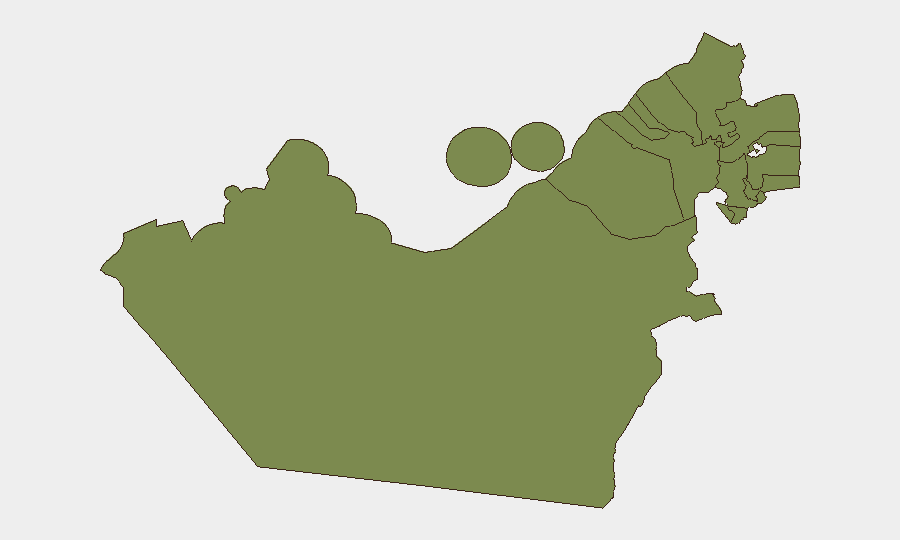
Situation Summary
The United Arab Emirates maintains a stable domestic security environment with no reported internal incidents, civil unrest, or acute threats to persons or assets in the last 24–48 hours. Regional tension with Iran remains elevated following Iran's recent missile and drone attacks on Kuwait (condemned by the UAE on 22 June), but there is no evidence of direct spillover or threat to UAE territory. A high-level US diplomatic visit (23–25 June) will increase security presence in Abu Dhabi and possibly Dubai, causing localized traffic and screening delays but posing no underlying security risk.
Key Developments
- Abu Dhabi (federal level) – 22 June 2026: The UAE Ministry of Foreign Affairs issued a formal statement strongly condemning Iran's recent missile and drone strikes on Kuwait, characterizing them as "terrorist" attacks and reaffirming solidarity with Kuwait. This reflects heightened regional concern over cross-border Iranian military activity in the Gulf, though no direct threat to UAE territory has been reported.
- Abu Dhabi & Dubai – 23–25 June 2026 (announced 22 June): US Secretary of State/National Security Advisor Marco Rubio is scheduled to visit the UAE, Kuwait, and Bahrain to discuss regional security, the Iran nuclear accord, and freedom of navigation in the Strait of Hormuz. Enhanced security protocols, VIP motorcades, and tighter screening at key government and diplomatic facilities should be anticipated, particularly around Abu Dhabi's central government district.
- No credible reports of domestic incidents: Open-source monitoring (news wires, social media, government statements) has detected no protests, demonstrations, violent crime spikes, terrorism-related arrests, aviation or port disruptions, or signs of political instability within UAE territory in the last 24–48 hours.
Highest-Risk Areas
Dubai carries a significantly elevated composite risk score (31.2) compared to all other emirates, driven largely by its high concentration of expatriate population, critical infrastructure, maritime and aviation hubs, and international business activity—factors that historically elevate exposure to terrorism-related intelligence and criminal networks. Abu Dhabi Emirate ranks second (18.3) and includes the federal capital, diplomatic quarter, and major energy infrastructure, elevating its profile in regional geopolitical dynamics. The remaining five emirates (Sharjah, Ajman, Ras al-Khaimah, Fujairah, Umm al-Quwain) carry substantially lower baseline risk (1.2 each), reflecting smaller populations and lower exposure to transnational threat vectors.
How GeoBit Would Assist
Security teams operating in the UAE should deploy AOI Monitoring & Early Warning on key diplomatic and government districts in Abu Dhabi and Dubai to track any unscheduled activity, protests, or security incidents during the Rubio visit window. OSINT fusion & corroboration (multi-language X/Twitter/Telegram, news feeds, and public statements) will provide real-time detection of any emerging civil unrest, regional escalation signals, or transnational threat chatter. Network & Actor Analysis can identify any shifts in Iranian proxy activity or regional militant networks that might signal a change in the threat posture to UAE interests.
7-Day Outlook
Near-term risk remains low to moderate. The US diplomatic visit will create temporary localized security disruptions but no substantive threat escalation. Monitoring for any Iranian response to the UAE's public condemnation of the Kuwait attacks, or any further cross-border military activity in the Gulf, remains the primary forward-looking concern; any such development would likely trigger increased UAE military alertness rather than civilian impact.
Highest-Risk Areas — Ranked
| # | State / Region | Risk |
|---|---|---|
| 1 | Dubai | 31.2 |
| 2 | Abu Dhabi Emirate | 18.3 |
| 3 | Sharjah Emirate | 1.2 |
| 4 | Ajman Emirate | 1.2 |
| 5 | Ras al-Khaimah | 1.2 |
| 6 | Fujairah Emirate | 1.2 |
| 7 | Umm al-Quwain | 1.2 |
Sources
Previous Daily Briefs
A new United Arab Emirates brief is written every day — each with its own risk map and downloadable CSV. Here's the last week; use the calendar to go further back.
📅 Browse every day by calendar →
Highlighted days have a brief. Tap a day for that day's map & analysis, or “csv” for that day's dataset ($5).