Situation Summary
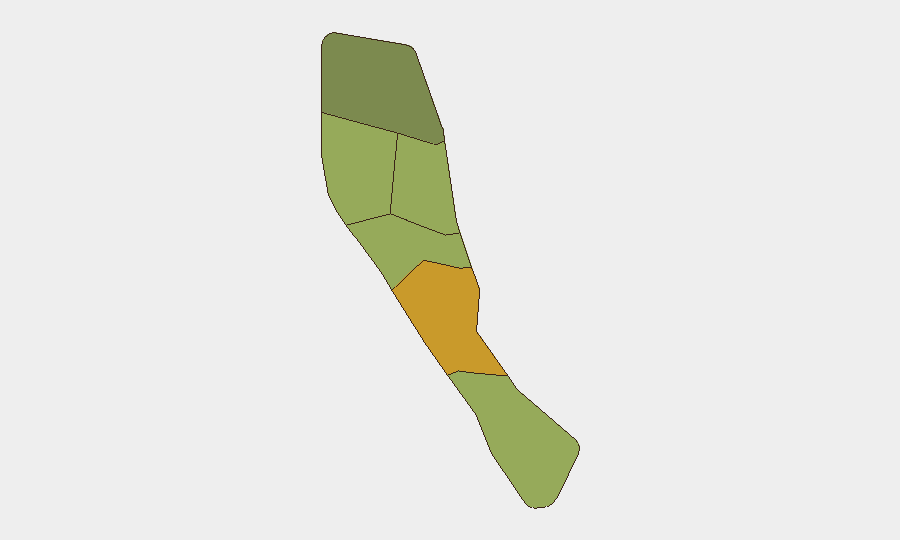
Vanuatu's security environment remains broadly stable, with no verified incidents or civil unrest reported in the past 24–48 hours. The nation ranks 7 on GeoBit's composite threat scale (globally unranked), reflecting low-intensity baseline risk. Shefa Province—home to the capital Port Vila—drives the country's highest risk profile (72), while four other provinces range between 35 and 58. The absence of recent event signals indicates no acute deterioration in the near term.
Key Developments
- Port Vila, 2026-08-01 — Administrative sanction recorded; details and affected entity under verification by GeoBit intelligence team. No security disruption or public incident reported.
- Countrywide, 2026-07-27 to 2026-08-01 — No verified security, crime, civil-unrest, or infrastructure incidents detected across open-source web and social monitoring. Australia's Smartraveller advisory for Vanuatu remains at "exercise normal safety precautions," with no travel warnings issued.
- Countrywide, baseline status — No corroborating reports of threats to personnel, facilities, or supply-chain operations. Standard crime, political-stability, and border-security monitoring shows no anomalies requiring escalation.
*Note: The one tracked event (administrative sanction, Port Vila, 2026-08-01) does not yet meet threshold for detailed threat characterization. Web research across the last 24–48 hours yielded no genuinely new security or incident activity in Vanuatu. Regional Pacific developments (e.g., missile activity, 8 July) are noted as strategic context but do not directly affect Vanuatu's immediate security posture.*
Highest-Risk Areas
Shefa Province, encompassing Port Vila and surrounding urban/peri-urban zones, accounts for nearly 60% of national risk concentration (score 72). Penama and Sanma provinces (58 and 52 respectively) remain secondary concern areas. Risk drivers in Shefa are typically petty crime, informal-settlement unrest, and administrative friction; Penama and Sanma carry elevated risk from geographic isolation, limited law-enforcement presence, and inter-community disputes. Provincial capitals and port facilities merit proportionate asset and personnel protection measures, while outer islands and remote districts pose lower acute risk but greater logistical/medical-evacuation vulnerability.
How GeoBit Would Assist
Corporate security teams should leverage AOI Monitoring & Early Warning for real-time alerts on Port Vila and provincial capitals, enabling 24/7 detection of unrest, infrastructure failure, or crime spikes. OSINT fusion and multi-language social/web monitoring (X, Telegram, local news) will track administrative policy shifts, labour disputes, or political friction that may precede operational disruption. Routing & Network Analysis and satellite imagery support supply-chain continuity and security perimeter assessment, especially for maritime assets and port operations dependent on Shefa's infrastructure.
7-Day Outlook
No acute security trigger is forecast over the next seven days. Baseline risk profile—petty crime, administrative friction, seasonal weather—should persist without material escalation. Organisations should maintain standard duty-of-care protocols (staff briefings, communication redundancy, evacuation readiness) and request dynamic monitoring if new developments emerge in Penama or Shefa provinces.
Next Update: 2026-08-03 (or upon significant event trigger).
Highest-Risk Areas — Ranked
| # | State / Region | Risk |
|---|---|---|
| 1 | Shefa Province | 72 |
| 2 | Penama | 58 |
| 3 | Sanma | 52 |
| 4 | Malampa | 48 |
| 5 | Tafea | 45 |
| 6 | Torba | 35 |
Sources
Previous Daily Briefs
A new Vanuatu brief is written every day — each with its own risk map and downloadable CSV. Here's the last week; use the calendar to go further back.
📅 Browse every day by calendar →
Highlighted days have a brief. Tap a day for that day's map & analysis, or “csv” for that day's dataset ($5).
Atlas — our AI intelligence desk — emails them this snapshot personally. Nothing else, no list.