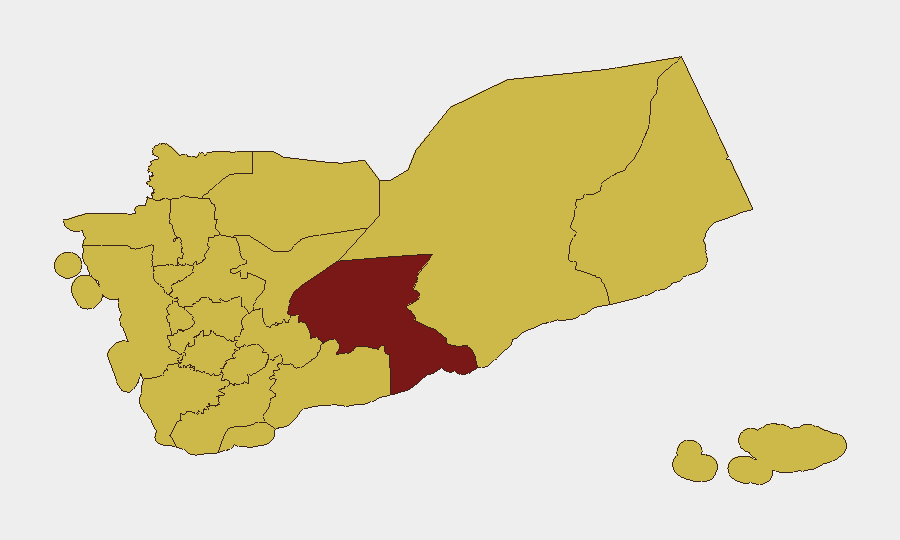
Situation Summary
Yemen remains at composite threat level #12 globally, driven primarily by ongoing civil war and fragmentation across multiple armed actors and de facto authorities. The 2022 truce has held militarily in relative terms, but the underlying political settlement remains stalled and economic conditions are deteriorating rapidly. Two recent diplomatic signals—Iranian threats (2026-06-18) and Yemeni rejections of Iranian overtures (2026-06-20, twice)—suggest renewed tension in external state involvement, though the immediate risk of major military escalation remains contained. Humanitarian conditions and critical service failures (electricity, fuel, currency stability) are now the primary drivers of instability and public unrest.
Key Developments
- Diplomatic signal – Iran–Yemen tensions (2026-06-18 to 2026-06-20): Iran reportedly threatened Yemen; Yemen rejected Iranian overtures on two separate occasions within 48 hours, signaling either resistance to deeper Iranian involvement or rejection of a specific proposal. Operational context remains unclear from open sources.
- Regional fallout (2026-06-20): Lebanese actors reduced relations with Yemen, possibly reflecting broader regional positioning or response to Yemen's Iranian stance. Significance for on-ground security in Yemen is indirect but reflects diplomatic fragmentation.
- Humanitarian and service collapse (ongoing, not strictly last 48h but acute): UN briefings this week confirm worsening electricity shortages, fuel scarcity, and currency instability. Recent reports of protests over power cuts in Aden and other governorates reflect public anger over service failures rather than organized political opposition, but create environment for unrest.
- Detention of UN and NGO personnel (ongoing, no new releases reported): 73 UN national staff and international personnel remain arbitrarily detained in Houthi-controlled areas with no recent movement toward release.
Note: Open-source reporting does not provide specific, time-stamped incidents (attacks, clashes, accidents, displacement) clearly dated to 2026-06-20 or 2026-06-21. Situation monitoring indicates relative military calm but deteriorating civilian conditions. Closed-source security feeds would provide more granular incident-level detail.
Highest-Risk Areas
Amanat Al Asimah (Sana'a capital district) and Shabwah Governorate jointly carry the highest composite risk scores (92.3), driven by ongoing Houthi control and shadow governance in the capital, and by resource competition, tribal fragmentation, and ISIS/AQAP presence in Shabwah's ungoverned spaces respectively. The eleven governorates ranked 3–12 (Sa'dah through Ibb) all register 62.3, reflecting sustained civil-war dynamics: mixed governance, checkpoints, informal taxation, and limited state capacity. Northern governorates (Sa'dah, Hajjah, 'Amran, Sana'a) remain under Houthi influence; southern and central zones fragment between STC, Islah, and military factions. Shabwah's elevated risk reflects dual threats: state fragmentation and persistent militant activity (ISIS-Y, AQAP).
How GeoBit Would Assist
A corporate security team operating in Yemen should deploy AOI Monitoring & Early Warning on high-risk governorates and specific facilities to detect real-time unrest, roadblock changes, or militant activity before it affects personnel. Conflict & Military mapping and force-structure analysis clarifies which armed actor controls each zone and how alliances are shifting (relevant to June diplomatic signals). Routing & Network Analysis provides alternative routes and journey-risk assessment around protests and checkpoints, especially critical given summer unrest over electricity. Real-time Intel Sweep and X/Telegram OSINT complement these—capturing local-language rumors, checkpoint movements, and early anger over services before incidents escalate.
7-Day Outlook
Military pressure is likely to remain contained, but service failures and currency instability will continue to fuel localized protests and friction at checkpoints. The Iran–Yemen diplomatic exchange suggests possible repositioning by external actors; watch for shifts in weapons supply, rhetoric, or proxy activity in the next 7–14 days. Risk to international and corporate personnel remains elevated in Amanat Al Asimah and Shabwah; operational security and movement discipline should remain at current alert levels.
Highest-Risk Areas — Ranked
| # | State / Region | Risk |
|---|---|---|
| 1 | Amanat Al Asimah | 92.3 |
| 2 | Shabwah Governorate | 92.3 |
| 3 | Sa'dah Governorate | 62.3 |
| 4 | Hajjah Governorate | 62.3 |
| 5 | Al Mahwit Governorate | 62.3 |
| 6 | Al Hudaydah Governorate | 62.3 |
| 7 | 'Amran Governorate | 62.3 |
| 8 | Sana'a Governorate | 62.3 |
| 9 | Raymah Governorate | 62.3 |
| 10 | Dhamar Governorate | 62.3 |
| 11 | Ibb Governorate | 62.3 |
| 12 | Ta'izz Governorate | 62.3 |
Sources
Previous Daily Briefs
A new Yemen brief is written every day — each with its own risk map and downloadable CSV. Here's the last week; use the calendar to go further back.
📅 Browse every day by calendar →
Highlighted days have a brief. Tap a day for that day's map & analysis, or “csv” for that day's dataset ($5).