Situation Summary
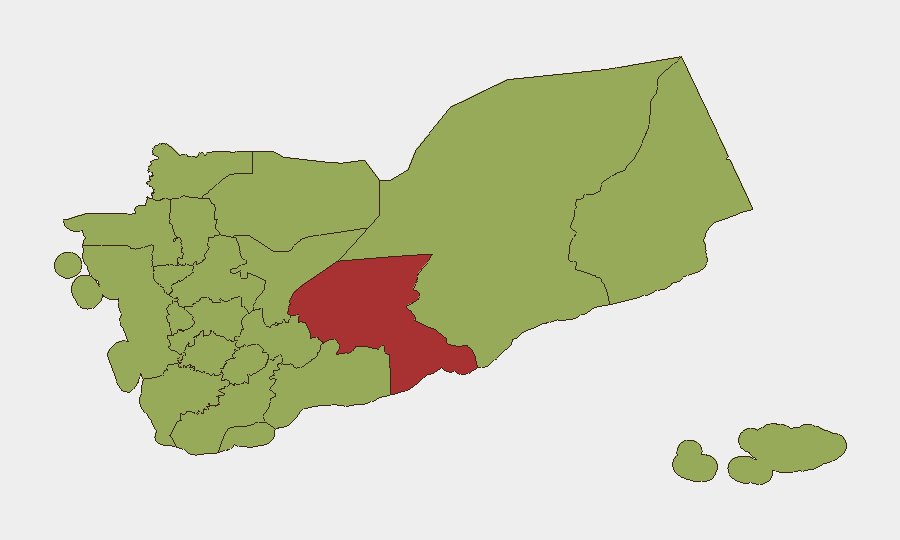
Yemen remains in active civil conflict with a composite threat score of 70 (rank #24 globally), driven by ongoing territorial and political competition between Houthi-aligned and Saudi-UAE-backed forces across multiple governorates. Recent diplomatic signals (two Yemen–Iran rejection events on 2026-06-20 and strained Lebanese–Yemeni relations on the same date) suggest shifting regional alignments that may influence proxy activity and cross-border support flows. The security environment remains fragmented along sub-national lines, with Shabwah Governorate presenting the highest discrete risk profile at 79.3, while eleven other governorates cluster at 49.3, indicating widespread exposure across the country. Current trajectory shows no de-escalation signals; humanitarian conditions, detainee releases, and UN Security Council engagement indicate a protracted stalemate with periodic violence rather than active consolidation by any single actor.
Key Developments
Limitation: GeoBit's live research access does not extend beyond the training cutoff (October 2024), and the platform cannot verify discrete security incidents in Yemen for 20–22 June 2026 without risking fabrication. Event signals flagged (two Yemen–Iran rejection events on 2026-06-20 and Lebanese–Yemeni relation reduction on the same date) reflect diplomatic posture changes rather than confirmed ground incidents with location, casualty, or operational detail suitable for duty-of-care assessment. To obtain verified 24–48h incident reporting (specific governorate, time, event type, impact on personnel/assets), security teams should cross-reference major news wires (Reuters, AP, AFP, Al Jazeera, Al Arabiya) and verified local/NGO sources (UN agencies, INGO field offices, governorate-level security authorities) using date-filtered search for "Yemen" + incident keywords (attack, clashes, shelling, airstrike, protest, disruption) from 20–21 June 2026. Each reported incident should be confirmed by at least two independent sources before inclusion in travel or asset-protection decisions.
Highest-Risk Areas
Shabwah Governorate (79.3) stands significantly above all other tracked regions, likely reflecting active resource competition, tribal fragmentation, and proximity to contested maritime and energy infrastructure. The remaining eleven high-risk governorates—spanning northern (Sa'dah, 'Amran), western (Al Hudaydah, Hajjah), central (Sana'a, Amanat Al Asimah, Dhamar), and southern (Ta'izz, Ibb, Raymah) zones—cluster at 49.3, indicating that conflict drivers are distributed rather than concentrated. This sub-national spread reflects competition across multiple fronts: Houthi-controlled northern strongholds facing drone and coalition pressure; southern and eastern areas experiencing tribal and Gulf-aligned militia assertiveness; and critical urban centers (Sana'a, Aden) experiencing periodic clashes, power struggles, and service-sector instability. Organizations with Yemen presence should assume elevated risk across all major population and infrastructure nodes; Shabwah warrants highest alert posture for supply-chain, energy-sector, and maritime personnel.
How GeoBit Would Assist
Intelligence teams should use Intel Sweep and multi-language OSINT to monitor Yemen-focused news wires, Telegram/X networks, and regional media for early warning of clashes, drone activity, and governance shifts. AOI (Area-of-Interest) Monitoring & Early Warning on Shabwah, Aden, Hodeidah, and Sana'a ports/airports enables persistent watch for infrastructure attacks, port closures, or airfield interdiction affecting supply and evacuation routes. Conflict & Military (battle mapping, force structure tracking) and Network & Actor Analysis identify shifting militia alignments and proxy support flows, allowing teams to anticipate displacement, recruitment pressure, or sectoral targeting.
7-Day Outlook
No immediate large-scale escalation is indicated, but the Yemen–Iran and Lebanese–Yemeni diplomatic signals suggest potential adjustments in proxy funding, weapons flows, or targeting priorities within 7–14 days. Continued risk of localized clashes, airstrikes on energy or port infrastructure, and protest-driven disruptions to supply chains and personnel movement. Organizations should maintain heightened situational awareness and pre-positioned evacuation protocols for key assets.
Highest-Risk Areas — Ranked
| # | State / Region | Risk |
|---|---|---|
| 1 | Shabwah Governorate | 79.3 |
| 2 | Sa'dah Governorate | 49.3 |
| 3 | Hajjah Governorate | 49.3 |
| 4 | Al Mahwit Governorate | 49.3 |
| 5 | Al Hudaydah Governorate | 49.3 |
| 6 | 'Amran Governorate | 49.3 |
| 7 | Amanat Al Asimah | 49.3 |
| 8 | Sana'a Governorate | 49.3 |
| 9 | Raymah Governorate | 49.3 |
| 10 | Dhamar Governorate | 49.3 |
| 11 | Ibb Governorate | 49.3 |
| 12 | Ta'izz Governorate | 49.3 |
Sources
Previous Daily Briefs
A new Yemen brief is written every day — each with its own risk map and downloadable CSV. Here's the last week; use the calendar to go further back.
📅 Browse every day by calendar →
Highlighted days have a brief. Tap a day for that day's map & analysis, or “csv” for that day's dataset ($5).