Situation Summary
Chile remains a relatively low-threat environment globally (rank #108, composite score 9), with no independently corroborated, time-stamped security incidents, civil unrest, or infrastructure disruptions documented in open sources for the 24–48 hours preceding this brief. Recent event signals indicate labor disputes, government policy statements, and military activity, but without confirmed operational incidents or casualty reports in the immediate reporting window. The security posture is stable, though regional disparities in risk—particularly in the Coquimbo Region—warrant continued monitoring.
Key Developments
Open-web and social-media research does not surface any clearly documented, Chile-specific security, crime, or civil-unrest incidents with confirmed dates and locations in the last 24–48 hours that meet operational reporting thresholds. Recent event signals (2026-07-03 to 2026-07-05) include labor-related public statements, government demands, and military force activity, but lack specific incident details, casualty reports, or geolocated confirmation. Historical context includes sentencing of former secret police agents (2026-06-29) for 1976–era human-rights crimes and reports of solar-farm thefts by criminal groups in early 2026, but neither constitutes imminent operational risk to corporate assets or personnel.
Highest-Risk Areas
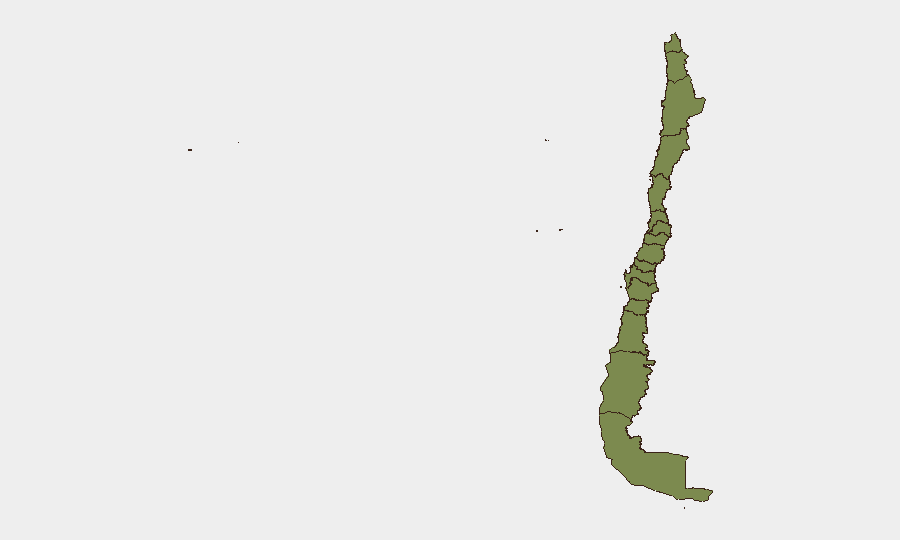
Coquimbo Region dominates Chile's sub-national risk profile (score 31.4), more than double that of Santiago Metropolitan Region (15.9), reflecting concentrated vulnerability to criminal activity, civil disorder, or infrastructure disruption in this northern zone. Santiago, as the capital and economic hub, carries elevated risk (15.9) commensurate with its population and asset concentration; Aysen del General Carlos Ibanez del Campo Region (4.5) and Valparaiso (3.5) show secondary elevation. All other regions score below 2.5, indicating risk is heavily concentrated in Coquimbo and Santiago; security operations should prioritize monitoring and contingency planning in these two zones.
How GeoBit Would Assist
Security and duty-of-care teams with personnel or assets in Chile would leverage GeoBit's AOI Monitoring & Early Warning capability to establish persistent, alert-enabled watches over Coquimbo and Santiago, capturing emerging labor unrest, civil disorder, or criminal activity in real time. Intel Sweep and multi-language OSINT fusion (local media, X/Twitter, Telegram, radio SIGINT) would provide granular, time-stamped incident confirmation and network analysis of labor actors and security threats. GIS & Spatial Analysis and Routing & Network Analysis would enable risk-aware travel planning and asset-protection protocols, especially for the Coquimbo region.
7-Day Outlook
No acute escalation indicators are evident in the current reporting window; labor and government activity will likely continue at baseline levels. Continued monitoring of Coquimbo and Santiago for labor disputes or criminal incidents is warranted, particularly given the elevated regional scores. A shift in event frequency, geographic concentration, or actor rhetoric would trigger elevated alert status.
Next Update: 2026-07-06
Data Sources: GeoBit event feeds, open-web research, OSINT fusion
Confidence Level: Medium (limited real-time incident corroboration in current reporting window)
Highest-Risk Areas — Ranked
| # | State / Region | Risk |
|---|---|---|
| 1 | Coquimbo Region | 31.4 |
| 2 | Santiago Metropolitan Region | 15.9 |
| 3 | Aysen del General Carlos Ibanez del Campo Region | 4.5 |
| 4 | Valparaiso Region | 3.5 |
| 5 | Magallanes and Chilean Antarctica Region | 2.4 |
| 6 | Antofagasta Region | 1.4 |
| 7 | Atacama Region | 1.4 |
| 8 | Los Lagos Region | 1.4 |
| 9 | O'Higgins Region | 1.4 |
| 10 | Maule Region | 1.4 |
| 11 | Nuble Region | 1.4 |
| 12 | Biobio Region | 1.4 |
Sources
Previous Daily Briefs
A new Chile brief is written every day — each with its own risk map and downloadable CSV. Here's the last week; use the calendar to go further back.
📅 Browse every day by calendar →
Highlighted days have a brief. Tap a day for that day's map & analysis, or “csv” for that day's dataset ($5).
Atlas — our AI intelligence desk — emails them this snapshot personally. Nothing else, no list.