Situation Summary
Chile remains a low-to-moderate threat environment (global rank #131, composite score 6.0) with no large-scale civil unrest or armed conflict. However, police-targeted violence and organized crime activity have elevated national concern as of mid-July 2026. Two separate shooting incidents on July 15 targeting Carabineros in Santiago and Los Ríos regions prompted immediate response from senior leadership, including the Interior Minister and Carabineros Director General, signaling institutional prioritization of officer safety and security coordination at the national level.
Key Developments
- Lo Espejo, Santiago Metropolitan Region (July 15, morning) – A man aged 20–25 fired multiple shots at two Carabineros during a preventive police check at the Cooperación–Lo Ovalle intersection, wounding both officers. The attacker fled on foot and was captured on security cameras; police launched a large ground and air operation. Officers remained in stable condition.
- Lo Espejo suspect identification (July 15) – Carabineros identified the presumed gunman as approximately 20 years old with a significant criminal record including prior homicide, drug trafficking, and illegal weapons charges. The suspect remained at large, prompting intensified search efforts.
- Valdivia, Los Ríos Region (July 15) – Two Carabineros were shot and seriously wounded during a police procedure in connection with the case of cabo segundo Eugenio Naín. The incident drew immediate condemnation from President José Antonio Kast on social media.
- Interior Minister operational response (July 15) – Following the Valdivia attack, Interior Minister Martín Arrau suspended a planned security agenda in northern Chile (Calama, Colchane) and returned from Antofagasta to coordinate central contingency actions.
- Carabineros leadership mobilization (July 15) – General Director Marcelo Araya suspended Los Ríos Region activities and traveled to Santiago to oversee the operational response and monitor wounded officers' condition.
Note: Open-source and social-media verification for July 17–18 remains limited; the above incidents are the most recent multi-source confirmed events within the 48-hour window.
Highest-Risk Areas
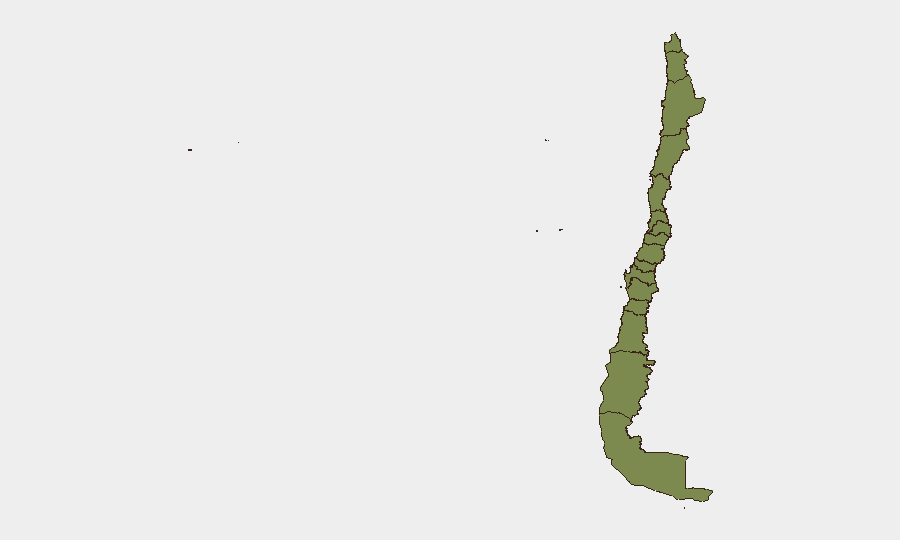
Coquimbo Region (risk score 31.8) significantly outpaces all other areas and drives national threat assessment, reflecting sustained organized-crime activity, violent robbery networks, and institutional tension. Santiago Metropolitan Region (18.1) follows as the second-highest-risk zone, with recent police-targeted shootings and street-crime concentration in peripheral districts such as Lo Espejo. Biobio Region (10.5) rounds the top three, driven primarily by criminal networks and localized gang activity. Combined, these three regions account for the majority of GeoBit's tracked security events in Chile; lower-risk regions (O'Higgins, Antofagasta, Araucania, Tarapacá, and southern areas) show minimal organized threat signals.
How GeoBit Would Assist
Corporate security teams should deploy Area-of-Interest (AOI) Monitoring & Early Warning with persistent watch on Coquimbo, Santiago, and Biobio regions to detect emerging criminal activity, police operations, or civil unrest in real time. Network & Actor Analysis and Intel Sweep (X/Twitter OSINT, multi-language web search, entity extraction) enable continuous tracking of organized-crime leadership, gang territorial disputes, and police-response patterns. Routing & Network Analysis supports duty-of-care teams in identifying safer employee commute and asset-transport routes around high-risk zones, particularly in Santiago peripheral areas.
7-Day Outlook
Police-targeted violence and criminal activity are expected to remain localized but elevated through late July, with Carabineros and Interior Ministry intensifying security operations in Santiago and northern regions. No imminent large-scale civil unrest or institutional breakdown is forecast; risk trajectory depends on the speed of suspect apprehension in Lo Espejo and ongoing investigation outcomes in Los Ríos. International travelers and corporate operations should maintain standard street-crime precautions in Santiago, Valparaíso, and Coquimbo.
Highest-Risk Areas — Ranked
| # | State / Region | Risk |
|---|---|---|
| 1 | Coquimbo Region | 31.8 |
| 2 | Santiago Metropolitan Region | 18.1 |
| 3 | Biobio Region | 10.5 |
| 4 | O'Higgins Region | 2.8 |
| 5 | Antofagasta Region | 2.3 |
| 6 | Araucania Region | 2.3 |
| 7 | Tarapacа Region | 2.3 |
| 8 | Valparaiso Region | 1.8 |
| 9 | Atacama Region | 1.8 |
| 10 | Aysen del General Carlos Ibanez del Campo Region | 1.8 |
| 11 | Los Lagos Region | 1.8 |
| 12 | Magallanes and Chilean Antarctica Region | 1.8 |
Sources
Previous Daily Briefs
A new Chile brief is written every day — each with its own risk map and downloadable CSV. Here's the last week; use the calendar to go further back.
📅 Browse every day by calendar →
Highlighted days have a brief. Tap a day for that day's map & analysis, or “csv” for that day's dataset ($5).
Atlas — our AI intelligence desk — emails them this snapshot personally. Nothing else, no list.