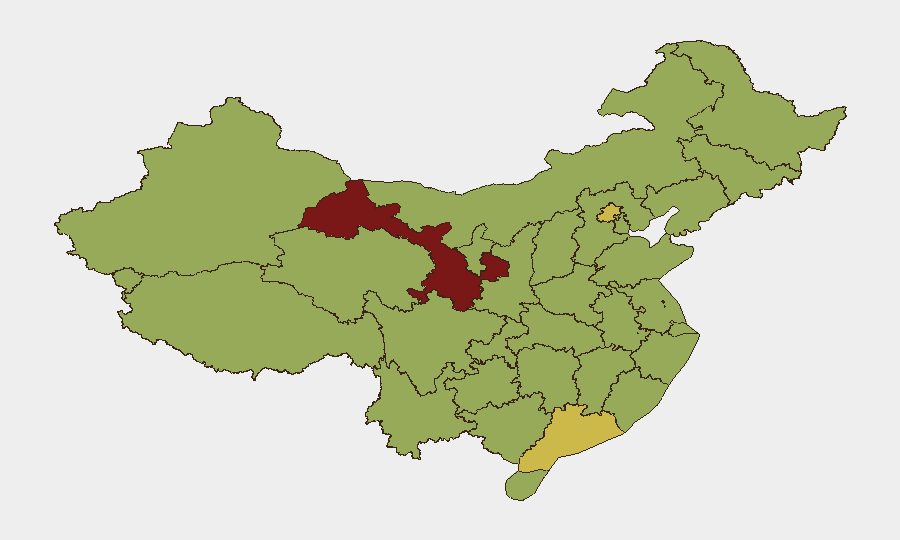
Situation Summary
China remains classified at moderate composite threat level (rank #18 globally, score 78) with a stable physical-security environment but elevated administrative enforcement posture. Recent activity reflects intensified regulatory and compliance operations rather than widespread unrest or kinetic incidents. Open-source reporting from the last 24–48 hours shows no major violent events, infrastructure disruptions, or organized protests, though targeted enforcement actions and device-based screening are ongoing in major urban centers.
Key Developments
- Shanghai public transit enforcement (2026-06-16, ongoing). Municipal authorities have conducted spot checks on mobile devices aboard public transit systems, screening for VPNs, foreign social media applications, and cryptocurrency tools. Concurrent regulatory actions have targeted domestic firms including Trip.com for alleged data-security and cross-border data-transfer compliance failures. *Relevance:* Direct operational and privacy risk to expatriates and business travelers using transit or cross-border digital services.
- Nationwide administrative tightening (reported through 2026-06-17, ongoing). Security briefings document elevated checkpoint and movement-control postures across major economic and coastal hubs, with targeted detentions and regulatory operations replacing large-scale street unrest. No corroborated violent incidents or infrastructure attacks are evident in the last 48 hours.
- International diplomatic signals (2026-06-17). Presidential and official disapprovals directed at China, alongside a threat communication from Myanmar, indicate elevated external scrutiny. Domestic media and academic pushback against government positions have been recorded, though without evidence of organized mobilization at scale.
- Investigative and arrest activity (2026-06-16). Chinese authorities conducted multiple arrest/detention operations and formal investigations, consistent with ongoing compliance and security operations rather than reactive crisis response.
- Foreign media access challenge (2026-06-16). Reuters rejection signals continued friction over press freedom and information access in mainland China.
Highest-Risk Areas
Gansu (84.6) stands significantly above all other regions and warrants priority monitoring; Beijing (64.1) and Guangdong (60.1) follow as major economic and administrative centers with persistent elevated risk. The clustering of moderate-to-high risk across coastal and eastern provinces (Shanghai, Zhejiang, Fujian, Jiangsu) reflects sensitivity around cross-border finance, data flows, and international commercial activity. Yunnan and Tibet, despite lower absolute scores, retain strategic importance due to border exposure and political sensitivity. Risk drivers appear linked to regulatory enforcement, digital-compliance campaigns, and administrative scrutiny rather than uncontrolled civil unrest.
How GeoBit Would Assist
Security teams would deploy AOI Monitoring & Early Warning to establish persistent watch on high-risk regions (especially Gansu, Beijing, Guangdong) and alert on emerging protests, transport disruptions, or enforcement escalations. OSINT fusion (X/Twitter, Telegram, local media, cross-language search) combined with sentiment & temporal analysis would enable real-time tracking of regulatory trends, device-check campaigns, and compliance announcements affecting travelers and expatriate operations. Routing & Network Analysis would support alternative transit and movement planning for personnel transiting Shanghai and other enforcement hotspots.
7-Day Outlook
Administrative enforcement and compliance operations are expected to remain elevated through the near term, with particular focus on data-security, cross-border technology use, and public-transit screening in major cities. No imminent large-scale unrest or violent escalation is forecast based on current signal patterns. Organizations should maintain heightened awareness of regulatory announcements and device/communication scrutiny in Tier-1 cities, especially Shanghai and Beijing.
Highest-Risk Areas — Ranked
| # | State / Region | Risk |
|---|---|---|
| 1 | Gansu | 84.6 |
| 2 | Beijing | 64.1 |
| 3 | Guangdong Province | 60.1 |
| 4 | Shanghai | 57.8 |
| 5 | Yunnan | 56.5 |
| 6 | Tibet | 56.1 |
| 7 | Ningxia | 55.8 |
| 8 | Zhejiang | 55.5 |
| 9 | Fujian | 55.4 |
| 10 | Jiangsu | 55.2 |
| 11 | Jiangxi | 55.2 |
| 12 | Hubei | 55.1 |
Sources
Previous Daily Briefs
A new China brief is written every day — each with its own risk map and downloadable CSV. Here's the last week; use the calendar to go further back.
📅 Browse every day by calendar →
Highlighted days have a brief. Tap a day for that day's map & analysis, or “csv” for that day's dataset ($5).