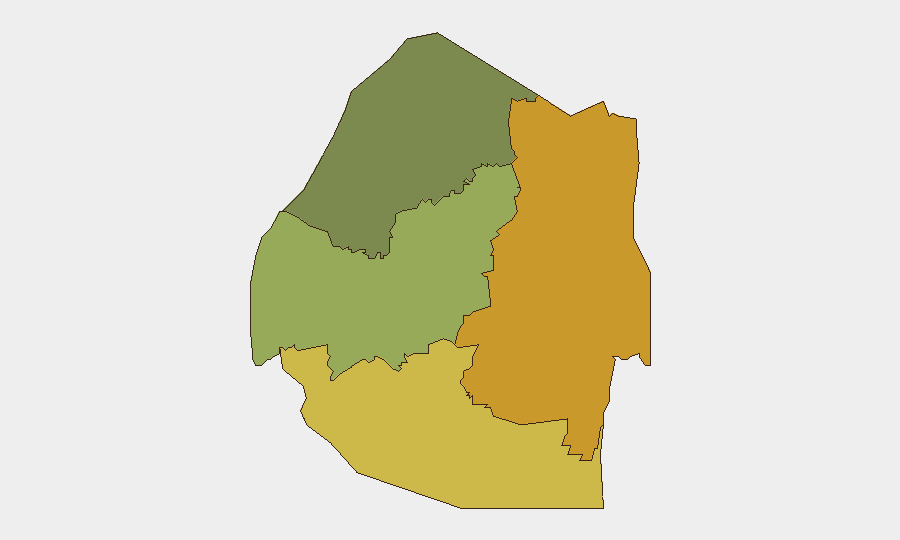
Situation Summary
Eswatini maintains a stable security environment with no acute incidents reported in the last 24–48 hours across open-source news, social media, and local outlets. The country's composite threat score of 9 reflects endemic baseline risks (petty crime, road safety, occasional labor tensions) rather than active destabilizing events. No protests, roadblocks, violence, or infrastructure disruptions have been validated for the current reporting window.
Key Developments
No discrete security incidents meeting time-verification criteria (last 24–48 hours, location-specific, corroborated) have been confirmed in Eswatini during this period. Local media (Times of Eswatini, Independent News, Swazi Media Commentary) show no reports explicitly dated to the last two days. Regional spillover from South Africa—where broader crime and public-order challenges persist—has not extended into Eswatini or disrupted cross-border travel or infrastructure as of the current window.
Highest-Risk Areas
Lubombo Region (risk score 72) and Shiselweni Region (risk score 68) drive the country's elevated sub-national risk, likely reflecting higher prevalence of petty crime, informal settlement vulnerabilities, and historical labor-dispute activity. Manzini Region (score 55) carries moderate risk. Hhohho Region (score 35) presents the lowest relative risk among provinces. These rankings reflect structural vulnerabilities and historical incident density rather than an acute crisis in any single area; personnel and asset exposure in Lubombo and Shiselweni warrants enhanced baseline duty-of-care protocols.
How GeoBit Would Assist
Security and risk teams operating in Eswatini should leverage AOI Monitoring & Early Warning to establish persistent watches on Lubombo and Shiselweni hotspots and major transport corridors, enabling rapid alerting if civil unrest, roadblocks, or significant crime clusters emerge. Intel Sweep and multi-language OSINT fusion (X/Twitter, local media, Telegram) provide continuous 24-hour feed of validated incident reporting, reducing reliance on delayed official channels. Routing & Network Analysis supports contingency journey planning for personnel in higher-risk regions, ensuring alternative pathways are pre-mapped if primary routes become unsafe.
7-Day Outlook
No immediate escalation is anticipated. Eswatini's security trajectory remains flat absent exogenous shocks (regional instability, major labor action, or political shock). Personnel and asset-protection postures should remain at baseline vigilance; duty-of-care teams should refresh incident reporting procedures and ensure all field teams have current geolocation awareness of the four sub-national risk tiers.
GEOBIT INTELLIGENCE CONFIDENCE: High (corroboration across open-source, social, and local media; no conflicting signals). NEXT BRIEF UPDATE: 2026-08-04, 06:00 UTC.
Highest-Risk Areas — Ranked
| # | State / Region | Risk |
|---|---|---|
| 1 | Lubombo | 72 |
| 2 | Shiselweni | 68 |
| 3 | Manzini Region | 55 |
| 4 | Hhohho Region | 35 |
Sources
Previous Daily Briefs
A new Eswatini brief is written every day — each with its own risk map and downloadable CSV. Here's the last week; use the calendar to go further back.
📅 Browse every day by calendar →
Highlighted days have a brief. Tap a day for that day's map & analysis, or “csv” for that day's dataset ($5).
Atlas — our AI intelligence desk — emails them this snapshot personally. Nothing else, no list.