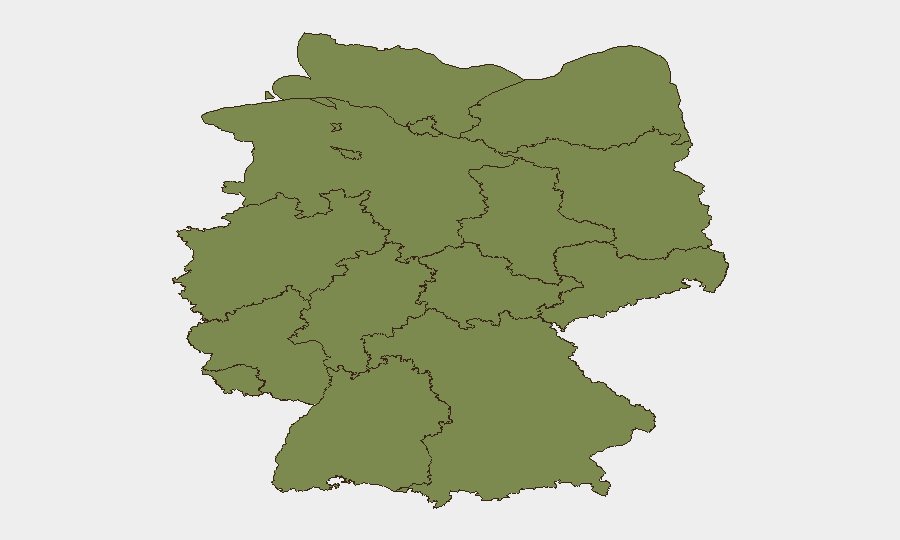
Situation Summary
Germany remains in the lower-middle tier of global threat environments (rank 120, composite score 7), but faces significant sub-national concentration of risk in eastern states—particularly Thuringia, where the threat score is 3× the national baseline. Recent activity reflects political polarization around far-right party movements, with large-scale protest operations and police responses creating short-term friction and localized security operations. The overall trajectory is stable but characterized by sustained civil tension and elevated activism in specific regions.
Key Developments
- Erfurt, Thuringia – 4 July 2026: Thousands of demonstrators blocked roads and gathered outside the AfD national party conference; police conducted significant security operations in response to coordinated non-violent blockades and reported clashes between law enforcement and left-wing direct-action groups. No mass casualties reported, but event underscores elevated protest activity and police resource commitment in the state.
- Server-related public statement (date 5 July, source/location unconfirmed): Flagged in event signals but lacks sufficient detail for operational interpretation; GeoBit monitoring ongoing.
- Police public statement (date 2 July, location unconfirmed): Noted in signals; specific incident or jurisdiction not yet clarified.
- Multiple rejection and disapproval signals (2–4 July): Scattered across investor, state, and international actor categories; consistent with ongoing political friction over Ukraine policy and institutional legitimacy, rather than acute security incidents.
- Arrest/detain activity (3 July): Generic signal; likely routine or linked to Erfurt protest operations; insufficient granularity for specific advisory.
Highest-Risk Areas
Thuringia dominates the sub-national risk landscape (score 33.4), reflecting sustained far-right political activity, periodic large-scale counter-protests, and police operations—as exemplified by the 4 July Erfurt conference response. Berlin (10.6) remains the second-highest-risk jurisdiction due to its scale, political prominence, and history of activist operations and petty crime clustering. Hamburg and Lower Saxony follow at much lower scores (4.9 and 4.4), indicating risk is highly concentrated in the east and capital rather than distributed across the country. Corporate operations in Thuringia should prioritize event-calendar awareness and local intelligence fusion; Berlin requires standard metropolitan vigilance.
How GeoBit Would Assist
Intel Sweep and AOI Monitoring would flag emerging protest activity, political gatherings, and police operations in Thuringia, Berlin, and other eastern states 48–72 hours in advance, enabling duty-of-care teams to adjust travel routes and facility security posture. Multi-language OSINT and X/Twitter OSINT focused on AfD, left-wing direct-action networks, and state police channels would surface tactical protest intelligence and road closures before mainstream media confirmation. Routing & Network Analysis would generate real-time alternative journey plans for personnel or asset movements during high-friction periods, bypassing protest zones and checkpoint concentrations.
7-Day Outlook
Erfurt AfD conference activity will likely dissipate by 6–7 July, but the underlying pattern of large-scale counter-protests around far-right events remains predictable through the remainder of 2026. Expect continued localized police operations, road disruptions, and minor clashes in Thuringia and Berlin around political gatherings; no escalation to mass violence is currently indicated. Operations should maintain elevated but standard alertness in these regions and remain responsive to short-notice event notifications.
Highest-Risk Areas — Ranked
| # | State / Region | Risk |
|---|---|---|
| 1 | Thuringia | 33.4 |
| 2 | Berlin | 10.6 |
| 3 | Hamburg | 4.9 |
| 4 | Lower Saxony | 4.4 |
| 5 | Bavaria | 4 |
| 6 | North Rhine-Westphalia | 3.8 |
| 7 | Saxony | 3.7 |
| 8 | Mecklenburg-Vorpommern | 3.6 |
| 9 | Rhineland-Palatinate | 3.4 |
| 10 | Baden-Württemberg | 3.4 |
| 11 | Schleswig-Holstein | 3.4 |
| 12 | Saxony-Anhalt | 3.4 |
Sources
Previous Daily Briefs
A new Germany brief is written every day — each with its own risk map and downloadable CSV. Here's the last week; use the calendar to go further back.
📅 Browse every day by calendar →
Highlighted days have a brief. Tap a day for that day's map & analysis, or “csv” for that day's dataset ($5).
Atlas — our AI intelligence desk — emails them this snapshot personally. Nothing else, no list.