Situation Summary
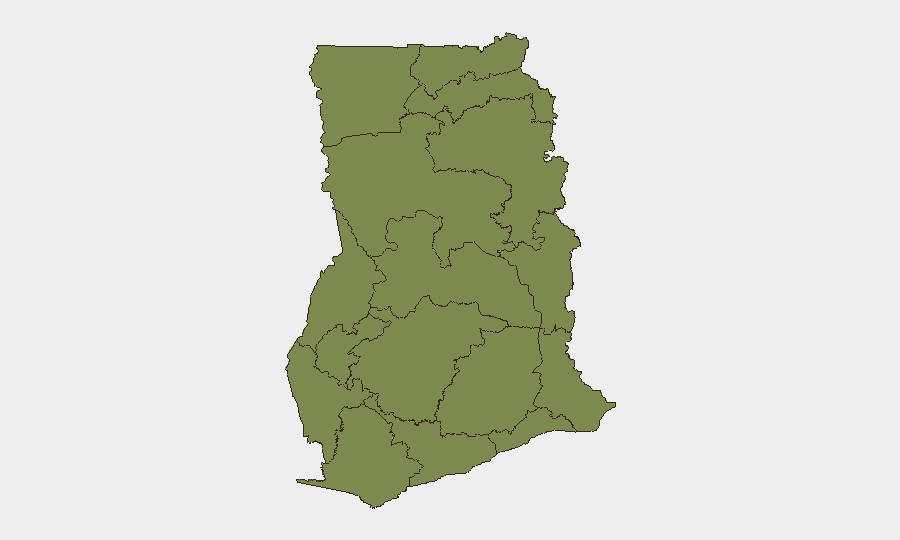
Ghana remains a low-to-moderate regional security environment (global rank #136) with composite threat score of 6, though risk is highly concentrated in Greater Accra Region (risk score 34), which accounts for the majority of tracked incidents. A curfew imposed in Nkwanta South Municipality (Oti Region) on 26 June 2026 reflects continuing localized movement restrictions tied to underlying security concerns. Open-source intelligence for the past 24–48 hours shows limited time-stamped incident reporting; most Ghana-wide developments from official sources and social channels are dated 24–26 June or earlier, suggesting either stabilization or reporting lag rather than acute escalation.
Key Developments
- Nkwanta South Municipality, Oti Region – 26 June 2026 – Movement restrictions imposed
The Ministry of the Interior announced a curfew in Nkwanta South Municipality in response to local security concerns, restricting civilian movement. This represents an active constraint on travel and business continuity in the municipality.
- Greater Accra Region – 28 June 2026 – Demonstration/rally activity
Social intelligence signals indicate demonstration or rally activity in Accra, though specific trigger, scale, and outcome are not detailed in available open sources. This aligns with Accra's elevated risk score (34) driven by urban concentration of population and protest activity.
- Central Bank–banking sector tension – 30 June 2026
Event signals indicate a demand-related interaction between the Central Bank and a commercial bank entity. Specific nature and financial stability implications remain unclear from available reporting but may warrant internal compliance and banking-sector liaison monitoring.
- International relations activity – 28–30 June 2026
Multiple event signals reflect diplomatic strain: reduced relations signaled between Ghana–Nigeria (29 June), Ghana–U.S. (28 June), and Ghana–Democratic Republic of Congo (30 June). No acute military or consular incident is confirmed, but deteriorating bilateral atmospherics may affect business operations and expatriate safety perceptions.
- Labour/workforce statement activity – 30 June 2026
Presidential and worker-related public statements recorded on 30 June, suggesting labour-sector tension or wage/employment-related dispute. Details unavailable from current open-source reporting.
Highest-Risk Areas
Greater Accra Region dominates Ghana's security profile with a risk score of 34—more than five times higher than any other region. This concentration reflects the capital's role as the political and economic hub, with high population density, regular protest activity, and the presence of foreign nationals and critical infrastructure. Bono East Region (risk 17.5) is the second-priority focus; all remaining regions carry materially lower scores (≤4.8), suggesting a two-tier risk geography in which Accra is the primary concern for corporate security and duty-of-care planners, with secondary attention to Bono East and the northern savanna belt.
How GeoBit Would Assist
AOI Monitoring & Early Warning with persistent watch on Greater Accra and Nkwanta South would provide automated alerts to security teams when protests, curfews, or checkpoints emerge. OSINT Fusion & Corroboration (X/Twitter, Telegram, local media, radio SIGINT) would resolve the timing and scope of labour disputes, diplomatic incidents, and banking-sector developments faster than manual monitoring. Routing & Network Analysis would enable rapid recalculation of staff commute and supply-chain routes if movement restrictions expand beyond Nkwanta South.
7-Day Outlook
No major escalation is signaled in the next seven days; however, the cluster of diplomatic tensions (Nigeria, U.S., DRC), unresolved labour/wage friction, and banking-sector demand activity creates ambient friction that could produce localized disruption or slowdowns in regulatory/commercial activity. The curfew in Nkwanta South is likely to remain in place through early July unless local security conditions improve. Monitoring of public statements and social-channel sentiment for signs of labour action or protest expansion in Accra is warranted.
Highest-Risk Areas — Ranked
| # | State / Region | Risk |
|---|---|---|
| 1 | Greater Accra Region | 34 |
| 2 | Bono East Region | 17.5 |
| 3 | Oti Region | 4.8 |
| 4 | Upper East Region | 4 |
| 5 | Upper West Region | 4 |
| 6 | Savannah Region | 4 |
| 7 | North East Region | 4 |
| 8 | Northern Region | 4 |
| 9 | Eastern Region | 4 |
| 10 | Volta Region | 4 |
| 11 | Bono Region | 4 |
| 12 | Ahafo Region | 4 |
Sources
Previous Daily Briefs
A new Ghana brief is written every day — each with its own risk map and downloadable CSV. Here's the last week; use the calendar to go further back.
📅 Browse every day by calendar →
Highlighted days have a brief. Tap a day for that day's map & analysis, or “csv” for that day's dataset ($5).