Situation Summary
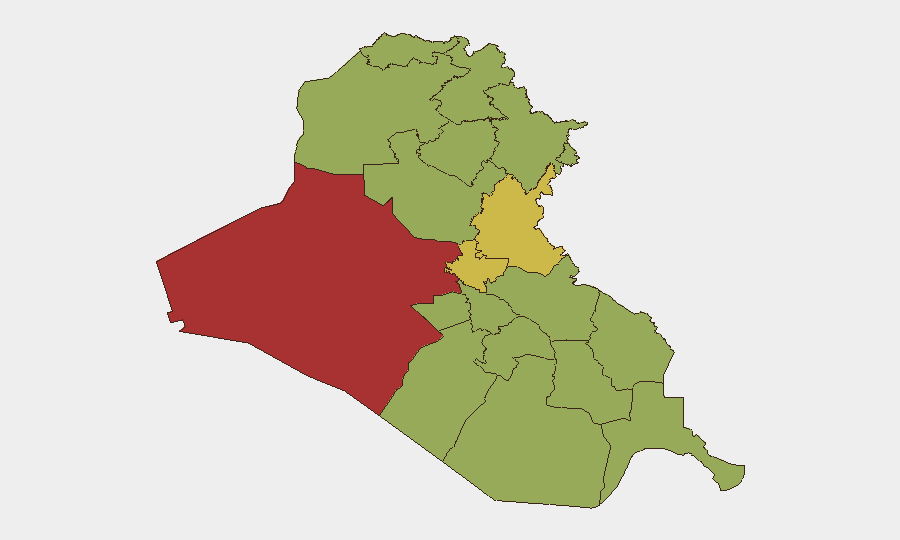
Iraq remains at composite threat rank #23 globally with 393 tracked events. Recent signal activity (11–12 June) indicates elevated diplomatic tension, military mobilization, and conventional force operations, though the overall threat score of 68 reflects a contained but fragmented security environment. Al-Anbar Governorate dominates the risk profile at 77.9, driven by militant activity and cross-border dynamics, while Baghdad's 64.9 score reflects both state-level instability and sectarian undercurrents. The trajectory shows no immediate systemic breakdown, but heightened state-to-state and state-to-nonstate friction.
Key Developments
- Military Mobilization (11 June). Iraqi armed forces initiated mobilization operations; specific operational scope and location not yet clarified in available signals. Assess as response to regional pressure or internal security concerns.
- US–Iraq Relations Deterioration (11 June). Washington issued threat communication to Baghdad; simultaneous US reduction of diplomatic relations signals deepening bilateral strain, likely linked to Iraqi sovereignty or force-presence disputes.
- Iran–Iraq Tensions (11 June). Iranian rejection of Iraqi position on unspecified matter; context suggests regional power competition rather than imminent kinetic escalation.
- Turkey–Iraq Rejection (10 June). Baghdad rejected Turkish position or demand; historical pattern suggests border security, PKK operations, or water/resource disputes.
- Unconventional Violence Signal (10 June). Iraqi actors engaged in unconventional violence involving neighborhood targets; geographic specificity unavailable; assess as militia activity, criminal networks, or sectarian action.
- Conventional Force Operation vs. Militants (12 June). Iraqi security forces conducted conventional military operations against militant targets; locale and casualty figures not yet available.
- Expulsion/Deportation Action (12 June). Iraqi authorities executed expulsion or deportation order; likely targeting foreign fighters, political figures, or humanitarian personnel.
Note on signal reliability: Event classifications above are derived from GEOBIT's event taxonomy but lack granular detail (actor names, casualty counts, specific governorate). Duty-of-care teams should treat these as alerting triggers, not definitive incident summaries; corroboration via embassy alerts, local security partners, and commercial intel providers is mandatory before operational decisions.
Highest-Risk Areas
Al-Anbar Governorate (77.9) remains the critical threat zone, reflecting persistent militant sanctuaries, cross-border trafficking, and weak state presence in western desert regions. Baghdad Governorate (64.9) follows as the political and administrative center; its score captures both targeted violence and systemic fragility amid competing power blocs. Diyala (60.8) and Wasit (52.5) represent secondary risk concentrations in the east-central belt, historically characterized by Sunni-Shia sectarian tension and Iranian militia influence. The southern and central governorates (Basra, Dhi Qar, Najaf, Babil, Qadisiyah) cluster at 47.9, indicating baseline but persistent risk from crime, militia activity, and local governance deficits. Erbil Governorate (48.9) in the KRI remains relatively stable but exposed to cross-border PKK activity and Turkish airstrikes.
How GeoBit Would Assist
Teams with personnel or assets in Iraq should deploy AOI Monitoring & Early Warning (persistent watch on Al-Anbar and Baghdad with automated alerting for escalation signals) and Intel Sweep + OSINT Fusion (daily monitoring of X/Telegram militia channels, Iraqi security announcements, and regional media for 24–48-hour incident corroboration). Battle Mapping & Force Structure analysis—updated weekly—would track Iraqi military mobilization, PMF positioning, and militant sanctuaries. Routing & Network Analysis tools enable real-time journey-risk assessment for staff movement between governorates.
7-Day Outlook
Expect continued low-level friction between Baghdad, Washington, and Tehran over the next week; no immediate de-escalation signals are visible. Military operations against militant cells in Al-Anbar and mixed urban areas will likely persist. Heightened state fragmentation and diplomatic strain increase the risk of localized security incidents affecting expatriate populations in Baghdad and Erbil; monitor staff welfare and mobility protocols closely.
Highest-Risk Areas — Ranked
| # | State / Region | Risk |
|---|---|---|
| 1 | Al-Anbar Governorate | 77.9 |
| 2 | Baghdad Governorate | 64.9 |
| 3 | Diyala Governorate | 60.8 |
| 4 | Wasit Governorate | 52.5 |
| 5 | Erbil Governorate | 48.9 |
| 6 | Babil Governorate | 47.9 |
| 7 | Al-Qadisiyah Governorate | 47.9 |
| 8 | Dhi Qar Governorate | 47.9 |
| 9 | Al-Muthanna Governorate | 47.9 |
| 10 | Maysan Governorate | 47.9 |
| 11 | Al-Basra Governorate | 47.9 |
| 12 | Al-Najaf Governorate | 47.9 |
Sources
Previous Daily Briefs
A new Iraq brief is written every day — each with its own risk map and downloadable CSV. Here's the last week; use the calendar to go further back.
📅 Browse every day by calendar →
Highlighted days have a brief. Tap a day for that day's map & analysis, or “csv” for that day's dataset ($5).