Situation Summary
Japan faces a composite threat score of 28 globally, characterized by elevated military tensions in its maritime domain, domestic civil-liberties friction over proposed legislation, and sustained operational risks from extreme weather and organized crime. The security picture is notably concentrated in Tokyo, which accounts for the majority of tracked risk events, while peripheral regions and maritime zones present secondary but acute challenges. The trajectory over the next 7–10 days will be shaped by the pace of China–Russia naval activity near Japan's EEZ and the legislative outcome of the flag-desecration bill, both of which carry potential for escalatory signaling or domestic unrest.
Key Developments
- Okinotorishima, Pacific EEZ (19 July, disclosed 21 July): Chinese Luyang III guided-missile destroyer conducted live-fire exercise approximately 180 km southwest of Okinotorishima within Japan's claimed EEZ, accompanied by two additional Chinese warships and one Russian frigate. Japan's Defense Ministry lodged a formal protest and characterized this as the first public acknowledgment of Chinese live-fire drills in Japanese-claimed waters, elevating maritime-safety and regional-tension concerns.
- Southwest of Okinotorishima (19–21 July): Japan Maritime Self-Defense Force detected and conducted surveillance of a combined Chinese–Russian task group (three Chinese vessels, one Russian frigate) conducting extended joint maneuvers 330 km southwest of Okinotorishima, with Japanese assessments citing hazard to civilian navigation.
- Tokyo (21–22 July): Approximately 150 academics issued public opposition to a proposed bill criminalizing national-flag desecration, citing constitutional free-expression violations; opposition parties are mobilizing counter-pressure, raising risk of civil-society friction and protest activity if legislation advances.
- Nationwide (through 22 July): Extreme heat wave with temperatures exceeding 35–40°C across multiple regions; 4,580 hospitalizations for heatstroke recorded 6–12 July with seven deaths; conditions persist, affecting critical infrastructure demand, emergency services, and outdoor operations.
- Nichirei cyberattack (mid-July, remediation ongoing through 22 July): Major frozen-food producer Nichirei experienced cyberattack disrupting supply chains to major retail clients including KFC Japan; incident underscores cyber-risk to commercial food and logistics infrastructure.
- Haneda Airport vicinity (22 July): Law enforcement served fresh warrants on four suspects linked to attempted cash-ambush robbery near Tokyo's primary aviation hub; reflects sustained organized-crime activity targeting major transport nodes.
- Japan immigration policy (21–22 July): Visa fees increasing fivefold (single-entry from ¥3,000 to ¥15,000; multiple-entry from ¥6,000 to ¥30,000), affecting corporate travel logistics and potentially generating administrative friction in the near term.
Highest-Risk Areas
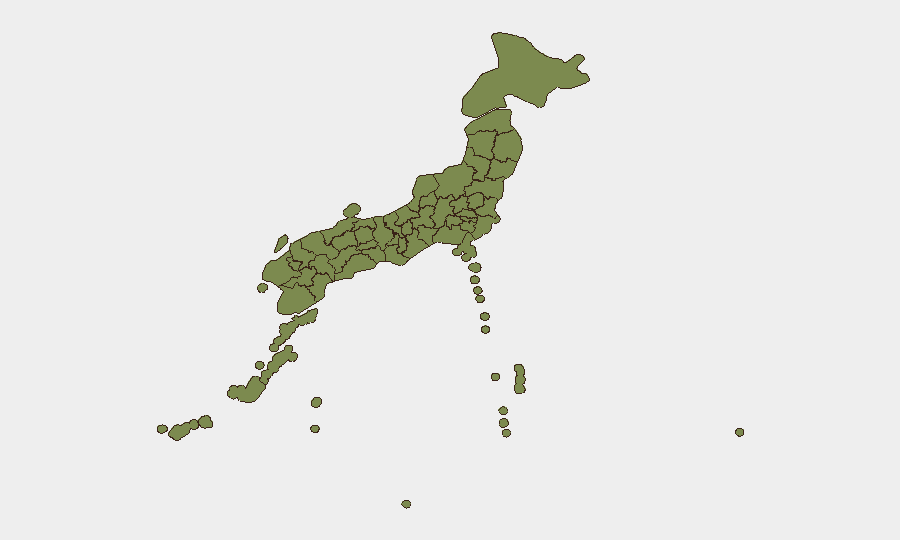
Tokyo dominates the risk landscape with a composite score of 30.8—more than 2.6 times the national average—driven by concentration of government, financial, and transport infrastructure, combined with political sensitivity around the flag-desecration bill and organized-crime activity near Haneda. Fukushima Prefecture (11.7) and Hiroshima Prefecture (7.3) register secondary risk elevation, though the sources cited do not detail current drivers; Kanagawa Prefecture (6.8), encompassing the greater Tokyo metropolitan area, extends urban risk eastward. Maritime zones southwest of Okinotorishima, while not formally ranked as prefectures, now represent acute military-tension and civilian-navigation risk due to sustained Chinese–Russian activity.
How GeoBit Would Assist
Security teams would deploy AOI Monitoring & Early Warning to track continued China–Russia naval activity in Japan's EEZ and alert to escalatory maneuvers or safety incidents. Intel Sweep and multi-language OSINT across Japanese media, government statements, and opposition-party channels would provide near-real-time tracking of the flag-desecration bill's legislative progress and nascent protest signals. Network & Actor Analysis applied to organized-crime investigations and cyber-incident response would support situational awareness around Haneda and supply-chain vulnerabilities.
7-Day Outlook
Expect continued Chinese–Russian naval presence and periodic Japanese surveillance/protest activity in the Pacific EEZ, with low but non-zero risk of unintended maritime incident. The flag-desecration bill will likely remain in legislative flux, with potential for protest mobilization if advancement accelerates. Extreme heat will persist through early August, maintaining pressure on emergency services and outdoor personnel safety.
Highest-Risk Areas — Ranked
| # | State / Region | Risk |
|---|---|---|
| 1 | Tokyo | 30.8 |
| 2 | Fukushima Prefecture | 11.7 |
| 3 | Hiroshima Prefecture | 7.3 |
| 4 | Kanagawa Prefecture | 6.8 |
| 5 | Tokushima Prefecture | 4.1 |
| 6 | Kumamoto Prefecture | 3.8 |
| 7 | Aichi Prefecture | 3 |
| 8 | Hyogo Prefecture | 2.7 |
| 9 | Hokkaido Prefecture | 2.2 |
| 10 | Kyoto Prefecture | 2.2 |
| 11 | Shizuoka Prefecture | 1.7 |
| 12 | Iwate Prefecture | 1.7 |
Sources
Previous Daily Briefs
A new Japan brief is written every day — each with its own risk map and downloadable CSV. Here's the last week; use the calendar to go further back.
📅 Browse every day by calendar →
Highlighted days have a brief. Tap a day for that day's map & analysis, or “csv” for that day's dataset ($5).
Atlas — our AI intelligence desk — emails them this snapshot personally. Nothing else, no list.