Situation Summary
Latvia remains in a low-intensity threat environment with no major security incidents, civil unrest, or infrastructure disruptions reported in the last 24–48 hours. However, the country faces sustained structural pressures: over 9,000 illegal border-crossing attempts from Belarus since January 2026, ongoing elevated cyberattack exposure, and residual airspace alerts in eastern districts following earlier Russian drone activity. The security posture is stable but dependent on maintained border controls and NATO coordination.
Key Developments
- Latvia–Belarus border, Paternieki crossing (July 31–August 2, 2026): The last functioning border crossing with Belarus was halted at 23:00 on July 31 due to information-system failures and remained closed as of August 2. The Latvian government is examining full closure of the Belarus border crossing in response.
- Latvia–Ukraine diplomatic engagement (August 5, 2026, Kyiv): Latvian Foreign Minister Baiba Braze met Ukrainian Foreign Minister Andrii Sybiha in Kyiv to discuss air defense, energy resilience, sanctions enforcement, and UN coordination—a show of solidarity amid ongoing Russian missile strikes on Ukrainian territory.
- No verified acute incidents: Open-source monitoring, X/Twitter intelligence, and available web research confirm no new terrorist attacks, violent crime, large-scale protests, cyberattacks, or transport disruptions within Latvia's borders in the last 24–48 hours.
Highest-Risk Areas
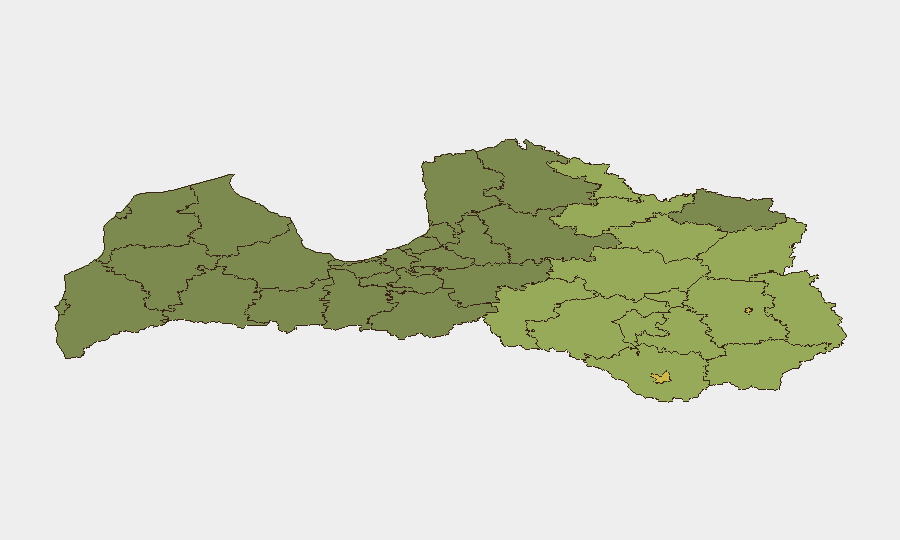
Eastern and southeastern districts—Rēzekne (risk 68), Daugavpils (risk 65), and Rēzeknes novads (risk 58)—are ranked as highest-risk, reflecting proximity to Belarus and Russia, sustained migration pressure, and legacy airspace vulnerability. Ludzas, Balvu, Preiļu, and Krāslavas novads (all risk 50–55) face similar geographic exposure. These eastern regions drive the national composite risk score primarily through border-security strain, cyberattack targeting, and drone-incursion precedent rather than active armed conflict or civil breakdown.
How GeoBit Would Assist
Security and duty-of-care teams operating in Latvia would deploy AOI Monitoring & Early Warning on the Belarus and Russian borders, eastern airspace corridors, and critical infrastructure nodes to detect emerging incidents in real time. Intel Sweep and multi-language OSINT fusion across Latvian media, social platforms, and regional intelligence feeds provide 24/7 corroboration of incidents and political instability signals. Routing & Network Analysis supports contingency planning for personnel and supply chains in the event of future border disruptions or airspace closures.
7-Day Outlook
No major escalation is anticipated in the next seven days. Border management and diplomatic engagement with Ukraine and NATO allies will likely remain the primary focus. Cyberattack and airspace monitoring will continue as a persistent baseline threat requiring routine vigilance rather than emergency response.
Highest-Risk Areas — Ranked
| # | State / Region | Risk |
|---|---|---|
| 1 | Rēzekne | 68 |
| 2 | Daugavpils | 65 |
| 3 | Rēzeknes novads | 58 |
| 4 | Ludzas novads | 55 |
| 5 | Balvu novads | 52 |
| 6 | Preiļu novads | 50 |
| 7 | Krāslavas novads | 48 |
| 8 | Jēkabpils novads | 47 |
| 9 | Augšdaugavas novads | 46 |
| 10 | Aizkraukles novads | 45 |
| 11 | Varakļānu novads | 44 |
| 12 | Līvānu novads | 43 |
Sources
Previous Daily Briefs
A new Latvia brief is written every day — each with its own risk map and downloadable CSV. Here's the last week; use the calendar to go further back.
📅 Browse every day by calendar →
Highlighted days have a brief. Tap a day for that day's map & analysis, or “csv” for that day's dataset ($5).
Atlas — our AI intelligence desk — emails them this snapshot personally. Nothing else, no list.