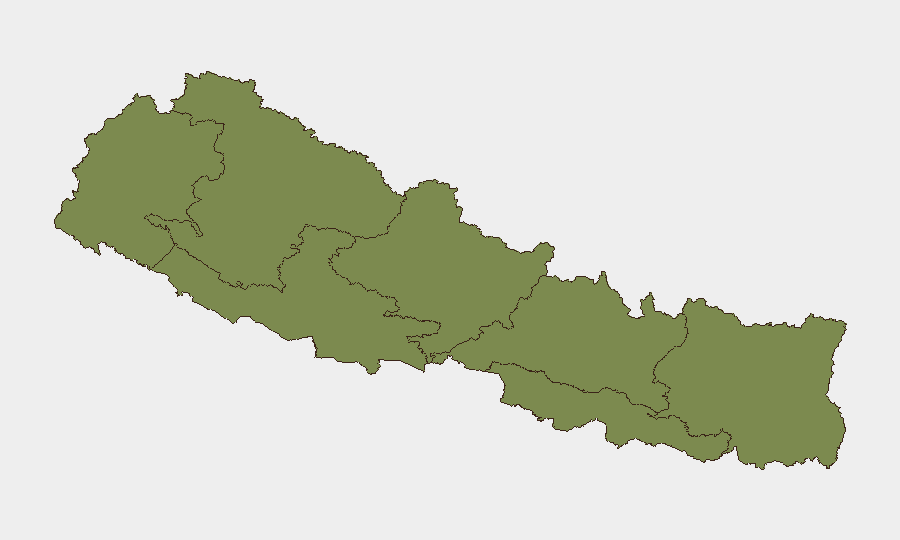
Situation Summary
Nepal remains a low-to-moderate composite threat environment (global rank #null, score 9/100) with 19 tracked events over the monitoring period. Recent signals indicate domestic political tension—including government rejections, disapprovals of trade policy, and a presidential statement on 22 June—but open-source corroboration of new security, civil-unrest, crime, or travel-risk incidents in the last 24–48 hours is absent. The country's risk profile is heavily concentrated in Bagamati Province (risk 3.9× the national average), where the capital and most government activity is located.
Key Developments
Open-source web research covering the last 24–48 hours (as of 23 June 2026) has not identified independently corroborated, time-stamped security or travel-risk incidents specific to Nepal in this window. Recent signals captured by GeoBit event feeds reflect political communication and policy disagreement rather than security events:
- 22 June | Government disapproval of South Asian Free Trade Area policy (national level)
- 22 June | Presidential statement issued (national level)
- 22 June | Administrative rejection noted (national level)
- 22 June | Industry investigations initiated (sector-level, details limited)
- 21 June | Multiple government and ministerial public statements; tourist–presidential statement in Chitwan district
These reflect political activity and governance transitions, not acute security threats. Note: Older content in social feeds references past civil unrest (2025 and earlier) and long-standing human-rights issues (conflict-era sexual violence); these do not represent new developments. Some very local incidents may exist in Nepali-language or closed channels not visible to accessible OSINT; assessment is therefore limited to corroborated English-language sources.
Highest-Risk Areas
Bagamati Province dominates the risk landscape, accounting for 31.2 of Nepal's composite score—approximately eight times the risk of any other province. This concentration reflects Bagamati's status as the seat of national government, largest population centres, and primary nexus of political activity and decision-making. Lumbini, Gandaki, and Koshi provinces (each 3–3.9 risk) show secondary but low-level exposure, likely tied to border proximity, past conflict zones, or economic activity. Karnali, Sudurpashchim, and Madhesh provinces remain minimal-risk areas. For corporate teams, this ranking suggests that operational and reputational risk is most sensitive to political instability and governance changes in and around Kathmandu; travel and asset exposure in peripheral regions carries materially lower threat.
How GeoBit Would Assist
Security teams operating in Nepal should employ AOI Monitoring & Early Warning on Bagamati Province (persistent watch for protest activity, roadblocks, or unrest around government districts) and OSINT Fusion (multi-language search, X/Telegram monitoring, and sentiment analysis) to detect emerging civil unrest before English-language news outlets report it. Election Monitoring and Regime Stability assessment capabilities provide longer-horizon insight into political fractures that may drive policy rejection or cabinet changes. Real-time Routing & Network Analysis can support contingency planning for personnel movement if unrest escalates.
7-Day Outlook
Near-term trajectory remains stable absent new security incidents. Political signals (rejections, statements) suggest internal policy debate rather than acute crisis, and tourism/commercial activity appear unimpeded. Monitor for escalation if trade disputes or administrative decisions trigger protest mobilization in Bagamati; no indicators of imminent large-scale unrest are visible in current open-source data.
Highest-Risk Areas — Ranked
| # | State / Region | Risk |
|---|---|---|
| 1 | Bagamati Province | 31.2 |
| 2 | Lumbini Province | 3.9 |
| 3 | Gandaki Province | 3.9 |
| 4 | Koshi Province | 3 |
| 5 | Sudurpashchim Province | 1.2 |
| 6 | Karnali Province | 1.2 |
| 7 | Madhesh Province | 1.2 |
Sources
Previous Daily Briefs
A new Nepal brief is written every day — each with its own risk map and downloadable CSV. Here's the last week; use the calendar to go further back.
📅 Browse every day by calendar →
Highlighted days have a brief. Tap a day for that day's map & analysis, or “csv” for that day's dataset ($5).