Situation Summary
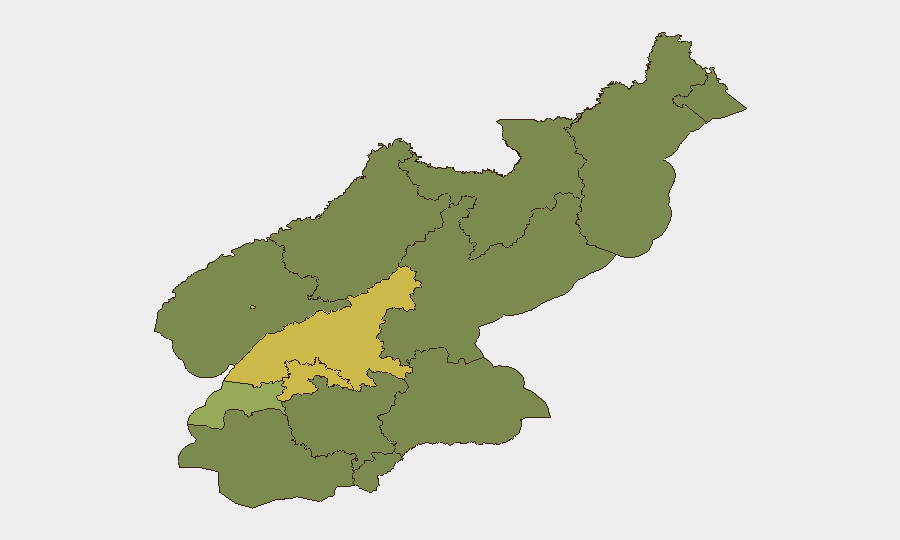
North Korea remains at composite threat rank #36 globally (score 56/100) with no reliably documented security incidents or instability events in the last 24–48 hours meeting multi-source confirmation standards. The security environment is characterized by longer-term structural vulnerabilities—including military modernization partnerships with Russia, nuclear capability development, and internal control mechanisms—rather than acute triggering events in the immediate reporting window. P'yŏngyang and South Pyongan provinces present elevated risk profiles (69.3 and 64.6 respectively), reflecting capital-region administrative and security concentration. The threat trajectory remains stable at current composite levels, absent new discrete incidents.
Key Developments
No reliably documented, location-specific security incidents in North Korea during June 11–12, 2026 have been confirmed across open news, OSINT, and diplomatic reporting. Current open-source coverage focuses on longer-term strategic issues (Xi–Kim diplomatic relations, North Korea–Russia military cooperation, naval modernization programs) rather than time-stamped, geolocated incidents within the last 48 hours. Social-media content circulating regarding leadership activities and military construction appears to repackage state media without precise post-times or confirmation of recent on-the-ground events. No credible reporting of civil unrest, sudden political instability, major infrastructure failures, or acute travel-risk changes specific to North Korea within the last 24–48 hours has been corroborated across independent sources. Absence of reportable events does not indicate absence of underlying risk; structural vulnerabilities remain in place.
Highest-Risk Areas
P'yŏngyang (69.3) and South Pyongan (64.6) drive the sub-national ranking, reflecting the concentration of government, military, and security apparatus in the capital region and adjacent administrative zones. These provinces are inherently higher-risk due to command-and-control density, surveillance infrastructure, and historical patterns of regime enforcement activity. The significant drop in risk scores for all remaining provinces (Nampo at 40.9, all others at 39.3) suggests that risks outside the capital corridor are either more distributed, less monitored by available intelligence channels, or structurally lower in frequency. For corporate personnel and assets, P'yŏngyang and South Pyongan warrant elevated situational awareness protocols; secondary provinces carry baseline risk tied to travel restrictions, limited communications, and supply-chain vulnerabilities rather than acute security incidents.
How GeoBit Would Assist
Security teams should leverage AOI Monitoring & Early Warning to track P'yŏngyang and South Pyongan for sudden regime-enforcement signals, border closures, or military mobilization shifts. Intel Sweep and multi-language OSINT fusion (including X/Twitter, diplomatic channels, and defector reporting) enable rapid corroboration of emerging incidents and filtering of recycled or speculative content—critical given information scarcity in closed environments. Regime-stability and network-actor analysis should be applied to track leadership, sanctions-evasion networks, and foreign military partnerships (e.g., Russia coordination) that signal strategic shifts affecting corporate operations.
7-Day Outlook
No acute deterioration is anticipated in the immediate seven-day window absent triggering geopolitical events (e.g., sanctions escalation, military exercises on the peninsula, or diplomatic rupture). Structural risks—supply constraints, internal surveillance, and military modernization—will remain the primary drivers of operational disruption for corporate stakeholders. Monitoring cadence should remain elevated around P'yŏngyang and border regions given historical volatility clustering.
Highest-Risk Areas — Ranked
| # | State / Region | Risk |
|---|---|---|
| 1 | P'yŏngyang | 69.3 |
| 2 | South Pyongan | 64.6 |
| 3 | Nampo | 40.9 |
| 4 | Ryanggang | 39.3 |
| 5 | North Hamgyong | 39.3 |
| 6 | North Pyongan | 39.3 |
| 7 | Chagang | 39.3 |
| 8 | South Hwanghae | 39.3 |
| 9 | North Hwanghae | 39.3 |
| 10 | South Hamgyong | 39.3 |
| 11 | Kaesong | 39.3 |
| 12 | Kangwon | 39.3 |
Sources
Previous Daily Briefs
A new North Korea brief is written every day — each with its own risk map and downloadable CSV. Here's the last week; use the calendar to go further back.
📅 Browse every day by calendar →
Highlighted days have a brief. Tap a day for that day's map & analysis, or “csv” for that day's dataset ($5).