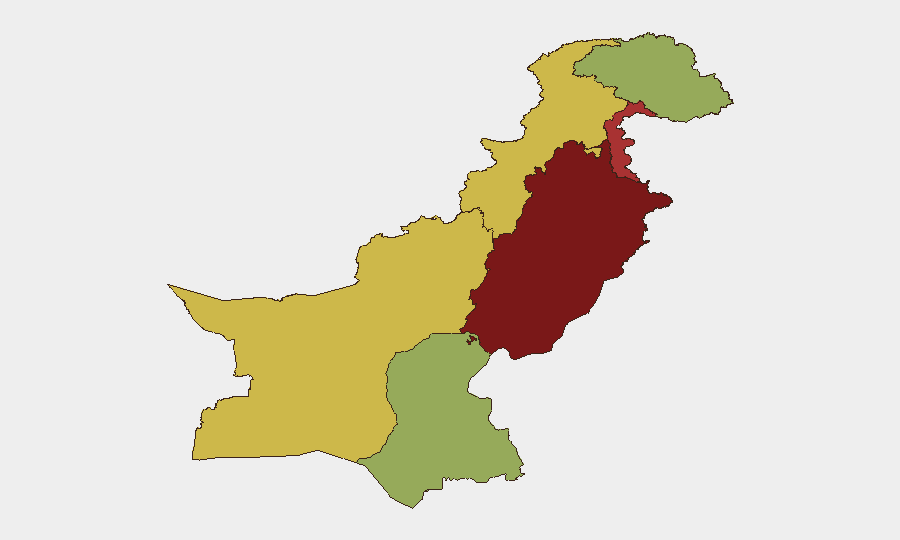
Situation Summary
Pakistan's composite threat score (74/100, rank #15 globally) reflects sustained insurgent pressure, law-enforcement friction, and renewed cross-border military activity as of 12 June 2026. The country faces a volatile combination of Taliban-linked militant networks in the northwest, political-institutional strain between security and justice sectors, and escalating diplomatic tension with Afghanistan following Pakistani airstrikes on border areas. Urban protest activity over fiscal policy and refugee measures compounds operational risk, particularly in Punjab and Islamabad, while travel advisories have been updated to reflect heightened terrorism and kidnapping risk nationwide.
Key Developments
- Pakistan–Afghanistan border airstrikes (10–12 June): Pakistani military conducted airstrikes on alleged militant hideouts in Khost, Kunar, and Paktika districts (eastern Afghanistan border). Afghan Taliban sources and local media report at least 13 killed, including 11 children; funerals and anti-Pakistan sentiment in border areas ongoing as of 12 June. Diplomatic fallout with Kabul intensifying.
- Law-enforcement and justice-sector friction (11–12 June): Public statements from prosecutors criticizing police conduct in Punjab and federally; government rejection of criticism; continued small-arms engagements involving security forces reported. Signals indicate possible coordination breakdown between law-enforcement and judiciary, raising uncertainty around detention and arrest practices.
- Counter-terrorism operation, border region (11–12 June): Security forces reported killing at least two suspected militants; recovery of Afghan identity card, foreign currency, modern small arms, and suicide vest. Timing aligns with post-airstrike CT push along/near Afghan border.
- Sustained urban protest activity (9–12 June, ongoing): Scattered protests and political agitation reported across multiple provinces over government fiscal policy and refugee measures; visible police and paramilitary deployments in urban centers and around government facilities. No single major riot, but pattern of reactive security operations in high-density areas persists.
- Punjab and Azad Kashmir risk elevation (updated 12 June): Sub-national threat scores now reflect Punjab (81.8) and Azad Kashmir (78.9) as highest-risk regions, driven by entrenched insurgent networks and chronic small-arms violence. Assessment updated as of 12 June.
- Khyber Pakhtunkhwa militant activity (ongoing through 12 June): Taliban-linked and tribal militant groups sustain activity in KP province; provincial threat score 66.4. Persistent risk on roads, checkpoints, and remote infrastructure in frontier districts.
- Tightened national security posture (11–12 June update): Enhanced checkpoints, movement restrictions, and consular warnings issued nationwide, particularly for border areas, Balochistan, KP, and major cities. Current travel advisories emphasize terrorism, kidnapping, civil unrest, and limited consular access in high-risk provinces.
Highest-Risk Areas
Punjab (81.8) and Azad Kashmir (78.9) now lead sub-national rankings, reflecting entrenched insurgent networks and persistent small-arms violence. Islamabad Capital Territory (68.4) experiences protest-driven risk and administrative friction, while Khyber Pakhtunkhwa (66.4) remains a Taliban-linked militant stronghold with elevated checkpoint and infrastructure risk. Balochistan (63.3) sustains chronic separatist and militant activity. The border corridor with Afghanistan—spanning KP and parts of Balochistan—is currently the highest-volatility zone due to ongoing airstrikes, militant cross-border movement, and heightened military posture.
How GeoBit Would Assist
Intel Sweep and multi-language OSINT across Pakistani media, Telegram, and social platforms enable real-time tracking of protest activity, security-force deployments, and militant signaling. AOI Monitoring & Early Warning on Punjab, Azad Kashmir, and KP border districts with automated alerting on violence spikes or institutional statements would provide duty-of-care teams advance notice of deterioration. Routing & Network Analysis assists personnel and logistics movement by identifying safer corridors around active protest zones and security checkpoints; Conflict & Military tracking provides updated force-posture and airstrike impact assessment.
7-Day Outlook
Border tension with Afghanistan is likely to sustain elevated military alert and cross-border militant activity through mid-June; further Pakistani airstrikes or Taliban retaliation remain credible. Institutional friction between law enforcement and prosecutors may worsen before resolution, increasing detention and due-process risk for foreign nationals. Protest activity in urban centers and around government facilities will likely persist at low-to-moderate tempo, creating sporadic checkpoints and movement delays in Punjab and Islamabad.
Highest-Risk Areas — Ranked
| # | State / Region | Risk |
|---|---|---|
| 1 | Punjab | 81.8 |
| 2 | Azad Kashmir | 78.9 |
| 3 | Islamabad Capital Territory | 68.4 |
| 4 | Khyber Pakhtunkhwa | 66.4 |
| 5 | Balochistan | 63.3 |
| 6 | Sindh | 59.2 |
| 7 | Gilgit-Baltistan | 52.5 |
Sources
Previous Daily Briefs
A new Pakistan brief is written every day — each with its own risk map and downloadable CSV. Here's the last week; use the calendar to go further back.
📅 Browse every day by calendar →
Highlighted days have a brief. Tap a day for that day's map & analysis, or “csv” for that day's dataset ($5).