Situation Summary
The Philippines remains a moderate-threat environment (global rank #47, composite score 48) with recent developments concentrated on school security rather than large-scale armed conflict or civil unrest. A series of shooting threats and security incidents at educational facilities nationwide—most notably Batangas City Integrated High School on June 29—have triggered cascading class suspensions and a coordinated national response from DepEd and the Philippine National Police. Diplomatic friction with the United States, reflected in multiple rejection and disapproval signals since June 27, adds a secondary layer of political tension, though its operational impact on ground security remains limited. The threat environment is regionally concentrated, with Mimaropa, Metro Manila, and Central Visayas accounting for the majority of tracked risk events.
Key Developments
- Batangas City, Batangas (June 29, 2026): Classes suspended at all levels at Batangas City Integrated High School following a credible shooting threat, triggering immediate security response and facility shutdown.
- Dauin, Negros Oriental (June 29, 2026): Local government mobilized barangay community watchmen to enhance security at municipal schools in direct response to nationwide school violence incidents.
- Nationwide (June 29–30, 2026): Multiple local government units announced class suspensions for June 30 across various schools and cities pending completion of security threat assessments.
- Nationwide education policy (June 29, 2026): Education Secretary Sonny Angara publicly disclosed critical resource gap—approximately 200 security guards covering roughly 48,000 public schools nationwide—and announced budget requests to hire additional personnel.
- Nationwide law-enforcement response (June 29, 2026): Philippine National Police ordered enhanced child-protection and cyber-safety initiatives through Women and Children Protection units and Anti-Cybercrime Group, including anti-bullying, child-abuse awareness, and online-threat programs.
- Diplomatic signals (June 27–28, 2026): Multiple Philippine government rejections and disapprovals directed at Washington, coupled with two "occupy territory" signals against the United States (June 27), indicate elevated political friction, though battlefield or mass-casualty impacts have not been reported.
Highest-Risk Areas
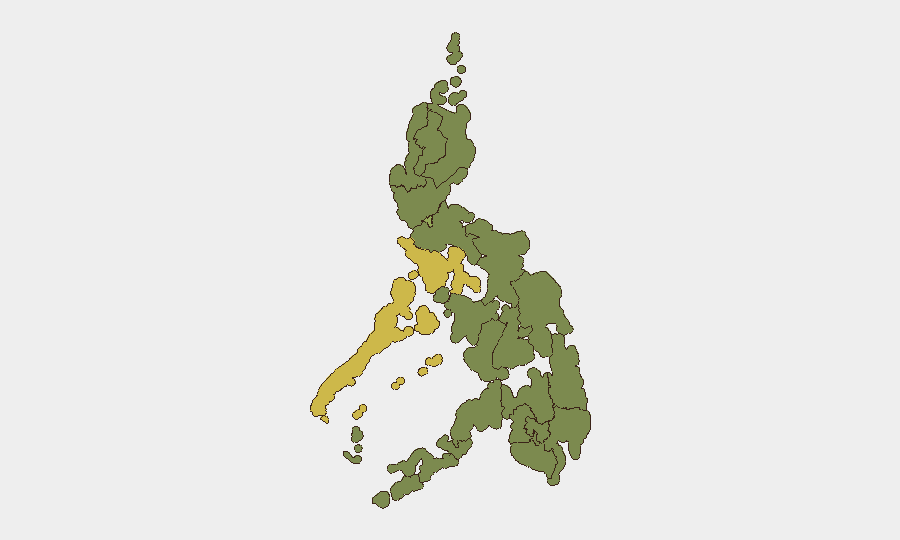
Mimaropa (composite risk 63.7) stands significantly above all other regions and warrants priority monitoring; the drivers of this elevated score are not fully transparent in current open reporting but may reflect maritime security, remote-island vulnerabilities, or trafficking activity. Metro Manila (42.3) carries the second-highest risk, consistent with its role as the political and economic center; school-security threats are now contributing to this composite. Central Visayas (39.1) and Northern Mindanao (35.9) follow, with the latter historically associated with leftist insurgency and private-security complications. The remaining regions cluster at 33.7–35.9, suggesting broadly distributed lower-level risk rather than acute concentration outside the top tier.
How GeoBit Would Assist
Corporate security teams should deploy AOI Monitoring & Early Warning on Mimaropa and Metro Manila to detect emerging school-security incidents and broader civil disturbances in real time, with automated alerting for duty-of-care escalation. OSINT Fusion & Corroboration across Twitter, Telegram, and local-government announcements will track class-suspension orders and threat claims faster than consolidated news feeds. Network & Actor Analysis can map relationships between threat actors, school-security organizations, and law-enforcement units to identify intelligence gaps and validate threat credibility before personnel movement decisions are made.
7-Day Outlook
School-security incidents are likely to remain the dominant near-term driver of disruption, with additional class suspensions probable pending resource deployment by DepEd. Diplomatic friction with the United States will likely continue at the rhetorical level without immediate operational consequence. No indicators currently suggest escalation to armed conflict or mass-casualty events, but the resource-constrained security posture in schools creates a sustained vulnerability window.
Highest-Risk Areas — Ranked
| # | State / Region | Risk |
|---|---|---|
| 1 | Mimaropa | 63.7 |
| 2 | Metro Manila | 42.3 |
| 3 | Central Visayas | 39.1 |
| 4 | Northern Mindanao | 35.9 |
| 5 | Eastern Visayas | 35.9 |
| 6 | Cordillera Administrative Region | 34.8 |
| 7 | Bangsamoro | 33.7 |
| 8 | Caraga | 33.7 |
| 9 | Soccsksargen | 33.7 |
| 10 | Davao Region | 33.7 |
| 11 | Ilocos Region | 33.7 |
| 12 | Cagayan Valley | 33.7 |
Sources
Previous Daily Briefs
A new Philippines brief is written every day — each with its own risk map and downloadable CSV. Here's the last week; use the calendar to go further back.
📅 Browse every day by calendar →
Highlighted days have a brief. Tap a day for that day's map & analysis, or “csv” for that day's dataset ($5).