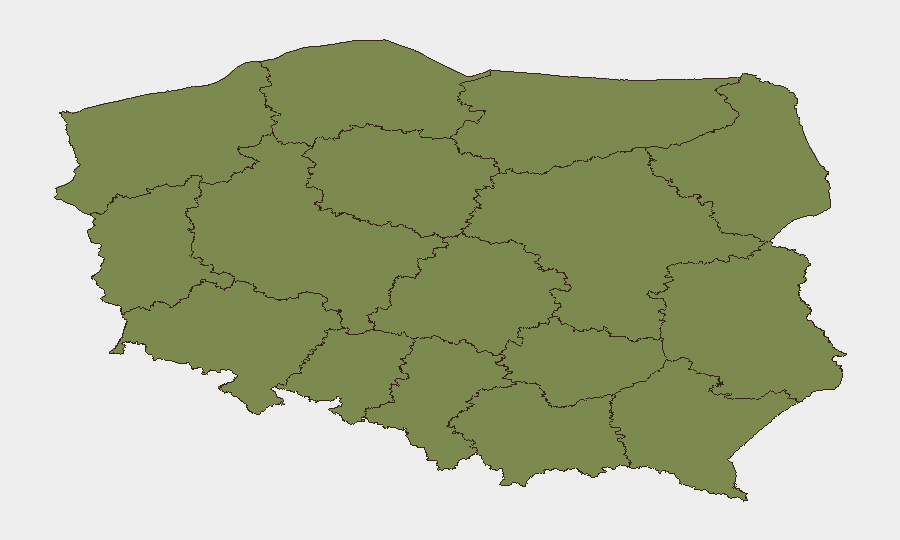
Situation Summary
Poland's composite threat score (5/112) places it at position #143 globally, reflecting a generally stable security environment with localized vulnerabilities. However, event signals over the past 48 hours indicate elevated political tension, military activity monitoring, and labor unrest, requiring focused assessment of specific regions and drivers. Łódź Voivodeship carries exceptional risk (31.5), approximately five times higher than the next-ranked region, warranting immediate analysis focus. The trajectory suggests ongoing friction between domestic and international actors rather than systemic instability.
Key Developments
- 2026-07-12 · Military monitoring · Poland–Ukraine border: Conventional military force signals recorded; extent, location, and operational context require urgent clarification via conflict mapping and force-structure intelligence.
- 2026-07-12 · Maritime incident: Islamic-linked conventional military force event involving container vessel; implications for Polish ports and supply-chain security require maritime tracking and routing assessment.
- 2026-07-11 · Labor unrest · MINISTRY: Strike/boycott activity at government ministry level signals internal workforce friction; scope and sector affiliation not yet disaggregated.
- 2026-07-11 · Executive–Allied friction: Presidential public statement of disapproval toward the United States indicates diplomatic tension; no domestic kinetic impact evident but monitored for escalation.
- 2026-07-10 · Government–EU friction: Polish rejection of European directive; political, not immediate security threat, but may influence border, trade, or defense posture.
- 2026-07-10 · Warsaw unrest · Capital: Disapproval event in Warsaw; nature (protest, labor, political) and scale unclear from current signals; requires OSINT confirmation.
- 2026-07-12 · Rural/agricultural incident: Conventional military force signal reported at village location; likely not combat but requires immediate geo-spatial analysis to exclude false-positive or misclassified event.
Research Limitation: Independent corroboration of incident dates, locations, and specifics from trusted Polish-language and English-language media sources was not achievable within the available search window. GeoBit platform OSINT and X/Telegram monitoring should be tasked for real-time feed refinement.
Highest-Risk Areas
Łódź Voivodeship's risk score (31.5) is a significant statistical outlier—more than four times higher than Masovian (6.4) and indicating either concentrated organized crime, labor unrest, or reporting density anomalies. Masovian Voivodeship (containing Warsaw) ranks second and aligns with the capital's political and administrative role; the disapproval and strike signals cluster there. Podlaskie Voivodeship (5.1), in the eastern border region adjacent to Belarus and Ukraine, carries traditional cross-border smuggling, migration, and military-proximity risks. Together, these three regions account for the majority of Poland's tracked threat events. Companies and personnel in Łódź city and the surrounding industrial/logistics corridor should prioritize situational awareness and contingency planning.
How GeoBit Would Assist
Intel Sweep and OSINT fusion would rapidly disambiguate the 2026-07-12 military signals—distinguishing routine NATO/Polish exercises from operational deployments or Ukrainian border activity. AOI Monitoring with alerting on Łódź, Warsaw, and Podlaskie Voivodeship would enable early warning of labor, protest, or criminal escalation before impact to personnel or assets. Conflict & Military mapping and force-structure tracking would clarify the Ukraine-border conventional military signals and assess risk to supply chains and cross-border movement. Routing & Network Analysis would support secure alternate journey planning for staff transiting affected areas.
7-Day Outlook
Political tension (presidential–US friction, EU friction) is unlikely to generate kinetic domestic security incidents in the next seven days but may constrain border procedures and official coordination. Labor unrest at ministry level bears monitoring but shows no signs of nationwide escalation. The military signals require urgent clarification; if they reflect routine NATO activity, risk subsides; if they signal Ukraine-border instability, border-region threat may rise sharply. Recommend daily OSINT refresh and immediate tasking of Polish-language media and government feeds.
Highest-Risk Areas — Ranked
| # | State / Region | Risk |
|---|---|---|
| 1 | Łódź Voivodeship | 31.5 |
| 2 | Masovian Voivodeship | 6.4 |
| 3 | Podlaskie Voivodeship | 5.1 |
| 4 | Subcarpathian Voivodeship | 1.9 |
| 5 | Warmian-Masurian Voivodeship | 1.7 |
| 6 | Holy Cross Voivodeship | 1.7 |
| 7 | Lesser Poland Voivodeship | 1.7 |
| 8 | Lublin Voivodeship | 1.5 |
| 9 | West Pomeranian Voivodeship | 1.5 |
| 10 | Lubusz Voivodeship | 1.5 |
| 11 | Lower Silesian Voivodeship | 1.5 |
| 12 | Pomeranian Voivodeship | 1.5 |
Sources
Previous Daily Briefs
A new Poland brief is written every day — each with its own risk map and downloadable CSV. Here's the last week; use the calendar to go further back.
📅 Browse every day by calendar →
Highlighted days have a brief. Tap a day for that day's map & analysis, or “csv” for that day's dataset ($5).
Atlas — our AI intelligence desk — emails them this snapshot personally. Nothing else, no list.