Situation Summary
Qatar remains a stable operational environment with no confirmed domestic security incidents, civil unrest, or infrastructure attacks in the past 24–48 hours. However, the country faces elevated external risk due to ongoing regional tensions in the Gulf, including recent drone attacks on Saudi Arabian oil facilities and a standing U.S. Embassy ordered-departure status (in effect since July 24). The security picture is characterized by geopolitical strain rather than internal instability, with Doha bearing disproportionate concentration of monitored risk signals.
Key Developments
- U.S. Embassy ordered departure ongoing (July 24–30, 2026). Non-emergency U.S. government personnel remain relocated outside Qatar; airspace closures and flight disruptions continue to impact travel risk for corporate and diplomatic movements.
- Qatar condemns Saudi oil-facility drone attacks (July 28, 2026). Qatar's Ministry of Foreign Affairs issued a public statement condemning attacks on Eastern Province and Riyadh facilities as violations of regional sovereignty and energy security—escalating diplomatic concern without direct Qatari territory impact.
- Regional diplomatic statements (July 29–30, 2026). Qatar–Iran and Qatar–U.S. diplomatic exchanges noted in event signals; no substantive domestic incidents accompanying these statements.
- No verified civil unrest or crime spikes (past 48 hours). Qatar News Agency, local press (Gulf Times, Al Raya, Qatar Tribune, The Peninsula), and independent verification confirm absence of reported unrest, infrastructure damage, or security incidents within Qatari territory.
Highest-Risk Areas
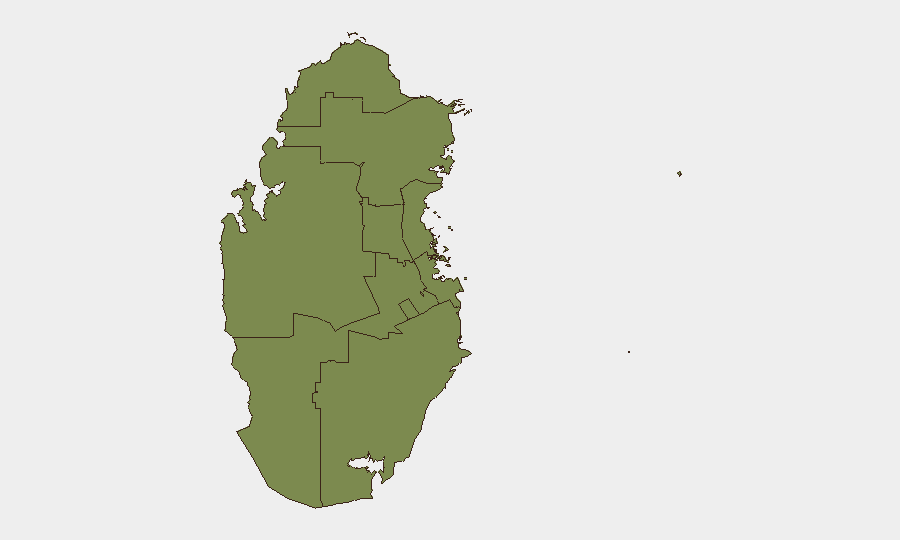
Doha dominates the sub-national risk profile with a composite score of 31.3—more than 24 times higher than any other municipality. This concentration reflects the capital's status as the political, economic, and diplomatic hub, hosting foreign missions (including the U.S. Embassy), major energy infrastructure, and government institutions. All remaining municipalities (Ash Shamal, Al Shahaniya, Al Rayyan, Al Khor, Al-Daayen, Umm Salal, Al Wakrah) register near-baseline risk (1.3), indicating that security concerns are effectively limited to the metropolitan area. The disparity underscores that duty-of-care focus should center on Doha-based personnel and facilities, particularly those with diplomatic or energy-sector exposure.
How GeoBit Would Assist
Security teams should deploy AOI (Area-of-Interest) Monitoring & Early Warning on Doha's diplomatic quarter and critical infrastructure sites to detect early signals of unrest or incident escalation. Intel Sweep (global event feeds, X/Twitter & Telegram OSINT, multi-language sentiment analysis) provides real-time monitoring of regional developments—such as the Saudi attacks and embassy-status changes—that affect Qatar's external security posture and travel corridors. Maritime & Aviation tracking would support contingency planning for airspace closures and maritime chokepoint risk (Strait of Hormuz), critical for supply-chain and personnel-evacuation routing.
7-Day Outlook
Regional tensions are likely to persist through early August, sustaining elevated travel risk and potential for airspace/port disruptions, though no imminent escalation to Qatari domestic security is indicated. Duty-of-care teams should maintain heightened monitoring of U.S. Embassy status updates and regional developments, with contingency plans for personnel relocation and supply-chain rerouting. Doha remains operationally viable for essential business activity but warrants elevated vigilance on diplomatic and energy-sector exposure.
Highest-Risk Areas — Ranked
| # | State / Region | Risk |
|---|---|---|
| 1 | Doha | 31.3 |
| 2 | Ash Shamal | 1.3 |
| 3 | Al Shahaniya | 1.3 |
| 4 | Al Rayyan | 1.3 |
| 5 | Al Khor and Al Thakhira | 1.3 |
| 6 | Al-Daayen | 1.3 |
| 7 | Umm Salal | 1.3 |
| 8 | Al Wakrah | 1.3 |
Sources
Previous Daily Briefs
A new Qatar brief is written every day — each with its own risk map and downloadable CSV. Here's the last week; use the calendar to go further back.
📅 Browse every day by calendar →
Highlighted days have a brief. Tap a day for that day's map & analysis, or “csv” for that day's dataset ($5).
Atlas — our AI intelligence desk — emails them this snapshot personally. Nothing else, no list.