Situation Summary
Russia faces sustained Ukrainian long-range strikes on critical infrastructure and military-industrial assets deep within its territory, coupled with elevated diplomatic tension with the West following a 12 June reduction-of-relations event. Military operations remain active on multiple fronts (Ukraine, Poland) as of 15 June, with Russian mobilization efforts ongoing. The composite threat environment has intensified significantly over the past 48 hours, driving elevated risk across border regions, energy infrastructure nodes, and military-production zones.
Key Developments
- Volna, Krasnodar Krai (14 June): Ukrainian drone attack on Black Sea oil/export terminal killed 1, injured 3, and triggered fire at facility; regional infrastructure impact ongoing.
- Rybinsk, Yaroslavl Oblast (night of 13–14 June): SBU-attributed drone strike ignited fire at Temp reserve oil depot, located >700 km from Ukrainian border; demonstrates extended Ukrainian strike reach into Russian interior.
- Novomoskovsk, Tula Oblast (night of 13–14 June): Drone attack sparked fire at Azot chemical plant; chemical facility damage represents elevated contamination/civilian-safety risk.
- Cheboksary, Chuvash Republic (reported 14 June): Ukrainian FP-5 Flamingo missiles struck military factory supplying drone/missile components, ~900 km from front line, per Zelensky statement.
- Volgograd region (reported 14 June): Ukrainian strikes on oil preparation/pumping station as part of broader campaign against Russian energy infrastructure.
- Conventional military escalation (15 June): Active conventional military exchanges recorded between Ukrainian and Russian forces, and between Polish and Russian forces, indicating multi-front operational tempo.
- Russian diplomatic isolation (12 June): Washington-versus-Russian reduction-of-relations event signals further Western disengagement; Russian public statements on Ukraine (15 June) reflect hardening posture.
- Reduced Russian sabotage activity (13–14 June): Ukrainian assessment notes reduced Russian reconnaissance/sabotage group activity along Chernihiv, Sumy, Kharkiv border areas; no Belarus strike-force buildup detected.
Highest-Risk Areas
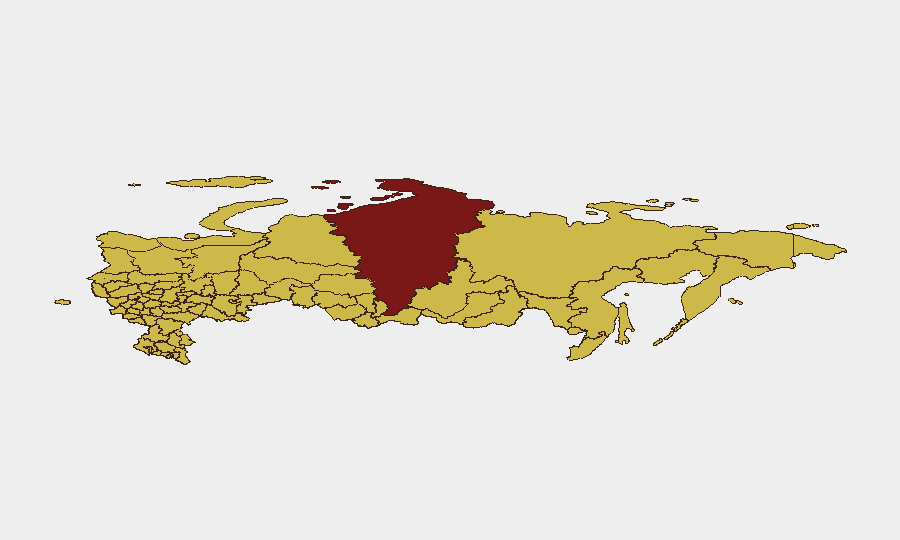
Krasnoyarsk Krai (94.6) and Moscow (90.1) rank as the two highest-risk sub-national zones, driven by proximity to military-industrial capacity, energy infrastructure concentration, and political/administrative centrality. Border regions—Bryansk Oblast (70.6), Kursk Oblast (66.4), and Rostov Oblast (66.3)—face elevated risk from direct Ukrainian military operations and cross-border strikes. Southern regions including Krasnodar Krai and Dagestan experience compounded threats from maritime drone attacks on energy terminals and persistent unconventional-violence activity. Moscow Oblast's ranking (67.4) reflects vulnerability of capital-region logistics and supply chains to disruption.
How GeoBit Would Assist
Security and risk teams would deploy AOI Monitoring & Early Warning on critical infrastructure clusters (energy nodes, military factories, transport hubs) across high-risk oblasts to detect drone/strike activity in near-real time. Conflict & Military battle mapping, force-structure tracking, and weapons-capability analysis would provide operational-level situational awareness of Ukrainian long-range strike patterns and Russian military mobilization. Satellite & imagery analysis combined with multi-language OSINT fusion (Telegram, regional media, official statements) would enable continuous monitoring of facility damage, repair timelines, and cascading infrastructure disruption affecting personnel and asset security.
7-Day Outlook
Ukrainian long-range strike tempo on Russian energy and military-industrial targets is likely to persist; no de-escalation signals are present. Russian military mobilization and multi-front engagement will sustain operational tempo and associated security volatility across border regions and interior zones. Corporate and expatriate exposure in Moscow, Saint Petersburg, and logistics corridors remains elevated; supply-chain disruption and indirect economic contraction are probable near-term consequences.
Highest-Risk Areas — Ranked
| # | State / Region | Risk |
|---|---|---|
| 1 | Krasnoyarsk Krai | 94.6 |
| 2 | Moscow | 90.1 |
| 3 | Saint Petersburg | 73.7 |
| 4 | Bryansk Oblast | 70.6 |
| 5 | Dagestan | 69.4 |
| 6 | Moscow Oblast | 67.4 |
| 7 | Primorsky Krai | 66.8 |
| 8 | Samara Oblast | 66.6 |
| 9 | Novosibirsk Oblast | 66.5 |
| 10 | Kursk Oblast | 66.4 |
| 11 | Rostov Oblast | 66.3 |
| 12 | Ingushetia | 66.2 |
Sources
Previous Daily Briefs
A new Russia brief is written every day — each with its own risk map and downloadable CSV. Here's the last week; use the calendar to go further back.
📅 Browse every day by calendar →
Highlighted days have a brief. Tap a day for that day's map & analysis, or “csv” for that day's dataset ($5).