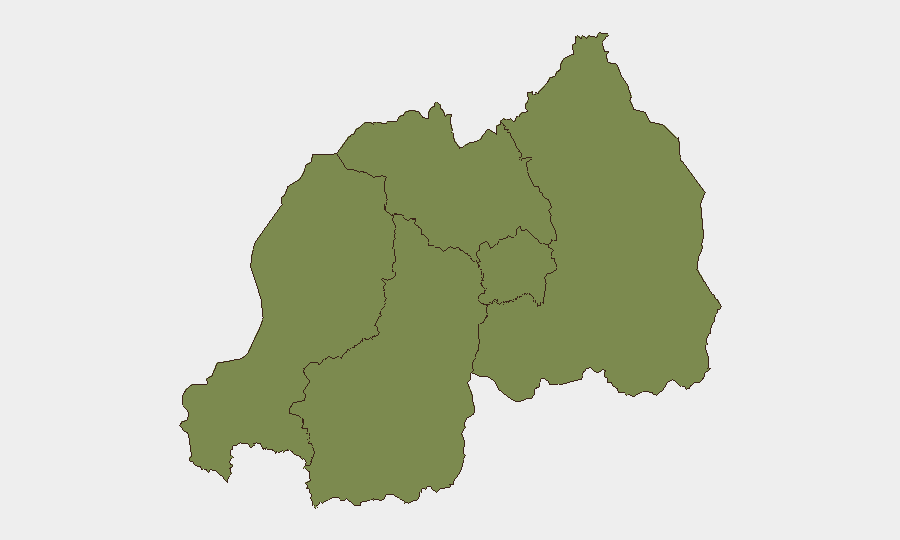
Situation Summary
Rwanda's overall security environment remains stable, with no acute security incidents, armed conflict, civil unrest, or major crime events reported in the past 24–48 hours. The primary operational constraint is the active Marburg virus outbreak, which continues to shape movement and duty-of-care protocols despite no new cases documented in the immediate period. Entry controls tied to DRC Ebola precautions remain in place but do not reflect instability within Rwanda itself. The country ranks #65 globally on composite threat, with Kigali City accounting for the majority of tracked risk signals.
Key Developments
- Nationwide, Rwanda – 21–22 July 2026 – No new security, conflict, civil unrest, crime, or infrastructure incidents reported. Threat assessment confirms stable baseline conditions with no protests, armed clashes, or terrorism events in the past 24–48 hours.
- Kigali International Airport, Kigali – ongoing (no change last 24–48h) – DRC Ebola-related entry restrictions remain active: foreign nationals with DRC travel or transit in the prior 30 days are denied entry; Rwandan nationals and residents from DRC must undergo mandatory quarantine. Rwanda Ministry of Health confirms no Ebola cases within Rwanda's borders.
- Nationwide, Rwanda – ongoing (no new cases last 24–48h) – Marburg virus outbreak persists as the primary public health emergency and operational constraint for personnel movement and quarantine planning, though epidemiological trajectory has not shifted in the immediate period.
- Kigali City – baseline risk 33.1 – Remains the dominant risk concentration; no new incidents in past 24–48 hours, but persistent urban security factors (petty crime, traffic safety) warrant standard duty-of-care measures for corporate personnel.
- Foreign Government Advisory (Australia Smartraveller) – current – Rwanda advisory recommends exercise of normal safety precautions; notes that emergency calls to 112 may not always be answered. No recent advisory upgrade or incident-driven change.
Highest-Risk Areas
Kigali City dominates the risk ranking at 33.1, reflecting its status as the capital and primary hub for international business, diplomatic, and NGO activity. The remaining four provinces (Western, Northern, Southern, Eastern) cluster at 3.1 each, indicating substantially lower and roughly equivalent baseline risk. The concentration in Kigali is consistent with typical urban security dynamics (population density, crime opportunity, infrastructure complexity) rather than political instability or armed activity. Southern Province's marginal elevation within the provincial tier reflects structural factors rather than recent incidents.
How GeoBit Would Assist
Security and risk teams should employ AOI Monitoring & Early Warning to track Kigali City and entry points (Kigali International Airport) for real-time changes in health-related restrictions or security posture. Intel Sweep (multi-language OSINT, event feeds, social-media analysis) provides continuous cross-check against local reporting in Kinyarwanda, French, and English to confirm the absence of emerging civil unrest or crime clusters. Routing & Network Analysis enables alternative-route and journey-planning protocols for personnel moving between Kigali and provinces, accounting for health checkpoints and airport restrictions.
7-Day Outlook
No escalation in armed conflict, political instability, or major crime is anticipated over the next week. The Marburg outbreak and DRC entry restrictions are expected to persist as the dominant operational constraints; any new case reporting or policy shifts would trigger rapid protocol adjustment. Routine security vigilance in Kigali (petty crime, traffic safety) remains the primary day-to-day duty-of-care focus for resident or visiting corporate personnel.
Highest-Risk Areas — Ranked
| # | State / Region | Risk |
|---|---|---|
| 1 | Kigali City | 33.1 |
| 2 | Western Province | 3.1 |
| 3 | Northern Province | 3.1 |
| 4 | Southern Province | 3.1 |
| 5 | Eastern Province | 3.1 |
Sources
Previous Daily Briefs
A new Rwanda brief is written every day — each with its own risk map and downloadable CSV. Here's the last week; use the calendar to go further back.
📅 Browse every day by calendar →
Highlighted days have a brief. Tap a day for that day's map & analysis, or “csv” for that day's dataset ($5).
Atlas — our AI intelligence desk — emails them this snapshot personally. Nothing else, no list.