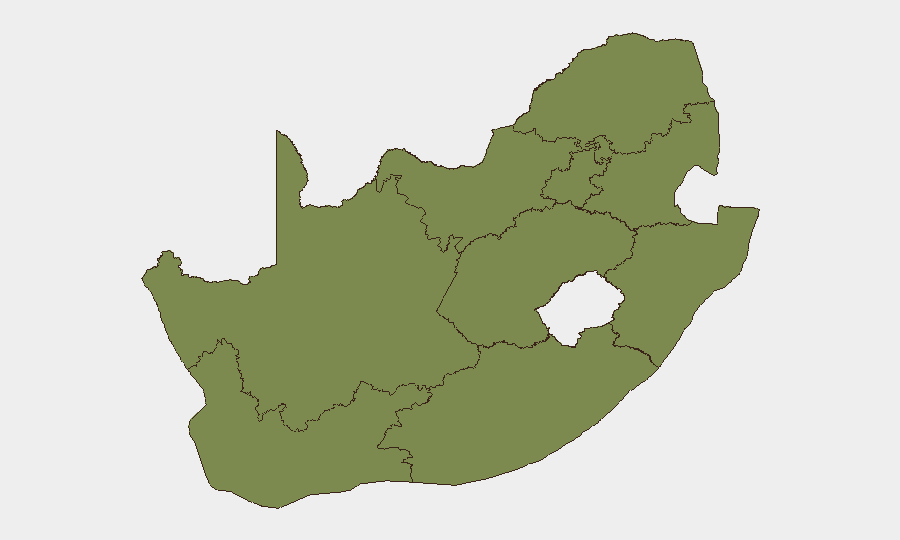
Situation Summary
South Africa (rank #63 globally; composite threat score 19) faces sustained multi-vectored security pressure across urban crime, xenophobic tensions, and state enforcement operations. Two mass shootings on the Cape Flats within hours on 9 July—killing seven and wounding five—underscore the lethal gang and firearm-access problem in Western Cape townships, while concurrent large-scale migration raids in Johannesburg signal intensified state enforcement that carries near-term friction risk. Gauteng and Free State remain the highest-risk provinces (scores 32.7 and 28.6 respectively), driven by organised crime, illicit mining networks, and urban violence; the immediate threat landscape is volatile and locally acute rather than nationally destabilising.
Key Developments
- Mitchells Plain and Philippi East, Cape Town (9 Jul): Two mass shootings in Tafelsig (Mitchells Plain) and Philippi East killed seven people and injured five; Western Cape police are investigating possible links between incidents and have deployed specialist detectives. This marks a sharp escalation in Cape Flats gang-related firearm violence.
- Ballito Junction Regional Mall, KwaZulu-Natal (8–9 Jul): Heightened security presence continues following disclosure of failed bomb plot by a 15-year-old arrested last week; authorities maintain visible deployments around the mall, signalling elevated alert posture in the region.
- Johannesburg CBD and inner city, Gauteng (9 Jul): Multi-agency operation arrested over 100 undocumented migrants (primarily from Lesotho, Mozambique, Zimbabwe) and targeted suspected criminals in an enforcement drive against illegal mining, robbery, and organised crime networks. Ad-hoc checkpoints and localized tensions likely in affected areas.
- National travel advisories (8–9 Jul updated): New Zealand SafeTravel and other sources warn of ongoing demonstrations and protests in major South African cities with risk of rapid escalation to violence; traffic and public-transport disruption reported.
- Prosecutor and regulator statements (9 Jul): Public statements from prosecutorial and regulatory bodies signal ongoing investigations; military and intelligence agencies also conducting investigations (signal events 9 Jul), suggesting active government response to undisclosed incidents.
- Migrant and foreign-national unrest signals (7–9 Jul): Intelligence signals include violent protest/riot involving Nigerians (7 Jul), foreign-national demonstrations (9 Jul), and tensions between foreign nationals and migrants, reflecting xenophobic friction in urban areas.
Highest-Risk Areas
Gauteng (32.7) and Free State (28.6) drive national risk, with KwaZulu-Natal (22.7) as a secondary hotspot. Gauteng's score reflects Johannesburg's role as a nexus of organised crime, illicit mining, people-smuggling, and xenophobic violence, exacerbated by weak governance in inner-city zones. The Free State's elevated ranking reflects similar organised-crime and inter-community violence patterns. Western Cape (9.4), despite recent mass shootings, ranks lower on the composite index, likely because gang violence there, while lethal, remains geographically concentrated in townships rather than systemic across the province. Northern Cape and Mpumalango carry minimal composite risk (2.7 each), reflecting lower event density and intensity.
How GeoBit Would Assist
Teams with personnel or assets in Gauteng, Free State, or KwaZulu-Natal should deploy AOI Monitoring & Early Warning on high-value facility locations (offices, residences, logistics hubs) to detect protest, roadblock, or crime-cluster activity in real time. Network & Actor Analysis and OSINT fusion (X, Telegram, local news feeds, Instagram SIGINT) enable tracking of xenophobic rhetoric, gang communication, and state enforcement patterns that precede violence. Routing & Network Analysis supports dynamic route-planning for personnel, avoiding demonstrations and security cordons on a 24–48-hour refresh cycle.
7-Day Outlook
Gang violence on the Cape Flats is likely to trigger retaliatory incidents and police counter-operations over 7–10 days, maintaining Western Cape alert status. Johannesburg's enforcement crackdown will persist, generating checkpoints and localized xenophobic friction. Protest risk across major cities remains elevated but non-directional; demonstration frequency may rise if political or labour triggers emerge.
Highest-Risk Areas — Ranked
| # | State / Region | Risk |
|---|---|---|
| 1 | Gauteng | 32.7 |
| 2 | Free State | 28.6 |
| 3 | KwaZulu-Natal | 22.7 |
| 4 | North West | 16.1 |
| 5 | Limpopo | 15.6 |
| 6 | Eastern Cape | 11.2 |
| 7 | Western Cape | 9.4 |
| 8 | Northern Cape | 2.7 |
| 9 | Mpumalanga | 2.7 |
Sources
Previous Daily Briefs
A new South Africa brief is written every day — each with its own risk map and downloadable CSV. Here's the last week; use the calendar to go further back.
📅 Browse every day by calendar →
Highlighted days have a brief. Tap a day for that day's map & analysis, or “csv” for that day's dataset ($5).
Atlas — our AI intelligence desk — emails them this snapshot personally. Nothing else, no list.