Situation Summary
The UAE remains a relatively stable, low-threat environment with a composite threat score of 22 globally. However, the June 23 official attribution of May 17 drone strikes on the Barakah Nuclear Power Plant to Iranian-backed groups operating from Iraqi territory has refreshed threat awareness and underscored persistent regional vulnerability to aerial attack. Current messaging from UAE Ministry of Defence emphasizes effective air-defence interception and operational control, though regional instability—particularly Iran-US dynamics—continues to create unpredictable risk vectors. No new physical security incidents have been independently verified in the last 24–48 hours within the UAE.
Key Developments
- Abu Dhabi, June 23, 2026: UAE Ministry of Defence released formal attribution statement confirming that three of six drones that targeted the country over a 48-hour period in mid-May originated from Iraqi territory and were linked to Iranian-backed proxy groups; one drone struck an electrical generator at Barakah Nuclear Power Plant, causing a fire but no injuries or radiation release.
- UAE nationwide, June 23, 2026: MOD public messaging reiterated that all six drones were successfully detected and engaged by UAE air-defence systems, signalling operational readiness and deterrence capability in the current threat environment.
- Dubai, June 23, 2026: UAE authorities publicly refuted viral social-media claims of a drone strike near Dubai International Airport, confirming the airport remains fully operational and attributing circulating reports to minor debris-related incidents; the clarification reflects heightened public sensitivity to drone-related rumors post-Barakah.
- UK advisory shift, referenced 18–24 June, 2026: UK Foreign Office lifted its "advise against all but essential travel" advisory for the UAE following a US-Iran interim agreement, but retained language describing the regional security situation as "unpredictable," signalling cautious reopening of travel risk assessment.
Highest-Risk Areas
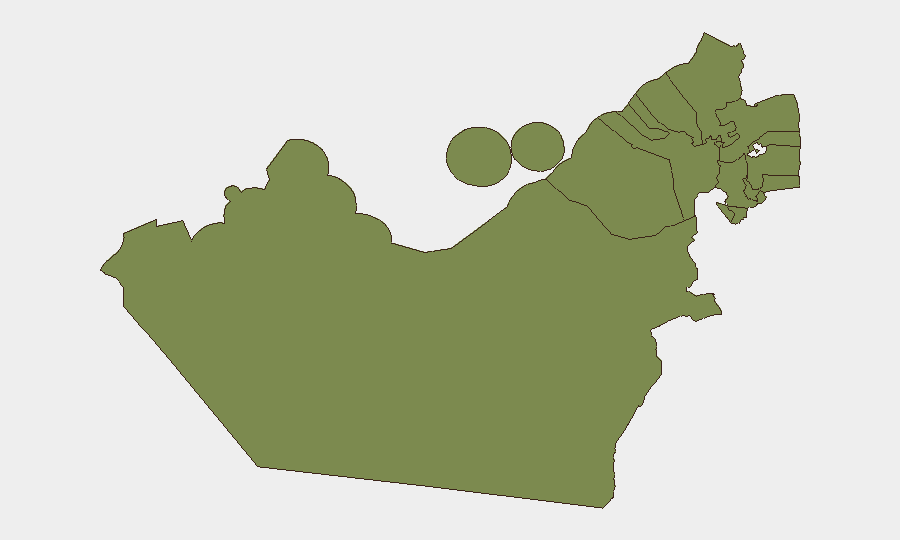
Dubai (risk 31.2) and Abu Dhabi Emirate (risk 26.9) account for the elevated composite risk scores, driven primarily by their role as major commercial, financial, and critical-infrastructure hubs (ports, airports, power and water systems, tourism) that may attract attention during periods of regional tension. The May drone strikes on Abu Dhabi's nuclear facility and the circulation of unverified attack rumors at Dubai International Airport underscore that these emirates remain the focus of both actual and perceived threat activity. The remaining five emirates (Sharjah, Ajman, Ras al-Khaimah, Fujairah, Umm al-Quwain) carry minimal composite risk (1.2 each), reflecting their secondary economic role and distance from major infrastructure targets.
How GeoBit Would Assist
Security teams protecting people and assets in Dubai and Abu Dhabi would deploy AOI (Area-of-Interest) Monitoring & Early Warning on critical facilities (airports, ports, power plants, government compounds) with automated alerting for unusual activity, drone signatures, or regional threat escalation. Conflict & Military tracking combined with Network & Actor Analysis would enable continuous assessment of Iranian-backed proxy capability, positioning, and signalling across Iraq and the broader region. Aviation tracking and Routing & Network Analysis would support real-time alternative-route planning for business travel and supply-chain continuity in the event of airspace restrictions or facility disruption.
7-Day Outlook
No imminent new attack is indicated, and UAE air defences have demonstrated effective interception capability. However, regional Iran-US dynamics remain volatile; any escalation in those tensions or further proxy activity from Iraqi territory could generate rapid follow-on drone activity. Corporate teams should maintain elevated situational awareness of regional diplomatic developments and refresh continuity plans for critical operations in Dubai and Abu Dhabi.
Highest-Risk Areas — Ranked
| # | State / Region | Risk |
|---|---|---|
| 1 | Dubai | 31.2 |
| 2 | Abu Dhabi Emirate | 26.9 |
| 3 | Sharjah Emirate | 1.2 |
| 4 | Ajman Emirate | 1.2 |
| 5 | Ras al-Khaimah | 1.2 |
| 6 | Fujairah Emirate | 1.2 |
| 7 | Umm al-Quwain | 1.2 |
Sources
Previous Daily Briefs
A new United Arab Emirates brief is written every day — each with its own risk map and downloadable CSV. Here's the last week; use the calendar to go further back.
📅 Browse every day by calendar →
Highlighted days have a brief. Tap a day for that day's map & analysis, or “csv” for that day's dataset ($5).