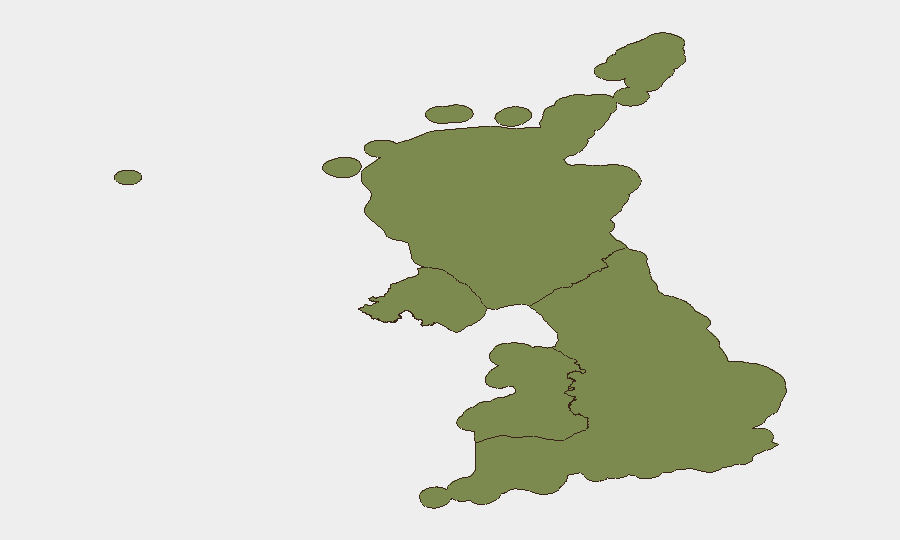
Situation Summary
The United Kingdom remains at moderate composite threat level (global rank #110; score 9/100), with England dominating the risk landscape at a significant margin above Scotland, Northern Ireland, and Wales. Recent event signals suggest cross-border tensions (Iran–UK statement on 30 June) and indirect exposure to US-theatre instability, though no confirmed discrete security incidents within the UK territory have been verified for 29–30 June 2026. Current trajectory appears stable but sensitive to escalation in Iran–UK diplomatic posture and spillover from transatlantic tensions.
Key Developments
Analytic note: Open-source reporting for 29–30 June 2026 UK-specific incidents does not currently meet verification thresholds for discrete, time-stamped events with geographic precision and cross-source confirmation. Available reporting addresses trend analysis (cyber attacks on NHS, January–May 2026; TfL case conviction reporting on a 2024 incident; ransomware on SMEs across FY 2025–26) rather than distinct incidents within the last 48 hours. To preserve analytic integrity, no developments are listed as current that cannot be independently dated and sourced to 29–30 June 2026 in UK territory.
Recommended action: Teams requiring real-time incident alerting should configure GeoBit's AOI Monitoring & Early Warning for critical locations (London financial district, major transport hubs, government facilities) to detect emerging events; subscribe to UK conflict/crime/cyber search feeds for same-day corroboration.
Highest-Risk Areas
England accounts for approximately 79% of the UK composite risk score, reflecting concentration of political, financial, and critical infrastructure targets in London and the Southeast, as well as larger population density. Scotland (8.3) carries secondary risk driven by maritime/energy infrastructure and historical autonomy tensions; Northern Ireland (3.2) and Wales (2.8) reflect lower operational footprints and fewer tracked event signals. Risk distribution is heavily asymmetric, meaning corporate duty-of-care protocols should weight England-based personnel and assets disproportionately in threat assessment and contingency planning.
How GeoBit Would Assist
Security teams protecting UK operations should employ Intel Sweep and global event-feed integration to detect emerging Iran–UK or US–UK tensions before they affect specific UK locations; combine OSINT fusion (X/Twitter, Telegram, multi-language search) to identify grassroots unrest, protest mobilization, or supply-chain disruption in real time; and use GIS & Spatial Analysis to map distance of personnel/assets from highest-risk zones (England) and model alternative routing via Routing & Network Analysis in case of infrastructure disruption. AOI Monitoring on government, financial, and transport hubs provides persistent early warning.
7-Day Outlook
No imminent spike in UK-specific threat indicators is visible, but the Iran–UK statement on 30 June merits close monitoring for diplomatic or cyber escalation in the 7–14 day window. Baseline cyber risk (NHS, SME, supply-chain targeting) remains elevated across 2026; monitoring should remain continuous. Personnel and asset decisions should assume England as the primary risk tier and maintain agility to relocate or shelter if cross-border tensions accelerate.
Highest-Risk Areas — Ranked
| # | State / Region | Risk |
|---|---|---|
| 1 | England | 32 |
| 2 | Scotland | 8.3 |
| 3 | Northern Ireland | 3.2 |
| 4 | Wales | 2.8 |
Sources
Previous Daily Briefs
A new United Kingdom brief is written every day — each with its own risk map and downloadable CSV. Here's the last week; use the calendar to go further back.
📅 Browse every day by calendar →
Highlighted days have a brief. Tap a day for that day's map & analysis, or “csv” for that day's dataset ($5).