Situation Summary
The United States remains at moderate composite threat level (rank #54 globally, score 25) with 7,245 tracked events, showing persistent volatility across multiple threat vectors: civil unrest, street-level violence, cyber intrusions, and infrastructure failure. The past 24–48 hours have registered elevated activity concentrated in high-density urban zones (California, Texas, New York) spanning political protest, armed crime, transit disruption, and public-sector cyber compromise. The trajectory indicates sustained baseline instability without imminent systemic escalation, though clustering of simultaneous incidents across geographically dispersed cities suggests operational strain on local law-enforcement and municipal response capacity.
Key Developments
- Washington, DC – 17 June – Multiple arrests at White House-area protest over U.S.–Iran peace framework; Park Police and DC Metro Police used bicycle lines and targeted detention after dispersal-order non-compliance near Lafayette Square.
- Houston, Texas – 17 June – Three-victim shooting (one critical) at southwest-side apartment complex; suspect fled; active police search ongoing.
- Chicago, Illinois – 17 June – Armed robbery on CTA Red Line southbound train prompted full service suspension between Roosevelt and 95th/Dan Ryan, evacuation, and extended platform clearance; residual delays persisted through evening.
- Oakland, California – 17 June overnight – Large illegal sideshow (street-racing gathering) on Interstate 880 near downtown with reported gunfire; CHP closed lanes, dispersed crowds, and recovered shell casings.
- Atlanta, Georgia – 17 June – Major water-main break in Midtown flooded streets, closed several blocks, and triggered boil-water advisories for adjacent residential and commercial zones; ongoing repair operations.
- Portland, Oregon – 17 June evening – Downtown march protesting police use-of-force incident turned confrontational; multiple arrests, vandalism, and graffiti documented; unlawful assembly declared and dispersal orders issued.
- New York City, New York – 17 June – Municipal agency ransomware intrusion disrupted public-facing online services; no confirmed sensitive-data theft; critical operations sustained offline; investigation ongoing.
- Phoenix, Arizona – 17 June – Electrical substation equipment failure triggered rolling blackouts during extreme-heat conditions; temporary cooling centers opened; traffic-signal outages and ongoing repairs.
Highest-Risk Areas
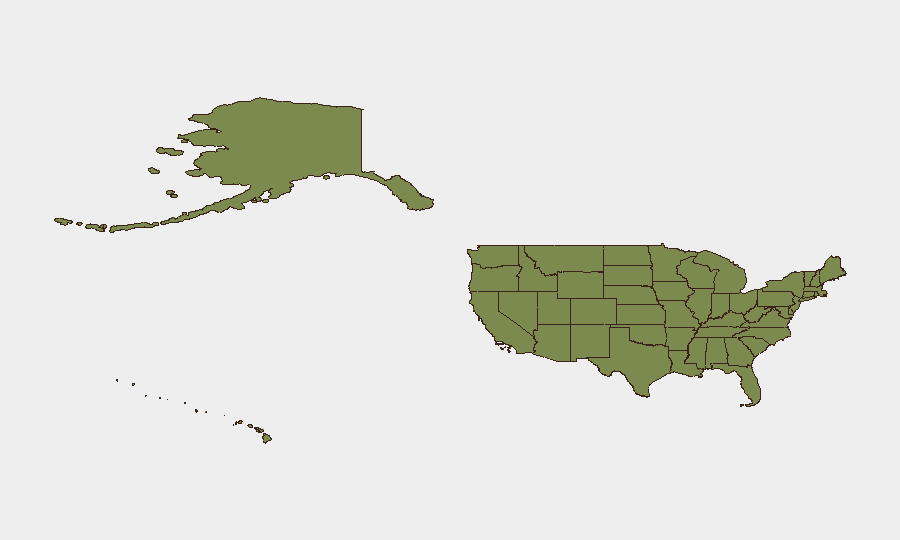
California (34.5), Texas (28.8), and Kansas (22.9) drive the national composite risk score, followed by New York (22.7) and Florida (18.4). California's elevated ranking reflects concurrent sideshow/shooting activity and ongoing civic unrest in the Bay Area; Texas concentration in Houston reflects multi-victim armed crime and broader metropolitan violence clusters. New York's ranking encompasses both cyber compromise of public infrastructure and hospital-level assault incidents. Kansas's presence in the top three suggests either concentrated recent event density or sustained protest/demand activity; further sub-state detail would clarify whether risk is metropolitan or dispersed.
How GeoBit Would Assist
Corporate security teams in these high-risk states should employ GeoBit's Intel Sweep and X/Twitter OSINT capabilities to monitor real-time protest activity, crowd assembly, and civil-unrest signaling across California, Texas, and New York metros; AOI Monitoring & Early Warning on logistics hubs, transit nodes, and corporate facilities in top-five risk states to detect emerging physical-security threats and infrastructure disruption; and Cyber Intelligence (via breach-tracker fusion and infosec-feed monitoring) to anticipate municipal and regional ransomware campaigns and advise on third-party vendor exposure.
7-Day Outlook
Protest activity around foreign-policy decisions (Iran framework) is likely to persist in DC and major coastal cities through mid-week; street-level violence in Houston and broader Texas metro areas shows no immediate de-escalation signals. Infrastructure incidents (power, water, transit) are episodic but will compound response strain if clustering continues; cyber targeting of public-sector entities is expected to remain opportunistic rather than coordinated at present.
Highest-Risk Areas — Ranked
| # | State / Region | Risk |
|---|---|---|
| 1 | California | 34.5 |
| 2 | Texas | 28.8 |
| 3 | Kansas | 22.9 |
| 4 | New York | 22.7 |
| 5 | Florida | 18.4 |
| 6 | Ohio | 14.6 |
| 7 | Illinois | 13.6 |
| 8 | Mississippi | 12.3 |
| 9 | Georgia | 11.5 |
| 10 | Louisiana | 11.1 |
| 11 | New Jersey | 10.3 |
| 12 | Pennsylvania | 9.7 |
Previous Daily Briefs
A new United States brief is written every day — each with its own risk map and downloadable CSV. Here's the last week; use the calendar to go further back.
📅 Browse every day by calendar →
Highlighted days have a brief. Tap a day for that day's map & analysis, or “csv” for that day's dataset ($5).