Situation Summary
Uzbekistan remains at a low composite threat level (3/100) with minimal overt security incidents in the last 24–48 hours. The country's overall stability profile is stable; however, cross-border narcotics trafficking from Afghanistan continues as a persistent operational concern, with three separate drug seizures reported in Surxondaryo and Samarkand on 21–22 June. High-level diplomatic and administrative activity (Tokayev–Mirziyoyeva meeting, 22 June) underscores normal political-business engagement and carries no unrest signals.
Key Developments
- Surxondaryo Region (border with Afghanistan), 21–22 June – Uzbek State Security Service and police conducted a joint controlled-delivery operation seizing approximately 37 kg of opium and hashish smuggled from Afghanistan; multiple suspects detained under Criminal Code Articles 246 and 273.
- Samarkand City, 21–22 June – Four individuals (two Uzbek nationals, two foreign nationals) arrested during the same operation while taking delivery of the confiscated narcotics shipment, indicating organized-crime participation along major domestic logistics routes and in a key tourist hub.
- Termez International Trade Centre, Surxondaryo, 21–22 June – Two Afghan nationals detained attempting to sell approximately 1.07 kg of opium (asking price USD 5,000); authorities recovered drugs that had been smuggled using body-concealment methods, highlighting border-crossing vulnerability and evolving smuggler tactics.
- Tashkent (Presidential Administration), 22 June – Kazakh President Kassym-Jomart Tokayev met Saida Mirziyoyeva, head of Uzbekistan's Presidential Administration, to discuss political and socio-economic reforms and bilateral cooperation; no civil unrest or security incidents reported in conjunction.
Highest-Risk Areas
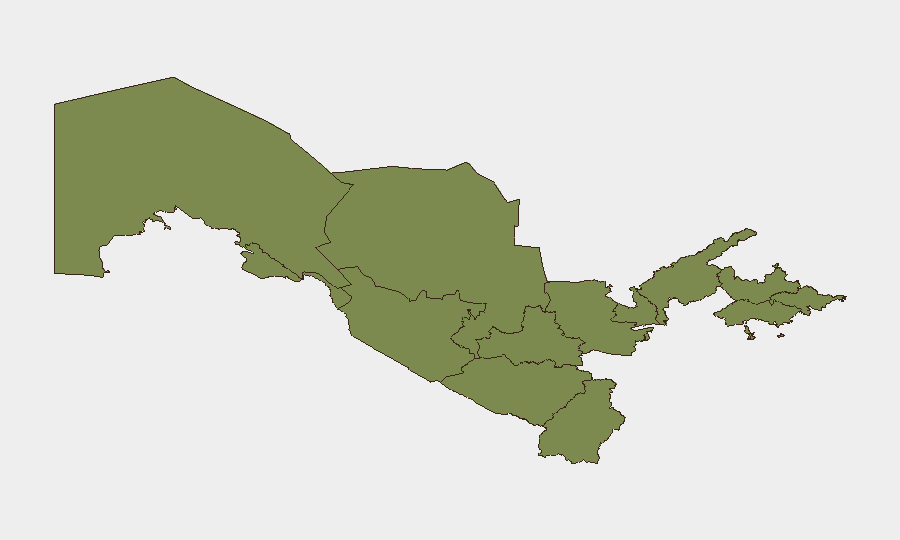
Tashkent dominates the sub-national risk profile (31.2), reflecting its status as the capital, largest urban center, and site of most administrative and diplomatic activity. Bukhara Region ranks second (7.2), driven primarily by cross-border smuggling activity with Afghanistan and associated organized-crime networks. All remaining regions cluster at baseline risk (1.2 each), indicating that threats are geographically concentrated in the south and capital rather than dispersed. The Surxondaryo and Fergana regions, which share the Afghan border, warrant continuous monitoring of narcotics flows and trafficking methods, as demonstrated by the 21–22 June seizures.
How GeoBit Would Assist
Security and duty-of-care teams operating in Uzbekistan should employ AOI (Area-of-Interest) Monitoring & Early Warning on Tashkent, Surxondaryo, and Bukhara to detect emerging unrest, organized-crime activity, or border incidents in near-real time. OSINT Fusion & Corroboration (X/Twitter, Telegram, local-language media) combined with Network & Actor Analysis will map trafficking organizations, arrest patterns, and security-force posture around Termez and other border crossings. Routing & Network Analysis should be used to plan alternative logistics routes and travel corridors that avoid high-crime or high-police-activity zones, particularly in Surxondaryo and along Afghanistan-border transit points.
7-Day Outlook
No significant escalation in security incidents is anticipated over the next seven days. Narcotics trafficking operations will likely persist as a chronic rather than acute threat; the frequency of seizures suggests Uzbek law-enforcement capability is present and active. Diplomatic and administrative normality is expected to continue, absent external shocks or unexpected border incidents.
Highest-Risk Areas — Ranked
| # | State / Region | Risk |
|---|---|---|
| 1 | Tashkent | 31.2 |
| 2 | Bukhara Region | 7.2 |
| 3 | Qashqadaryo Region | 1.2 |
| 4 | Surxondaryo Region | 1.2 |
| 5 | Fergana Region | 1.2 |
| 6 | Republic of Karakalpakstan | 1.2 |
| 7 | Xorazm Region | 1.2 |
| 8 | Navoiy Region | 1.2 |
| 9 | Jizzakh Region | 1.2 |
| 10 | Tashkent Region | 1.2 |
| 11 | Namangan Region | 1.2 |
| 12 | Sirdaryo Region | 1.2 |
Sources
Previous Daily Briefs
A new Uzbekistan brief is written every day — each with its own risk map and downloadable CSV. Here's the last week; use the calendar to go further back.
📅 Browse every day by calendar →
Highlighted days have a brief. Tap a day for that day's map & analysis, or “csv” for that day's dataset ($5).