Situation Summary
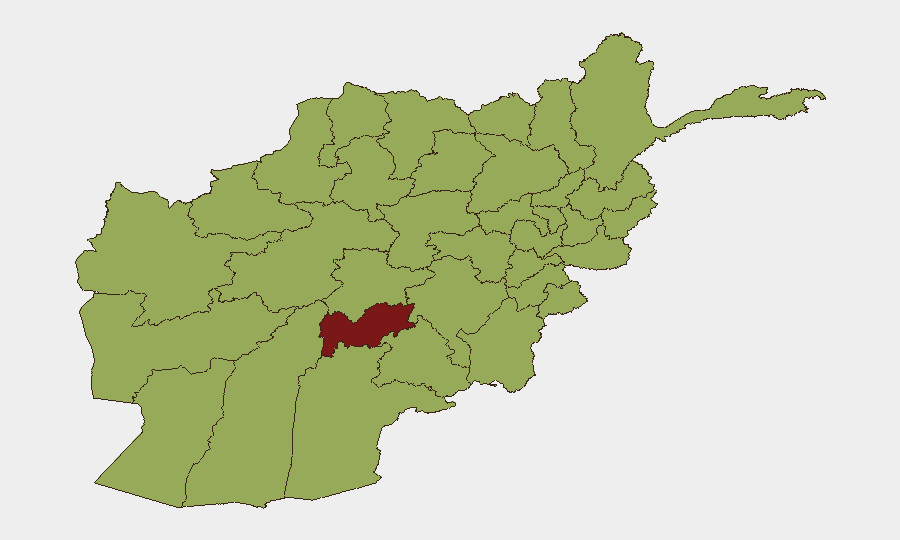
Afghanistan remains at elevated risk (#18 globally) with insurgent activity as the primary driver. The 33 tracked events in the current reporting window reflect continued pressure on state authority, particularly in southern and eastern provinces. Sub-national risk is heavily concentrated: Uruzgan Province stands at 80.3 (substantially above the national composite of 72), while a secondary tier of high-risk zones clusters around 50–53. The security environment shows no signs of near-term stabilization.
Key Developments
Limitation on Current Reporting: GeoBit's live web research capability has not yielded verifiable, time-stamped incident-level reporting specific to 14–16 June 2026. Available open sources either pre-date the last 24–48 hours, lack precise dating, or describe medium-term trends rather than discrete events. The event signals listed (President statements, settlement disputes, arrests in Philadelphia, Pakistan–Taliban communications) do not constitute Afghanistan-specific security incidents suitable for duty-of-care briefing.
Background Context (not current developments):
- Pakistani airstrikes on multiple Afghan provinces on 10 June were reported to break a month-long lull in cross-border military action, signaling renewed Pakistan–Taliban tensions.
- UN Security Council engagement on women's rights and Taliban governance continues; Herat arrests occurred earlier in June in connection with broader enforcement patterns.
- Russia–Taliban military/technical cooperation and Central Asia–Afghanistan dialogue remain active but without verifiable incident updates in the last 48 hours.
To obtain incident-level fidelity (specific location, time, actor, event type) for the current 48-hour window would require access to near-real-time threat feeds, direct monitoring of regional Telegram channels and Dari/Pashto-language reporting, or commercial intelligence platforms with on-ground collection in Afghanistan.
Highest-Risk Areas
Uruzgan Province's risk score of 80.3 reflects concentrated insurgent presence, limited state capacity, and a history of Taliban stronghold activity; it is substantially more volatile than the national baseline and warrants isolation as a no-go zone for non-essential personnel. A secondary cohort—Kunduz, Zabul, Helmand, Kandahar, Ghazni, Paktika, Farah, Nimruz, Jowzjan, Balkh, and Badghis—all score 50–53, indicating systemic instability across the south, east, and north. This geographic spread suggests insurgent pressure is not isolated to single regions but reflects fragmented state control nationwide. Border zones (Paktika, Farah, Nimruz, Badghis) carry additional risk from cross-border movement and Pakistan–Afghanistan friction.
How GeoBit Would Assist
AOI Monitoring & Early Warning with persistent geofencing on Uruzgan and secondary high-risk provinces would provide alert-based coverage of activity changes and incident clustering, enabling duty-of-care teams to adjust presence or movement in real time. Conflict & Military force-structure and weapons-capability tracking, combined with Network & Actor Analysis, would support assessment of Taliban factional control, splinter-group activity, and ISKP presence in specific regions. Routing & Network Analysis allows security teams to model alternative movement corridors and safe passage through contested areas, critical for supply chains and personnel rotation.
7-Day Outlook
No major tactical escalation is expected in the immediate seven days, though the Pakistan–Afghanistan border tension from early June may persist as both sides calibrate posture. Uruzgan and secondary high-risk zones will likely remain volatile; routine insurgent activity (ambush, IED, taxation) should be assumed baseline. Humanitarian access constraints will continue, limiting visibility into ground-truth incident reporting and increasing reliance on signal intelligence and cross-border observer networks.
Highest-Risk Areas — Ranked
| # | State / Region | Risk |
|---|---|---|
| 1 | Uruzgan Province | 80.3 |
| 2 | Kunduz Province | 52.9 |
| 3 | Zabul Province | 51 |
| 4 | Helmand Province | 51 |
| 5 | Kandahar Province | 50.3 |
| 6 | Ghazni Province | 50.3 |
| 7 | Paktika Province | 50.3 |
| 8 | Farah Province | 50.3 |
| 9 | Nimruz Province | 50.3 |
| 10 | Jowzjan Province | 50.3 |
| 11 | Balkh Province | 50.3 |
| 12 | Badghis Province | 50.3 |
Sources
Previous Daily Briefs
A new Afghanistan brief is written every day — each with its own risk map and downloadable CSV. Here's the last week; use the calendar to go further back.
📅 Browse every day by calendar →
Highlighted days have a brief. Tap a day for that day's map & analysis, or “csv” for that day's dataset ($5).