Situation Summary
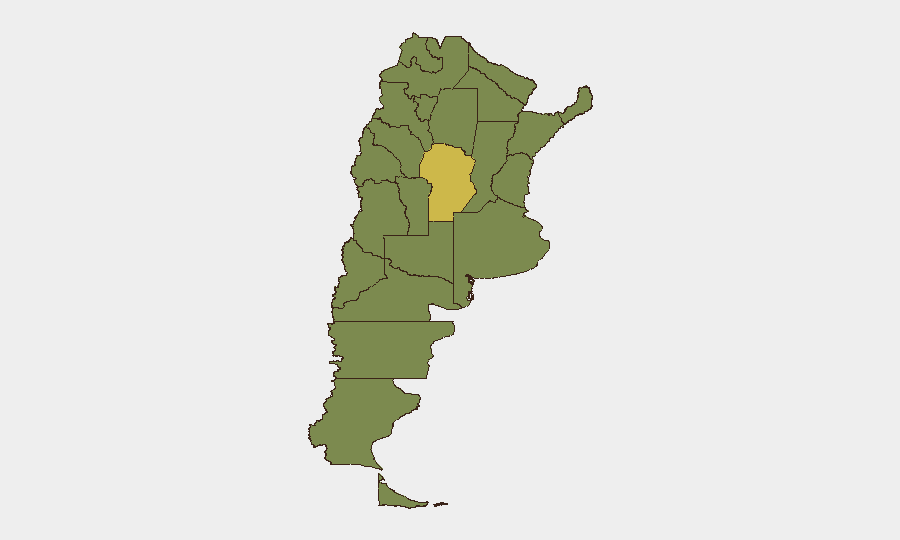
Argentina remains a moderate, stable-risk environment (global rank #48) with no acute security incidents or mass civil unrest confirmed in the last 24–48 hours. Open-source monitoring across news, social media, and official channels documents heightened visible police and military presence in major urban centers as a precautionary posture, alongside elevated civic and political discourse, but no verified violent escalation or infrastructure disruption. Córdoba Province continues to drive national risk metrics due to persistent administrative and political tensions; Buenos Aires and other major provinces remain elevated-risk zones but stable. The overall threat trajectory is assessed as moderate but non-deteriorating.
Key Developments
- Buenos Aires and major urban centers (28–30 June): Heightened police and military presence documented as precautionary measure; no specific incident or unrest outbreak confirmed in latest 24–48-hour window.
- National political environment (28–30 June): Multiple government and parliamentary statements, disapprovals, and investigative actions recorded in event signals; no acute security incident or mass mobilization tied to statements.
- Córdoba Province (elevated, ongoing): Continues as highest sub-national risk area (composite 61.7); political and administrative tensions persist but no new violent incidents or infrastructure failures confirmed in last 48 hours.
- Buenos Aires Province (ongoing): Secondary elevated-risk zone; standard monitoring protocols in place with no new incident developments in latest period.
- Cross-border signal (28 June): Event signal flagged conventional military force activity involving Paraguay and investor; no confirmation of direct Argentine security impact in open-source checks.
Highest-Risk Areas
Córdoba Province dominates the sub-national risk ranking (61.7), driven by ongoing political and administrative friction; Buenos Aires City and Province together represent the second-tier concentration of risk (35.4 and 33.0 respectively), reflecting both population density and governance complexity. Río Negro, La Rioja, Santiago del Estero, and Jujuy provinces follow as secondary elevated-risk zones. This distribution reflects political instability, administrative tensions, and localized crime vectors rather than acute conflict or terrorism. Personnel and asset concentration in Buenos Aires and Córdoba warrants standard heightened protocols; operations in smaller provinces in the northwest and Patagonia should maintain baseline awareness but do not present acute near-term escalation risk.
How GeoBit Would Assist
Security teams should deploy AOI Monitoring & Early Warning on Córdoba and Buenos Aires (city and province) to flag real-time developments in political discourse, protest activity, and police/military movement. Intel Sweep, multi-language OSINT, and X/Telegram monitoring enable continuous detection of emerging threats—including political instability signals, protest organization, and crime trends—before they reach mainstream reporting. Network & Actor Analysis and Sentiment & Temporal Analysis support early identification of high-risk political or criminal actors and escalation patterns, enabling proactive duty-of-care decisions for personnel and asset positioning.
7-Day Outlook
No acute security deterioration is expected over the next seven days; current political and administrative tensions are assessed as elevated but stable and non-violent. Standard corporate security protocols—including personnel movement planning, asset monitoring, and real-time event alerting—remain appropriate. Continued monitoring of Córdoba and Buenos Aires political developments is recommended to detect any shift toward mass mobilization or infrastructure impact.
Highest-Risk Areas — Ranked
| # | State / Region | Risk |
|---|---|---|
| 1 | Córdoba | 61.7 |
| 2 | Río Negro Province | 35.8 |
| 3 | La Rioja Province | 35.4 |
| 4 | Autonomous City of Buenos Aires | 35.4 |
| 5 | Santiago del Estero Province | 34.7 |
| 6 | Jujuy Province | 33.3 |
| 7 | Buenos Aires Province | 33 |
| 8 | Mendoza Province | 32.3 |
| 9 | Salta Province | 32.3 |
| 10 | Chubut Province | 32.3 |
| 11 | Chaco Province | 32 |
| 12 | San Juan Province | 31.7 |
Sources
Previous Daily Briefs
A new Argentina brief is written every day — each with its own risk map and downloadable CSV. Here's the last week; use the calendar to go further back.
📅 Browse every day by calendar →
Highlighted days have a brief. Tap a day for that day's map & analysis, or “csv” for that day's dataset ($5).