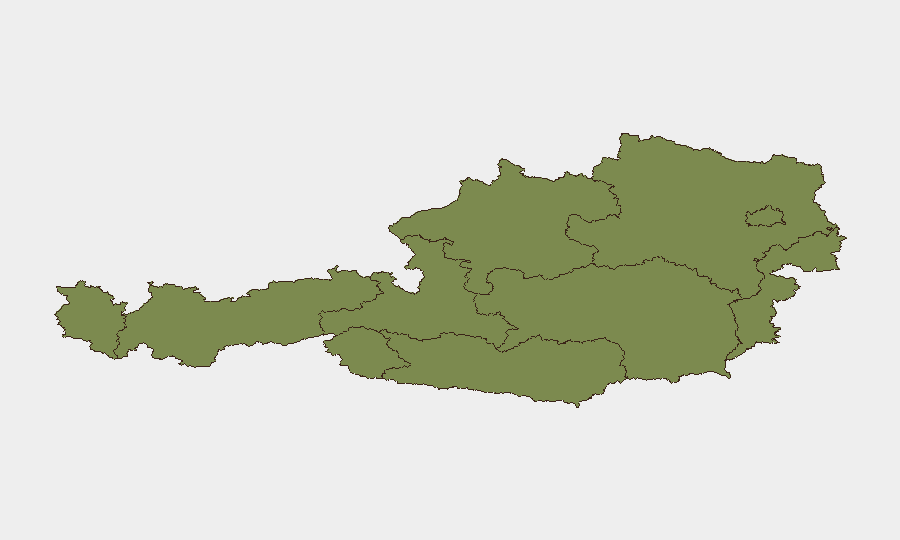
Situation Summary
Austria remains at composite threat rank #null globally (score 43/100) with 12 tracked events over the monitoring period. No credible, time-stamped security incidents, civil unrest, or infrastructure disruptions have been verified in Austrian territory within the last 24–48 hours via open-source channels. Heightened security measures are in place at strategic facilities due to regional geopolitical tension (Iran–Israel dynamics), but this precaution does not reflect an active threat event within Austria itself. The risk profile remains stable, with Vienna accounting for the plurality of measured exposure.
Key Developments
No verified incidents meeting recency and specificity criteria have been identified in the last 24–48 hours. Open-source research confirmed the absence of dated, location-specific security events, criminal activity, demonstrations, or infrastructure failures in Austria within this window.
*Background context (not current developments):*
- Police have reported completion of investigations into older cases, including a €240,000+ firm theft in Leoben, Styria (8 July 2026) and serial burglaries in Wien-Favoriten (incidents since February 2025), but these are archival.
- Fiber-optic disruptions in Vienna linked to a bridge fire on 19 June 2026 have been resolved.
- Austria activated enhanced security protocols in response to Iran–Israel tensions affecting regional stability; no specific threat incidents within Austria have been publicly disclosed.
Highest-Risk Areas
Vienna dominates the sub-national risk profile (score 31.3), accounting for >70 % of measured risk and reflecting its status as the capital, seat of international organizations, and hub for diplomatic, financial, and transport infrastructure. Lower Austria (12.2) is secondary but significantly lower, driven by proximity to Vienna and standard metropolitan-adjacent vulnerabilities. All other states (Vorarlberg, Tyrol, Upper Austria, Salzburg, Carinthia, Styria, Burgenland) score uniformly at 1.3, indicating baseline risk with no acute regional drivers. Vienna's concentration of risk reflects the density of soft targets (international organizations, transport hubs, government facilities) and its operational importance to regional supply chains and diplomatic networks.
How GeoBit Would Assist
Security teams monitoring Austria should employ AOI (Area-of-Interest) Monitoring & Early Warning with persistent watch on Vienna's critical infrastructure and diplomatic precincts, coupled with Intel Sweep and multi-language OSINT (X/Twitter, Telegram, local news feeds) to detect emerging labor, political, or security signals before they escalate. Network & Actor Analysis and sentiment & temporal analysis tools would enable rapid classification of any grassroots organizing, protest coordination, or threat-actor communication. Routine use of Routing & Network Analysis supports contingency planning for key personnel and asset movements should conditions shift.
7-Day Outlook
No escalation in Austria-specific threats is anticipated over the next seven days absent a major shift in Iran–Israel hostilities or unexpected regional political rupture. Monitoring posture should remain elevated at Vienna's international facilities and border crossing points; routine travel and business operations face no material elevation in risk. Standard duty-of-care protocols (staff awareness, contingency routing, facility security reviews) suffice for current conditions.
Highest-Risk Areas — Ranked
| # | State / Region | Risk |
|---|---|---|
| 1 | Vienna | 31.3 |
| 2 | Lower Austria | 12.2 |
| 3 | Vorarlberg | 1.3 |
| 4 | Tyrol | 1.3 |
| 5 | Upper Austria | 1.3 |
| 6 | Salzburg | 1.3 |
| 7 | Carinthia | 1.3 |
| 8 | Styria | 1.3 |
| 9 | Burgenland | 1.3 |
Sources
Previous Daily Briefs
A new Austria brief is written every day — each with its own risk map and downloadable CSV. Here's the last week; use the calendar to go further back.
📅 Browse every day by calendar →
Highlighted days have a brief. Tap a day for that day's map & analysis, or “csv” for that day's dataset ($5).
Atlas — our AI intelligence desk — emails them this snapshot personally. Nothing else, no list.