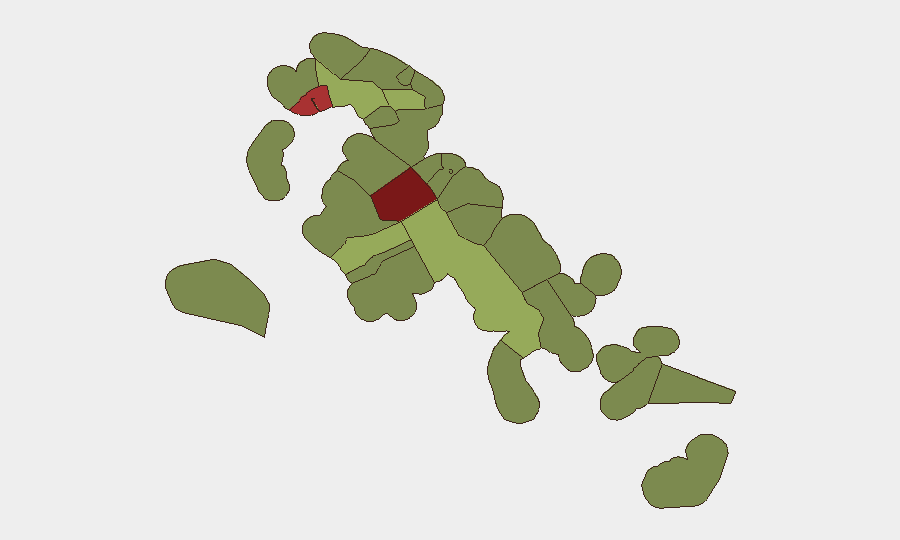
Situation Summary
The Bahamas remains at moderate composite threat level (rank #83 globally, score 21), with crime and gang activity as the primary driver. No major systemic security incidents occurred in the week of 2026-09-01 to 2026-09-08, though isolated violent crimes continued in high-risk urban centers. The security environment is characterized by persistent street-level violence concentrated in Nassau and Freeport, with no indication of broader destabilization or deterioration.
Key Developments
- Abaco, 2026-09-06 to 2026-09-07: Man identified as Warren "Spy" Ellis was shot dead outside an auto parts store; a child was also wounded in the incident. Local sources flagged concern over potential retaliation, suggesting possible gang-related motivation and elevated risk of further violence in the region.
- Nassau (New Providence), 2026-09-06: Secondary reporting documented a downtown Nassau shooting following an escalated argument; victim fatality reported but independent corroboration pending. Incident consistent with pattern of spontaneous interpersonal violence in the capital.
- Nassau and Freeport, 2026-09-02: U.S. State Department reiterated travel warnings for violent crime affecting both cities; advisory update signals sustained diplomatic concern but reflects ongoing risk context rather than a discrete new incident this week.
- Nassau (New Providence), 2026-09-02: Bahamas Educators Managerial Union industrial action disrupted school operations and turned away students at multiple locations. Strike was labor-focused with no reported broader civil unrest or secondary security spillover.
- Bahamas-wide, 2026-09-03 to 2026-09-04: Government and telecom officials convened policy forum in Nassau to address infrastructure resilience, cybersecurity standards, and connectivity diversification. Reflects institutional focus on critical infrastructure hardening but signals no imminent cyber or telecommunications crisis.
Highest-Risk Areas
New Providence (risk 92) and City of Freeport (risk 78) account for the majority of national threat concentration, driven by gang presence, interpersonal violence, and street-level crime. Central Abaco (52) and Central Andros (48) follow as secondary risk zones, with recent homicide activity in Abaco reinforcing elevated concern in that district. Remaining outer islands (Exuma, East Grand Bahama, Cat Island) remain at lower to moderate risk, suggesting crime is predominantly urban and concentrated in three principal population centers. Corporate teams with personnel in Nassau and Freeport should maintain heightened situational awareness and restrict movement to well-traveled, populated routes during evening hours.
How GeoBit Would Assist
Security teams managing exposure in Bahamas would employ Intel Sweep and global event feeds to detect emerging crime patterns and gang activity before escalation, coupled with AOI (Area-of-Interest) Monitoring & Early Warning persistent watch on New Providence and Freeport to trigger alerts on shooting incidents or civil unrest. Network & Actor Analysis would support mapping of gang structures and conflict drivers across high-risk districts, informing travel-restriction and movement protocols. Routing & Network Analysis would enable real-time alternative journey planning for personnel transiting Nassau and Freeport, avoiding zones flagged by contemporaneous threat signals.
7-Day Outlook
No systemic security event is anticipated in the week ahead; street-level violence is expected to remain episodic and localized to Nassau and Freeport. Retaliation risk following the Abaco homicide warrants close monitoring, particularly if secondary shootings occur. Overall threat trajectory remains stable at current composite level absent major gang conflict escalation or organized crime shift.
Highest-Risk Areas — Ranked
| # | State / Region | Risk |
|---|---|---|
| 1 | New Providence | 92 |
| 2 | City of Freeport | 78 |
| 3 | Central Abaco | 52 |
| 4 | Central Andros | 48 |
| 5 | Exuma | 45 |
| 6 | East Grand Bahama | 42 |
| 7 | South Andros | 38 |
| 8 | North Abaco | 35 |
| 9 | North Eleuthera | 33 |
| 10 | South Abaco | 32 |
| 11 | Cat Island | 30 |
| 12 | Mangrove Cay | 28 |
Sources
Previous Weekly Briefs
A new Bahamas brief is written every Monday, covering the week — each with its own risk map and downloadable CSV. Use the calendar to go further back.
- September 2, 2026
- August 31, 2026
- August 29, 2026
- August 27, 2026
- August 25, 2026
- August 23, 2026
- August 21, 2026
📅 Browse past briefs by calendar →
Highlighted days have a brief. Tap a day for that day's map & analysis, or “csv” for that day's dataset ($5).
Atlas — our AI intelligence desk — emails them this snapshot personally. Nothing else, no list.