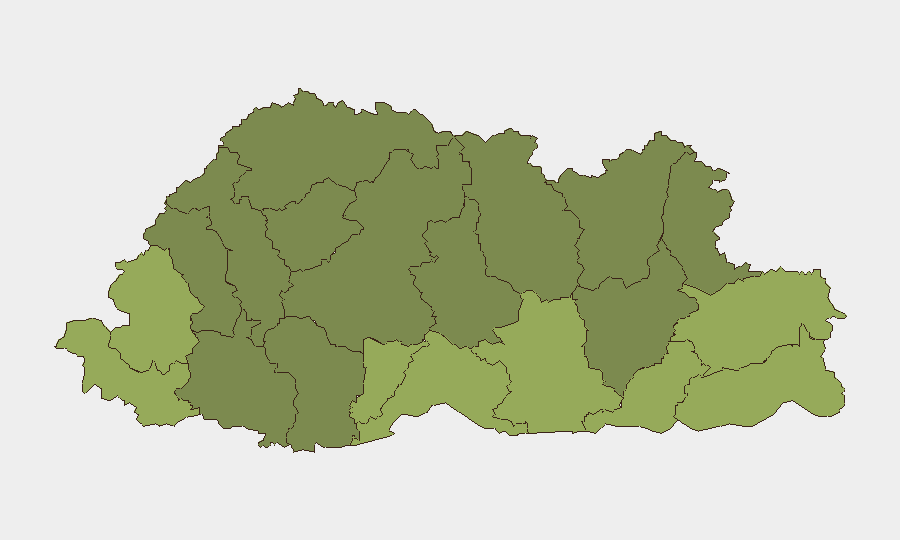
Situation Summary
Bhutan remains stable and low-risk from a security perspective as of 10 July 2026. No credible reports of civil unrest, border incidents, terrorism, or major crime have emerged in the last 24–48 hours across accessible open-source channels, official advisories, or social media. The overall threat composite score of 2 and global ranking of #198 reflect an operating environment characterized by institutional strength and minimal near-term security volatility.
Key Developments
No significant security incidents have been credibly reported in Bhutan during the 24–48 hour window ending 10 July 2026. Open-source intelligence, including regional media, X/Twitter, and U.S. Department of State materials, contains no alerts, advisories, or confirmed events that would alter the current security posture for corporate operations or personnel. This absence of reported activity itself indicates sustained stability.
In terms of infrastructure or connectivity developments unrelated to security incidents: reports from regional outlets note that Starlink satellite internet service has recently launched in Bhutan, potentially improving high-speed connectivity in remote areas. This expansion has no documented link to cyber incidents, unrest, or physical security concerns.
Historical context (not a current development): arrest and detention events recorded on 8 July involving Bhutanese nationals, Kathmandu entities, and the individual Sujata Koirala were documented by GeoBit signal sources and are under investigation; however, no additional updates or escalation have been reported in the subsequent 48 hours.
Highest-Risk Areas
Southern border districts—Samtse (58), Sarpang (55), Haa (52), and Pemagatshel (50)—carry elevated composite risk scores relative to the national baseline. These regions share proximity to the India–Bhutan border and, in some cases, historical friction points or cross-border movement concerns. Risk drivers in these districts likely reflect long-standing transnational dynamics (migration, informal trade, occasional smuggling activity) rather than acute instability. Central and northern districts (Thimphu region, Wangdue Phodrang, Lhuntse, Gasa) show substantially lower scores, consistent with stronger institutional presence and lower population density. Corporate teams with operations or personnel in the southern belt should maintain standard due-diligence monitoring; no imminent escalation is indicated.
How GeoBit Would Assist
AOI Monitoring & Early Warning on southern border districts would flag any uptick in arrest, detention, or cross-border movement signals before they reach mainstream media. Intel Sweep and multi-language OSINT fusion across regional outlets, Telegram channels, and X would provide early detection of localized unrest, labor disputes, or trafficking activity that could affect supply chains or personnel safety. Network & Actor Analysis focused on key criminal or militant actors in the Samtse–Sarpang corridor would enable predictive assessment of organized crime or smuggling trends that historically characterize these regions.
7-Day Outlook
No material change to the security environment is forecast for the next seven days absent new information. Bhutan's institutional stability, low crime rates, and absence of active political or ethnic tensions suggest continued low risk. Security teams should maintain routine monitoring posture and ensure travel and movement protocols reflect the southern district risk gradient, but no emergency preparedness escalation is warranted at this time.
Highest-Risk Areas — Ranked
| # | State / Region | Risk |
|---|---|---|
| 1 | Samtse District | 58 |
| 2 | Sarpang District | 55 |
| 3 | Haa District | 52 |
| 4 | Pemagatshel District | 50 |
| 5 | Samdrup Jongkhar District | 48 |
| 6 | Tsirang District | 45 |
| 7 | Zhemgang District | 42 |
| 8 | Trashigang District | 40 |
| 9 | Mongar District | 38 |
| 10 | Gasa District | 35 |
| 11 | Lhuntse District | 32 |
| 12 | Wangdue Phodrang District | 30 |
Sources
Previous Daily Briefs
A new Bhutan brief is written every day — each with its own risk map and downloadable CSV. Here's the last week; use the calendar to go further back.
📅 Browse every day by calendar →
Highlighted days have a brief. Tap a day for that day's map & analysis, or “csv” for that day's dataset ($5).
Atlas — our AI intelligence desk — emails them this snapshot personally. Nothing else, no list.