Situation Summary
Djibouti ranks #81 globally (composite threat score 15) with 26 tracked events in the monitoring window. No confirmed security incidents, civil unrest, attacks, or infrastructure disruptions have been reported in the country over the last 24–48 hours as of 20 July 2026. The security environment remains characterized by baseline regional tensions—including maritime threats in the Bab el‑Mandeb strait, food-security pressures affecting ~25% of the population, and ongoing geopolitical positioning by multiple state and non-state actors—but without acute domestic instability or sudden operational risk escalation at present.
Key Developments
No new, verified security or unrest incidents have been reported inside Djibouti in the last 24–48 hours. Open-source feeds, social-media signals (X/Twitter, Telegram), and regional conflict-monitoring platforms show reporting gaps or lag; events flagged in the intelligence sweep are either policy statements, regional threat assessments, or humanitarian alerts rather than discrete ground-level events. Nearest developments are:
- Bab el‑Mandeb strait (17 July): EU foreign-policy chief Kaja Kallas announced consideration of expanded Red Sea naval mission mandate during visit to mission HQ in Djibouti, reflecting concern over potential Houthi attempts to close the strait. Strategic signaling; no attack or incident reported.
- National humanitarian alert (mid-July report released 17 July): UN/IPC food-security assessment identified ~256,000 people (≈25% of population) likely to face crisis or emergency hunger levels in coming months. Structural risk, not a dated event.
- Baseline terrorism advisory (ongoing): Australia's Smartraveller advisory continues to rate Djibouti as requiring "high degree of caution" due to terrorism threat; reflects standing risk posture, not new incident.
Security teams should anticipate reporting delays typical for the Horn of Africa; confirmation of localized incidents often lags 3–5 days.
Highest-Risk Areas
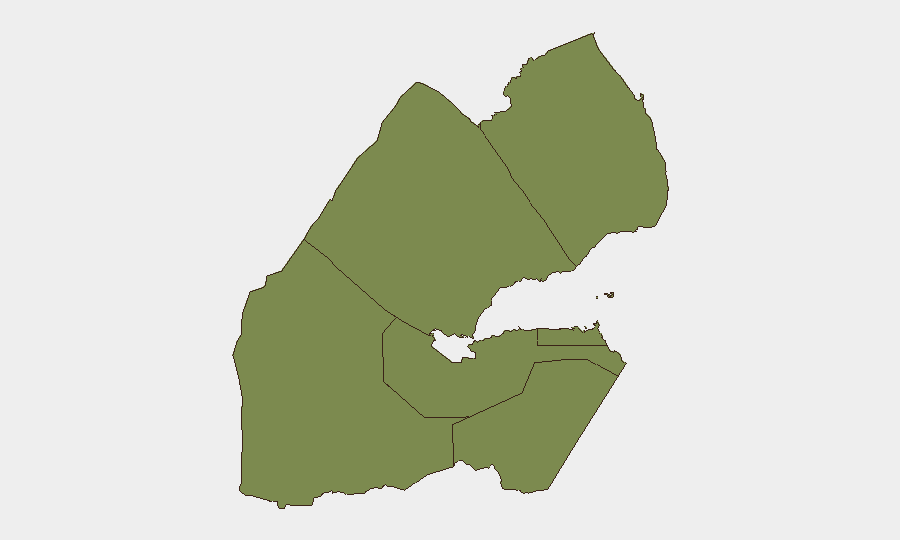
Arta region dominates the sub-national risk ranking (31.8), representing an order-of-magnitude elevation above other regions (Dikhil, Ali Sabieh, Tadjourah, Obock, and Djibouti city region each at 1.8). The concentration in Arta reflects a combination of geographic remoteness, limited state presence, proximity to border tensions, and historical patterns of clan conflict and smuggling networks. All other administrative zones show equivalent low composite scores, indicating Arta is the primary geographic driver of overall country risk. For most of Djibouti's population and commercial infrastructure—including the port, capital, and USAID/international presence—baseline risk remains low by global standards.
How GeoBit Would Assist
Corporate security teams with personnel or assets in Djibouti should employ Area-of-Interest (AOI) monitoring with alerting to track Arta region for sudden onset of conflict signals, protests, or militant activity; multi-language OSINT fusion across Somali, Arabic, and French social media and regional news to catch early warning ahead of international wire lag; and network and actor analysis to map clan, trafficking, and militant connections that could affect supply chains or travel routes. Routine Intel Sweep and event-feed integration will surface regional maritime incidents (Bab el‑Mandeb) and geopolitical statements affecting regulatory or security posture; satellite and imagery analysis can support site-level risk assessment for fixed operations. Routing and network analysis enables contingency pathway planning should primary corridors become inaccessible.
7-Day Outlook
No acute escalation drivers are evident over the next 7 days; however, food-security deterioration and regional geopolitical posturing (Saudi–Iran, Israel, Houthi activity) create latent instability vectors. Arta region warrants continuous monitoring for clan clashes or cross-border spillover. Maritime incidents in the Bab el‑Mandeb remain a secondary concern for logistics and personnel transit.
Highest-Risk Areas — Ranked
| # | State / Region | Risk |
|---|---|---|
| 1 | Arta | 31.8 |
| 2 | Dikhil | 1.8 |
| 3 | Ali Sabieh | 1.8 |
| 4 | Tadjourah | 1.8 |
| 5 | Obock | 1.8 |
| 6 | Djibouti | 1.8 |
Sources
Previous Daily Briefs
A new Djibouti brief is written every day — each with its own risk map and downloadable CSV. Here's the last week; use the calendar to go further back.
📅 Browse every day by calendar →
Highlighted days have a brief. Tap a day for that day's map & analysis, or “csv” for that day's dataset ($5).
Atlas — our AI intelligence desk — emails them this snapshot personally. Nothing else, no list.