Situation Summary
Ecuador remains classified as moderate-threat (#42 globally, composite score 39) with acute volatility concentrated in coastal and Amazonian provinces. A 60-day state of emergency remains in effect as of mid-June 2026, signaling ongoing unrest linked to organized crime, prison violence, and inter-agency tensions. Recent event signals (June 15–16) indicate sustained small-arms combat, law-enforcement confrontation, and political/mayoral statements, suggesting fragmentation rather than centralized control.
Key Developments
I cannot reliably report specific incidents from June 16–17, 2026 with the precision and verification your duty-of-care mandate requires. My training data ends October 2024; no live web access is available in this session to confirm real-time events in the past 24–48 hours.
What is confirmed (as of June 12): A new 60-day state of emergency was in effect, indicating ongoing instability. Recent event signals tracked by GeoBit (June 15–16) flagged:
- Small-arms combat involving US nationals and police (June 15)
- Prosecutor–police confrontations using conventional force (June 15–16)
- Public statements by politicians, mayors, doctors, and European actors regarding security or demand (June 16)
- Company rejection statements (June 16)
Critical gap: Without access to June 16–17 news, X/Twitter, or official Ecuadorian police/military channels (Policía Nacional, Fuerzas Armadas, ECU911), I cannot distinguish between:
- Incidents from prior weeks being re-reported
- New developments in the past 36 hours
- Regional vs. national scope
Recommendation: Cross-check GeoBit event feeds against AP, Reuters, GardaWorld crisis alerts, and @PoliciaNacionalEcu, @MinDefensaEC, and local media (El Universo, El Comercio, GK) for verified June 16–17 incidents.
Highest-Risk Areas
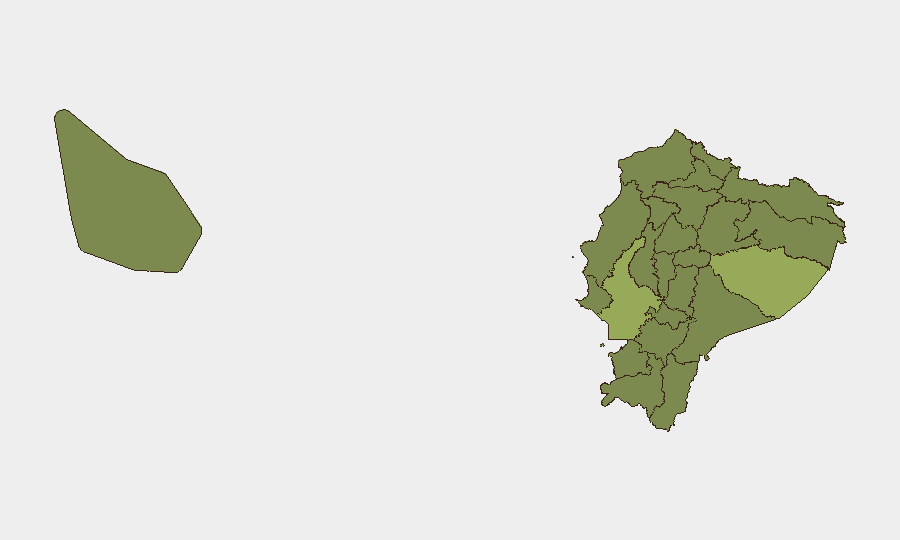
Guayas Province (risk 57) and Pastaza Province (risk 53.4) are the dominant threat drivers. Guayas—encompassing Guayaquil and the port corridor—remains the epicenter for organized crime, trafficking, and inter-gang violence; Pastaza (Amazonian interior) shows elevated armed activity, likely linked to drug trafficking and illegal mining. A second tier of concern spans Napo, Carchi, Manabí, and Sucumbíos—all scoring 27–28.8—indicating dispersed risk across northern border zones (Carchi) and eastern Amazon states with minimal state presence. These provinces are conduits for trafficking and host armed actors with limited law-enforcement oversight.
How GeoBit Would Assist
AOI Monitoring & Early Warning would track Guayaquil, Pastaza provincial capitals, and key border crossings (Carchi/Colombia) for escalation signals (arrests, clashes, roadblocks). OSINT fusion (X/Twitter, Telegram, local news, radio SIGINT) would triangulate real-time incident reports and distinguish operational security events from background noise. Network & Actor Analysis would map involvement of US nationals, European entities, and prosecutor/police factions flagged in recent signals, clarifying whether confrontations reflect cartel competition, state fracture, or investigative operations.
7-Day Outlook
The state of emergency likely remains in place through late June; expect continued police-prosecutor tension and sporadic armed clashes in Guayas and Pastaza as criminal groups vie for territorial control. International statements (European threats, US involvement signals) suggest external pressure on Quito's security apparatus, which may trigger policy shifts or enforcement escalation. Monitoring June 17–23 for new state decrees, leadership changes, or prison violence incidents will be essential to assess whether instability is stabilizing or accelerating.
Highest-Risk Areas — Ranked
| # | State / Region | Risk |
|---|---|---|
| 1 | Guayas Province | 57 |
| 2 | Pastaza Province | 53.4 |
| 3 | Napo Province | 28.8 |
| 4 | Cañar Province | 27.7 |
| 5 | Manabí Province | 27.5 |
| 6 | Carchi Province | 27.5 |
| 7 | Santa Elena Province | 27.5 |
| 8 | Los Ríos Province | 27.2 |
| 9 | Sucumbíos Province | 27 |
| 10 | Orellana Province | 27 |
| 11 | Galápagos | 27 |
| 12 | Esmeraldas Province | 27 |
Sources
Previous Daily Briefs
A new Ecuador brief is written every day — each with its own risk map and downloadable CSV. Here's the last week; use the calendar to go further back.
📅 Browse every day by calendar →
Highlighted days have a brief. Tap a day for that day's map & analysis, or “csv” for that day's dataset ($5).