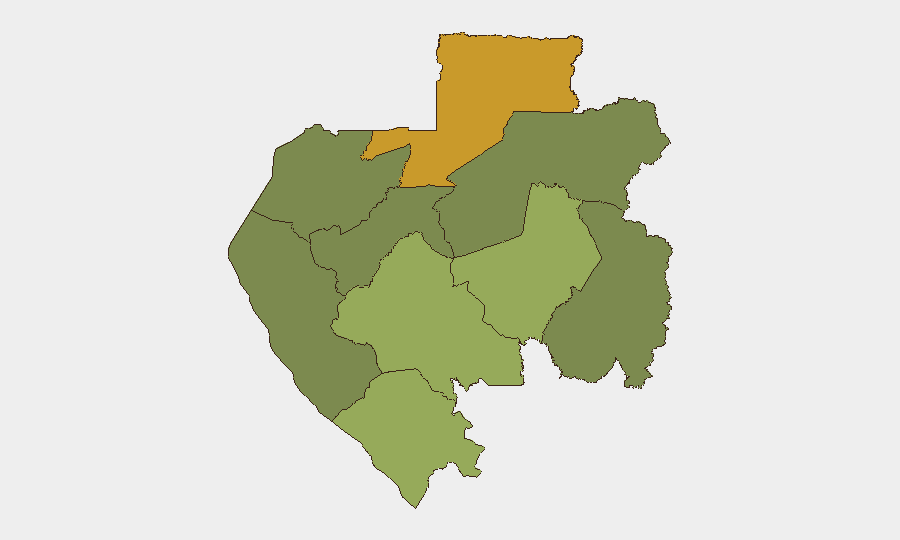
Situation Summary
Gabon remains a low-threat environment in global and regional context, ranking 60th globally with a composite threat score of 28. No new security incidents, civil unrest, crime spikes, or infrastructure disruptions have been reported in the past 24–48 hours from mainstream or open-source intelligence feeds. The security posture remains stable, though sub-national variance is significant, with northeastern Woleu-Ntem Province substantially elevated above the national baseline.
Key Developments
No verifiable security, conflict, civil-unrest, crime, political-instability, infrastructure, or acute travel-risk incidents have been corroborated for Gabon in the last 24–48 hours. Specialist OSINT feeds covering Central Africa and the Gulf of Guinea region show no new shootings, protests, bombings, major crimes, or service disruptions attributed to this period. Social media channels referencing Gabon contain routine political commentary and non-incident content without cross-confirmed claims of fresh unrest or attacks. The absence of reportable developments reflects the overall low-incident character of the current environment rather than a lull following elevated activity.
Highest-Risk Areas
Woleu-Ntem Province (risk score 72) drives nearly all sub-national concern, followed by Ogooué-Lolo (58) and Ngounié (48), which together account for the elevated national profile. These northeastern and south-central zones are sensitive to cross-border movement, illicit trafficking networks, and isolated armed activity; Woleu-Ntem's proximity to Cameroon and Equatorial Guinea amplifies exposure to regional instability. Estuaire Province (risk 15), home to the capital Libreville and primary economic assets, remains low-risk. Ogooué-Ivindo carries no tracked threat signal. Organizations with operations in or transit through Woleu-Ntem or Ogooué-Lolo should maintain heightened situational awareness; those in Libreville and coastal regions face routine crime and petty corruption risks typical of Gulf of Guinea capitals.
How GeoBit Would Assist
Security teams monitoring Gabon should deploy AOI Monitoring & Early Warning on Woleu-Ntem, Ogooué-Lolo, and cross-border zones (Cameroon–Gabon, Equatorial Guinea–Gabon) to detect emerging trafficking, armed movement, or political activity before escalation. Intel Sweep and multi-language OSINT fusion across regional feeds, radio SIGINT, and social channels provide persistent visibility into incident development, regime stability signals, and maritime activity in the Gulf of Guinea. Conflict & Military and Network & Actor Analysis capabilities track armed-group positioning and trafficking networks should sub-national risk trajectories change. For personnel movement, Routing & Network Analysis identifies safe transit corridors and alternative routes avoiding high-risk provinces.
7-Day Outlook
No acute incident triggers or political flashpoints are evident on the near-term horizon. The security environment is expected to remain stable through early July, with routine governance and economic activity continuing. Monitoring should remain attuned to Woleu-Ntem developments and cross-border indicators; any significant change would likely originate in that zone.
Highest-Risk Areas — Ranked
| # | State / Region | Risk |
|---|---|---|
| 1 | Woleu-Ntem | 72 |
| 2 | Ogooué-Lolo Province | 58 |
| 3 | Ngounié Province | 48 |
| 4 | Nyanga Province | 42 |
| 5 | Haut-Ogooué Province | 35 |
| 6 | Moyen-Ogooué Province | 28 |
| 7 | Ogooué-Maritime Province | 25 |
| 8 | Estuaire Province | 15 |
| 9 | Ogooué-Ivindo | 0 |
Sources
Previous Daily Briefs
A new Gabon brief is written every day — each with its own risk map and downloadable CSV. Here's the last week; use the calendar to go further back.
📅 Browse every day by calendar →
Highlighted days have a brief. Tap a day for that day's map & analysis, or “csv” for that day's dataset ($5).