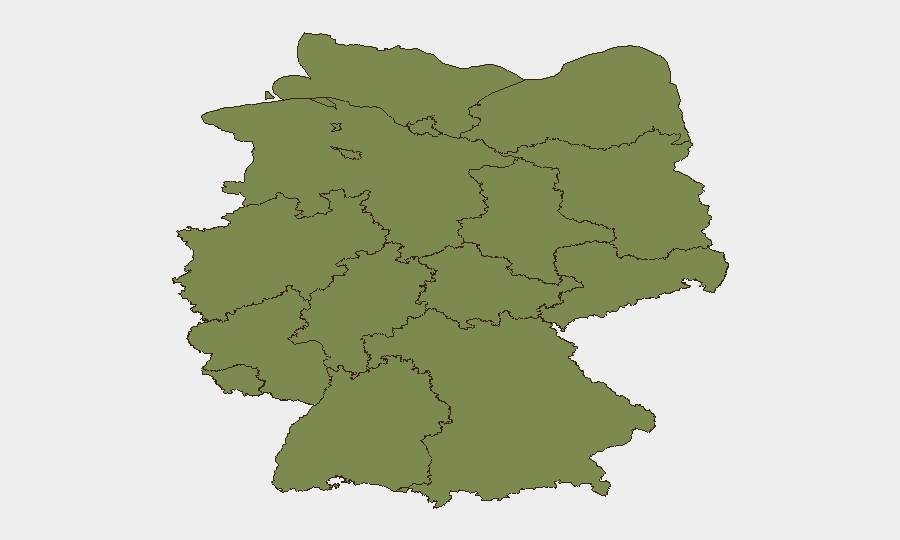
Situation Summary
Germany remains a relatively stable operating environment (global rank #111, composite threat score 8), but a critical mass-shooting incident in Lower Saxony on July 6 underscores persistent vulnerability to spontaneous violence. Sub-national risk is heavily concentrated in Thuringia (score 33.6), driven by ongoing political polarization and civil unrest, while Berlin, Lower Saxony, and Hamburg show elevated but lower-magnitude risk. The security landscape reflects localized instability rather than systemic national crisis, but duty-of-care teams should remain alert to flash incidents and regional volatility.
Key Developments
- Stade, Lower Saxony – Mass shooting, July 6, 2026
Five people killed in a mass shooting near a youth facility on Dankersstraße in Stade (40 km west of Hamburg). Two suspects arrested. Police characterize the incident as an "extended family tragedy"; motive under investigation. Major police cordon and public area-avoidance warnings remain in effect.
- Thuringia – Ongoing protest and civil-order escalation (week of July 5–6)
Recent event signals (July 5–6) show obstruction of passage, arrests tied to Russia-linked actors, police-protester clashes with conventional force use on both sides, violent repression by police, and pro-democracy movement disapproval. Context: Thuringia's risk score (33.6) reflects sustained political friction and protest activity over the past weeks; no single incident on July 6 is identified, but the signal density confirms elevated operational volatility.
- Administrative sanctions and court disapproval (July 5–6)
District court and German state-level admin sanctions issued; pro-democracy movement and worker organizations issued disapproval statements. Precise targets and scope require further detail, but signals indicate legal and civil pressure on one or more entities.
- Bombing threat – Prosecutor involvement (July 6)
A bombing event involving prosecutor engagement was flagged in event signals. Open-source confirmation and location details are not yet available; this requires immediate escalation for clarification.
Highest-Risk Areas
Thuringia dominates the sub-national risk picture with a composite score of 33.6—roughly 3.6 times higher than Berlin (9.1) and 5.8 times higher than Lower Saxony (5.7). This reflects sustained protest activity, police-protester confrontations, and political friction that have accumulated since early 2026. Berlin and Lower Saxony rank second and third; Berlin's risk stems from persistent civil unrest and political activism, while Lower Saxony's profile now includes the mass-shooting incident in Stade and associated emergency response. Hamburg, Bavaria, and North Rhine-Westphalia show moderate risk (4.3–4.5), typical of major urban centers with routine crime and protest activity. All other states remain below 4.0, indicating lower operational concern.
How GeoBit Would Assist
GeoBit's Intel Sweep, multi-language OSINT, and X/Twitter & Telegram monitoring enable real-time detection of flash violence and protest escalation across German regions, reducing reaction lag for corporate teams. AOI Monitoring & Early Warning with persistent geofencing around high-risk zones (Thuringia, Berlin, Hamburg ports/transport hubs) and company facilities can trigger alerts before incidents impact personnel or supply chains. Network & Actor Analysis and sentiment analysis of protest and political signals help distinguish routine dissent from indicators of imminent violence, supporting proportionate security posture adjustments and evacuation planning.
7-Day Outlook
Thuringia will likely remain volatile due to ongoing political activism and police presence; no de-escalation signals are evident. Lower Saxony and Hamburg warrant monitoring for secondary incidents or copycat activity following the Stade shooting. Nationwide, the threat level is expected to remain stable absent a major political trigger or secondary mass-casualty event.
Highest-Risk Areas — Ranked
| # | State / Region | Risk |
|---|---|---|
| 1 | Thuringia | 33.6 |
| 2 | Berlin | 9.1 |
| 3 | Lower Saxony | 5.7 |
| 4 | Hamburg | 4.5 |
| 5 | Bavaria | 4.3 |
| 6 | North Rhine-Westphalia | 4.3 |
| 7 | Mecklenburg-Vorpommern | 3.9 |
| 8 | Saxony | 3.9 |
| 9 | Rhineland-Palatinate | 3.6 |
| 10 | Baden-Württemberg | 3.6 |
| 11 | Schleswig-Holstein | 3.6 |
| 12 | Saxony-Anhalt | 3.6 |
Sources
Previous Daily Briefs
A new Germany brief is written every day — each with its own risk map and downloadable CSV. Here's the last week; use the calendar to go further back.
📅 Browse every day by calendar →
Highlighted days have a brief. Tap a day for that day's map & analysis, or “csv” for that day's dataset ($5).
Atlas — our AI intelligence desk — emails them this snapshot personally. Nothing else, no list.