Situation Summary
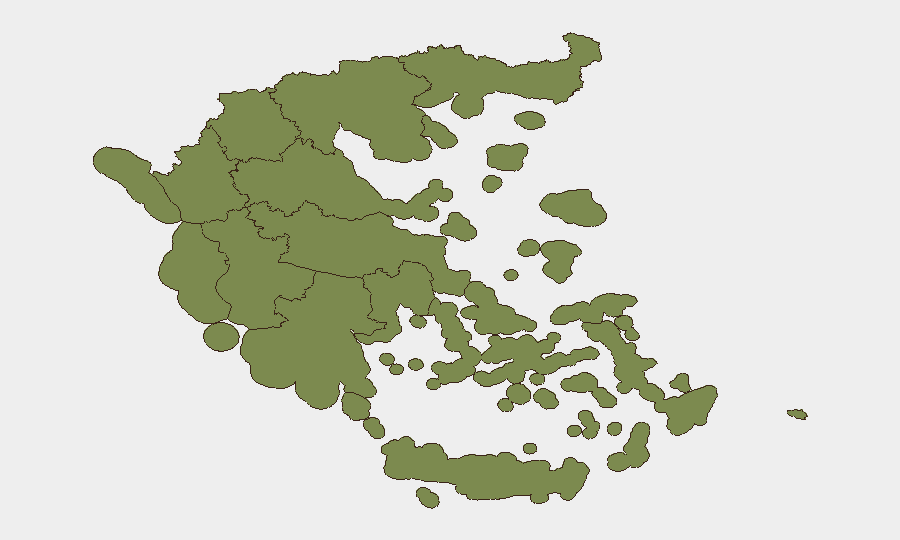
Greece maintains a composite threat score of 7 (rank #122 globally) with 72 tracked events, reflecting relatively modest but concentrated security exposure. The majority of risk is heavily weighted to Central Greece (score 31.5), which dominates the national profile; Attica (Athens metro, score 10.8) and South Aegean (score 9) follow at substantially lower levels. Recent signal activity (72 events) includes mixed incident types—public statements, investigation triggers, and unconventional violence reports—suggesting fragmented rather than coordinated national instability.
Key Developments
Data Limitation Notice: The GeoBit event signal log for 2026-07-03 through 2026-07-05 identifies event *types* and actor categories (Prime Minister statement, resident unconventional violence, US statement, investigative activity in Athens) but does not include specific incident narratives, locations beyond Athens/Athens metro, or confirmed causality. Without current public reporting, specific development bullets cannot be reliably constructed.
To produce operationally valid 24–48-hour development bullets, cross-verification against Greek-language and English news sources (e.g., ANA-MPA, Ekathimerini, Reuters Greece) is required. Current web search results supplied do not contain Greece-specific unrest, crime, infrastructure, or political developments from the target window.
Recommendation: Provide recent Greece-focused reporting (news URLs, social-media posts, wire feeds) so developments can be extracted with location, date, and corroboration.
Highest-Risk Areas
Central Greece dominates the risk profile with a composite score nearly 3× that of Attica and 3.5× South Aegean, indicating that threat drivers—whether industrial action, local instability, or concentrated criminal activity—are geographically concentrated in that region rather than dispersed. Attica and South Aegean form a secondary tier of elevated but manageable concern, typical of capital-region and island-tourism exposure. The remainder of Greece (Western Greece, Thessaly, Peloponnese, border regions) presents minimal tracked risk, suggesting that security attention for most corporate and expat populations can be proportionally weighted toward Central Greece and Athens metro.
How GeoBit Would Assist
Security teams operating in Greece would prioritize persistent AOI (Area-of-Interest) Monitoring & Early Warning for Central Greece, Attica, and key transport/logistics hubs, with real-time alert thresholds set for unconventional violence, labor action, and protest escalation. Multi-language OSINT (Greek social media, Telegram, local news) combined with sentiment and temporal analysis would provide 48–72-hour leading indicators of crowd mobilization or supply-chain disruption. Routing & Network Analysis would enable duty-of-care teams to plan alternative journeys around active protest zones or blocked infrastructure in real time.
7-Day Outlook
No clear escalation signal is evident in the current 7-day event distribution; however, the concentration of incidents in Central Greece and the recency of investigative and resident-action events warrant close monitoring. If additional public demands or statements emerge from government or labor actors, expect 3–5 day lead time before any operational disruption (transportation, access, supply) materializes in affected regions. Standard business continuity protocols for Greece should remain active, particularly for Central Greece operations.
Highest-Risk Areas — Ranked
| # | State / Region | Risk |
|---|---|---|
| 1 | Central Greece | 31.5 |
| 2 | Attica | 10.8 |
| 3 | South Aegean | 9 |
| 4 | Central Macedonia | 6.1 |
| 5 | Epirus | 3.2 |
| 6 | Ioanian Islands | 2.6 |
| 7 | Western Greece | 2.1 |
| 8 | Western Macedonia | 1.5 |
| 9 | Eastern Macedonia and Thrace | 1.5 |
| 10 | Peloponnese Region | 1.5 |
| 11 | Thessaly | 1.5 |
| 12 | Autonomous Monastic State of the Holy Mountain | 1.5 |
Previous Daily Briefs
A new Greece brief is written every day — each with its own risk map and downloadable CSV. Here's the last week; use the calendar to go further back.
📅 Browse every day by calendar →
Highlighted days have a brief. Tap a day for that day's map & analysis, or “csv” for that day's dataset ($5).
Atlas — our AI intelligence desk — emails them this snapshot personally. Nothing else, no list.